
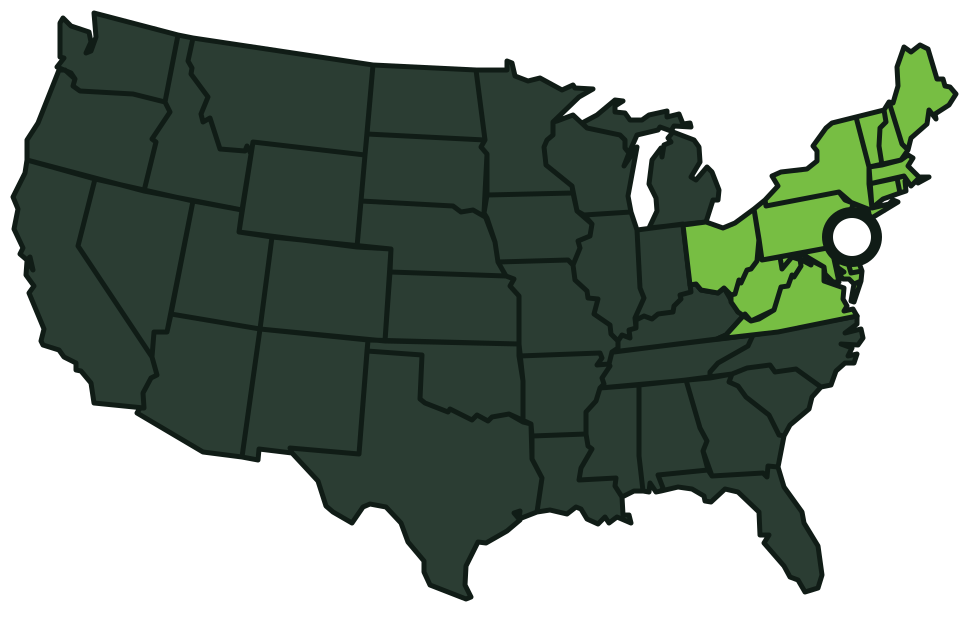
 Philadelphia, PA
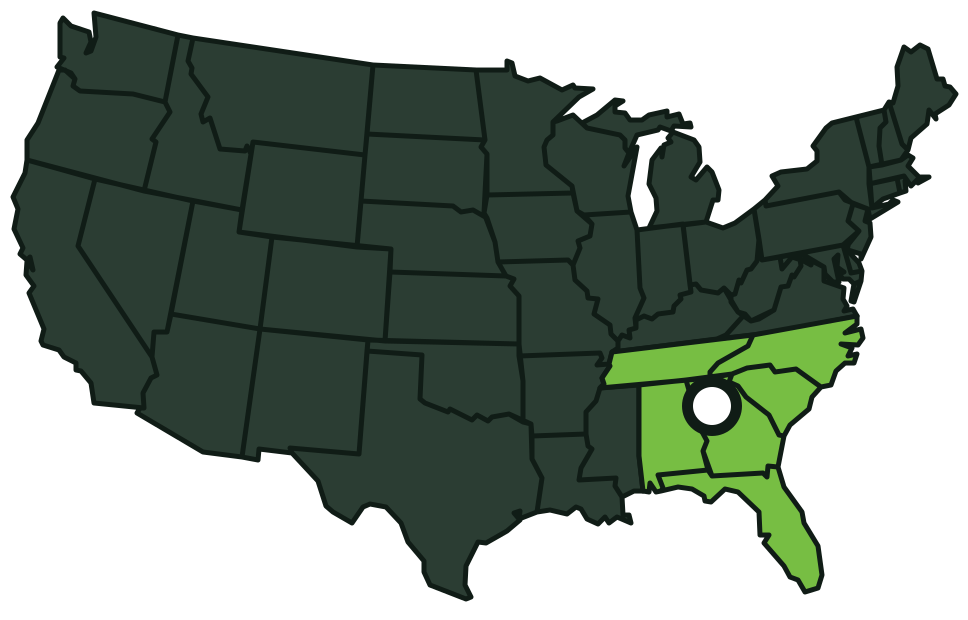 Atlanta, GA
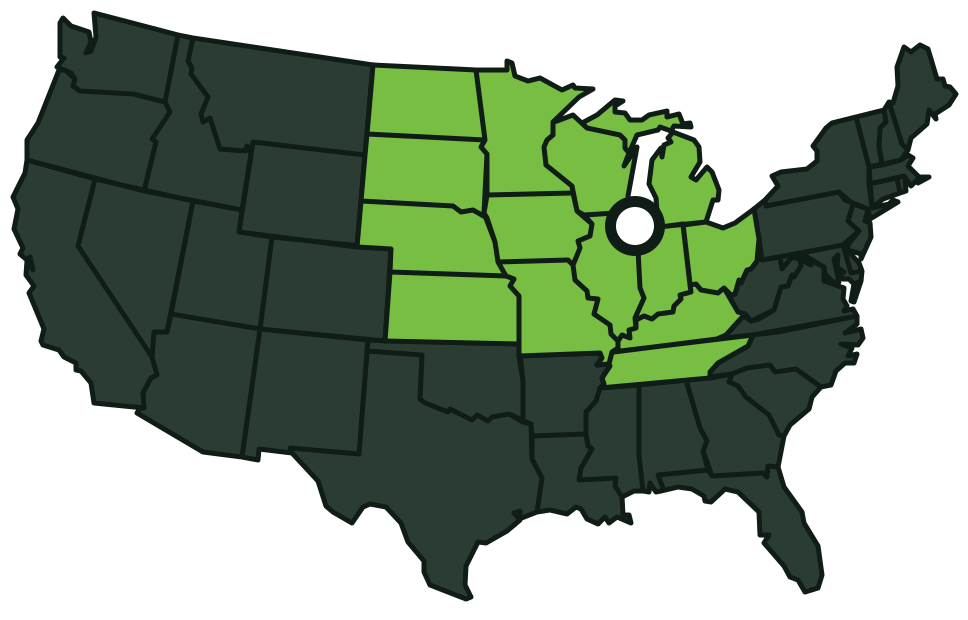 Chicago, IL
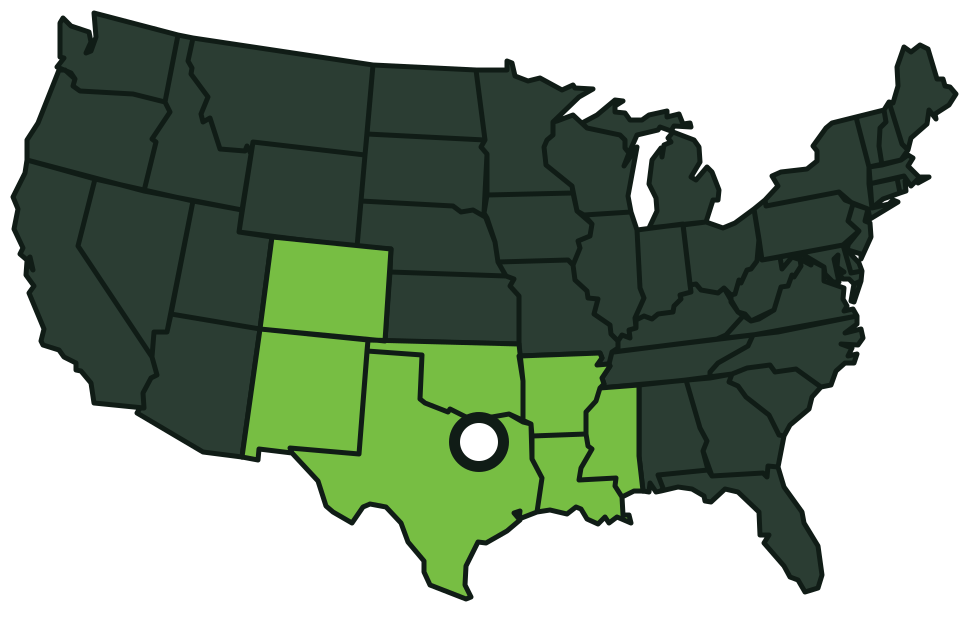 Dallas, TX
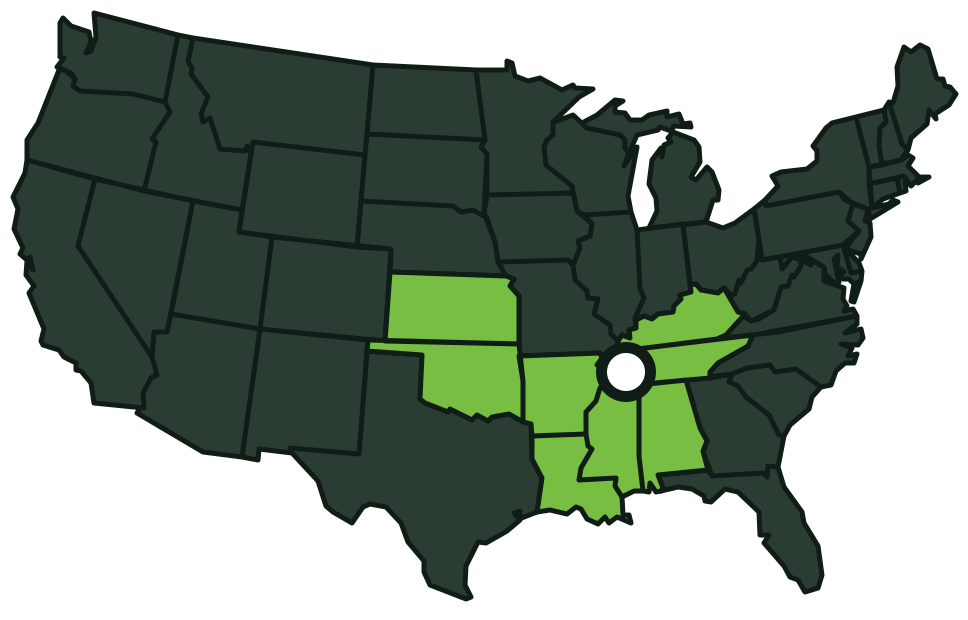 Jackson, TN
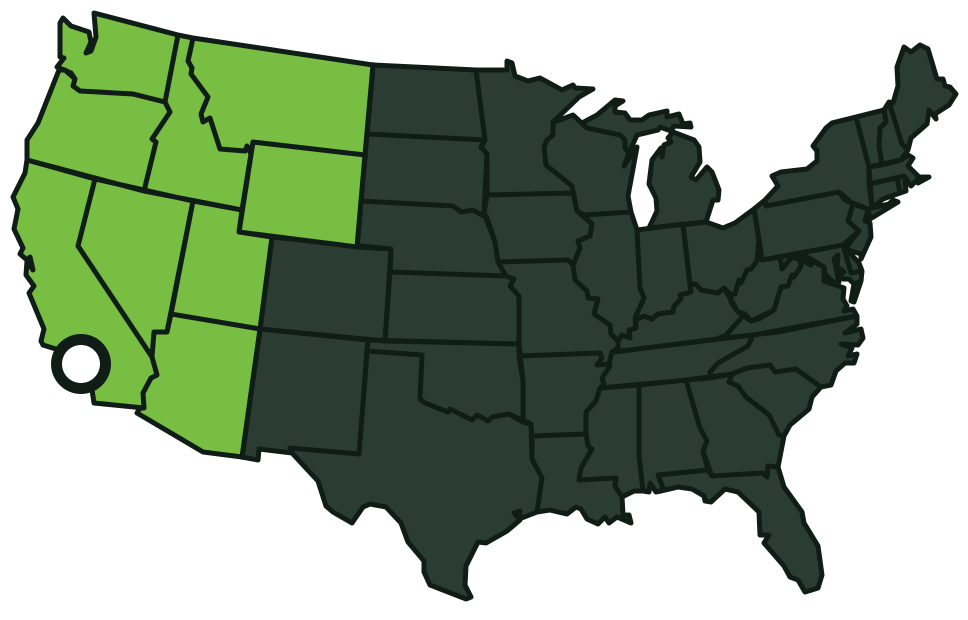 Los Angeles, CA
Corrugated and Packaging Plants
Starch, adhesive and paper dust, in a plant that measures downtime in changeovers. The scope has to fit the window the schedule actually has, which is rarely the window anyone would choose.
The state of a converting plant before the first visit.
- The boxes go to a food customer, and that customer requires an SQF, BRCGS, FSSC 22000 or AIB audit. The overhead, the corrugator and the scrap system all have to pass it.
- Starch and adhesive have built on the corrugator, the glue unit and the steel above them to the point where they are affecting run quality.
- Paper dust has loaded the overhead structure, the lighting and the sprinkler lines across the whole building.
- The baler pit and scrap conveyor system have filled and the vacuum system is no longer clearing properly.
- The dust collection equipment is running behind what the plant produces, and nobody is certain when it was last opened.
- A fire event or a near miss in the scrap system has made the housekeeping program suddenly urgent.
What the work looks like
in your building.
The two problems in a converting plant
A corrugated plant has a machine problem and a building problem, and they need different answers.
The machine problem is starch and adhesive. It builds on corrugator rolls, glue units, applicators, flute rolls and everything driving them, and it changes how the plant runs before anyone calls it a cleaning issue: warp, bond quality, glue line consistency, and the small running adjustments that operators make to compensate. By the time buildup is obvious it has usually been costing something for months.
The building problem is paper dust. It is produced continuously, it travels, and it settles on overhead steel, lighting, sprinkler lines and every other horizontal surface in the plant. In quantity it is a combustible dust, which is why NFPA 660 applies here and why insurers photograph the rafters.
Both are solvable. They are rarely solvable in the same window, which is why an honest plan for a converting plant is a sequence rather than a single visit.
Where it collects
- Corrugator rolls, flute rolls and the single-facer
- Glue units, starch applicators and adhesive systems
- Drives, gearboxes, guards and the areas under the machine
- Overhead steel, purlins, cable trays, lighting and sprinkler lines
- Conveyors, transfers, stackers and the scrap system
- Baler, baler pit and scrap conveyor trenches
- Dust collection ducting, cyclones and collectors
- Floors, aisles, stock areas and the dock
Why the window drives everything
In most industries the constraint on this work is access. In a converting plant the constraint is the schedule, and it is unusually tight. Plants run to order, changeovers are frequent and short, and the difference between a scope that fits and a scope that does not is the difference between work that happens and work that gets deferred for another year.
Kelly plans against the window that exists. That means a scope broken into pieces that each fit a real slot, a crew staged and ready rather than mobilizing on the day, lockout arranged in advance with the plant’s own people, and a clear rule that the work stops when the plant needs the space back, not when the crew is finished.
It also means being direct about what does not fit. Plant-wide overhead cleaning is not a changeover job, and saying so at the survey is more useful than discovering it at two in the morning with a line waiting.
The scrap system, which is where the fires start
Every converting plant has a scrap handling system, and it is close to universally the least visited part of the building. Trim goes into ducting, through a cyclone, into a baler or a bin, and the whole path accumulates. It also contains exactly the conditions a dust fire needs: fine cellulose material, moving air, mechanical equipment and confined volumes.
This is the part of the plant an insurer will ask about specifically, and the part where a documented cleaning interval is worth more than a deep clean. Kelly cleans the ducting, the cyclone, the collector, the baler and the pit beneath it, with bonded and grounded equipment and non-sparking tools, and provides the record.
Where cleaning reveals a condition rather than an accumulation, which on scrap systems it frequently does, that goes in the report too. Worn ducting, a collector that is undersized for what the plant now produces, or a pit with no practical access are all worth knowing about before they become the reason for a claim.
What a program looks like once it settles
Most converting plants that start with one job end up on an interval, because the building reloads at a rate that is measurable and predictable. Kelly measures what comes off on the first visit, proposes a frequency from that, and returns on it with the same crew.
A typical settled program separates into three tracks running at different rates: machine cleaning tied to the plant’s own maintenance rhythm, overhead and structural work on a longer cycle covering the building in sections, and the scrap and dust collection system on its own interval because it reloads fastest and matters most. The three are planned together so a crew on site for one can pick up the others where access allows.
That is also the version of this work that closes an insurance finding or a housekeeping citation, because what those ask for is a program with a frequency and a record, not a single clean.
The standards this
plant type is held to.
A box that food goes into is food contact packaging, so the plant is held to whatever audit its customer requires: SQF, BRCGS, FSSC 22000 or the older AIB standard. For most converting plants this is the biggest reason the overhead and the equipment get cleaned, and the auditor wants the record as much as the result.
The consolidated combustible dust standard, effective December 2024. Paper dust is combustible and a converting plant produces it continuously. The requirement is a Dust Hazard Analysis, a written housekeeping program with accumulation thresholds, and cleaning methods that do not themselves create an ignition source.
Walking and working surfaces kept clean, orderly and free of hazards. Starch on a floor and dust on a walkway are both citable, and both are what an inspector sees first.
Lockout and tagout, and machine guarding. Nothing enters a corrugator, a glue unit or a conveyor until the plant's own energy control procedure is complete and verified.
Scrap systems, balers and dust collection are where converting plant fires start, which is why insurers inspect them specifically. A documented cleaning program on those systems is frequently what the renewal conversation turns on.
What Kelly does here,
and in what order.
Most converting plants take two or three of these on one visit, sequenced around the schedule rather than around the crew. Overhead work happens before machine work, and machine work happens in the window the plant can actually give up.
- 01 Industrial Dry Ice Blasting Corrugator rolls, glue units, flute rolls, starch applicators and drive components. No water near the adhesive system, no abrasive on machined surfaces, and no disassembly, which is what makes it fit a changeover rather than an outage.
- 02 Ceiling, Overhead and High Dusting Overhead steel, lighting, sprinkler lines, ductwork and the structure above the corrugator, which is where the dust load that ends up on the product actually lives.
- 03 Combustible Dust Cleaning Where accumulation has passed the point of housekeeping, and in the scrap and dust collection systems specifically, with bonded and grounded equipment and non-sparking tools.
- 04 Equipment, Conveyor and Line Cleaning Conveyors, transfers, stackers and scrap handling, cleaned in the changeover window with the line locked out and returned before the next order runs.
- 05 Industrial Pit Cleaning Baler pits, scrap pits and sumps, under permit, with what comes out characterized before it moves.
- 06 Baghouse and Dust Collector Service Trim and dust collection baghouses cleaned out, inspected and re-bagged, so the extraction at the corrugator and the converting lines keeps pulling and the dust stops landing on the structure.
- 07 Industrial Vacuum Services In scrap, dust collection and pneumatic systems, and anywhere material has to be captured where it sits rather than blown down.
The windows a converting plant actually has.
Very few corrugated plants can give up a week. What they have instead is a set of short, repeating windows, and a scope that does not fit one of them will not happen at all.
- The changeover
- Minutes to a couple of hours, several times a shift. Usable for targeted dry ice work on a glue unit or a specific roll, provided the crew is staged, the lockout is prearranged and the work stops on the plant's word rather than on completion.
- The weekend or non-production down
- The most productive window in this industry. Long enough for corrugator cleaning, overhead work in a section of the building, or a baler pit, with the plant back up for Monday.
- Annual or holiday shutdown
- Where plant-wide overhead, dust collection and scrap system work belongs. Booked well ahead because every converting plant in the region wants the same days.
- On a recurring program
- The interval set from how fast the building reloads, which in a converting plant is measured in weeks rather than months. Scheduled work is also the only version of this that an insurer treats as a program rather than a reaction.
Who Kelly works for in this industry.
Kelly names International Paper and Georgia-Pacific among its customers. Both are among the largest producers of containerboard and corrugated packaging in the country.
The Atlanta service center runs this scope more than any other, because the converting plants follow the mills and the mill base in Georgia and the Carolinas is the densest in the United States. The Philadelphia center runs a close second on the corridor from eastern Pennsylvania through New Jersey into Ohio.
Every service from
six service centers.
Every Kelly service is staffed from all six centers, so the crew that comes to your plant is the one based nearest to it. Coverage is all 48 contiguous states.
See the full territory map and the states each center covers on the service areas pages.
Asked before the quote.
Can you clean a corrugator without taking it apart?
How short a window can you work in?
What about the scrap and baler system?
Will cleaning overhead contaminate the product below?
Do you run this as a program rather than a one-off?
Tell us about the facility.
We'll tell you straight.
A specialist reviews every request, not a call center. If it is not Kelly work, we will say so and point you in the right direction.