
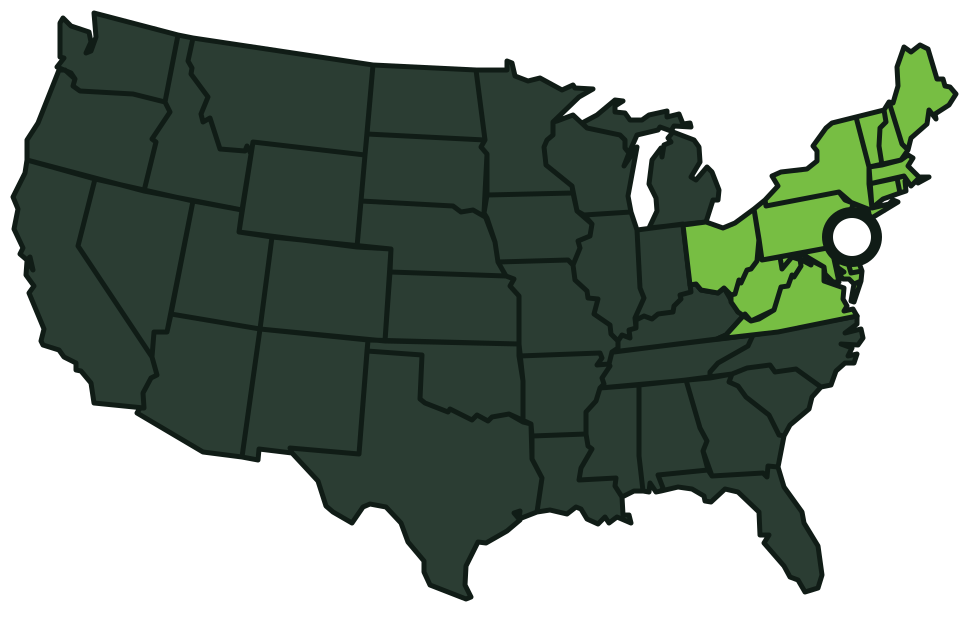
 Philadelphia, PA
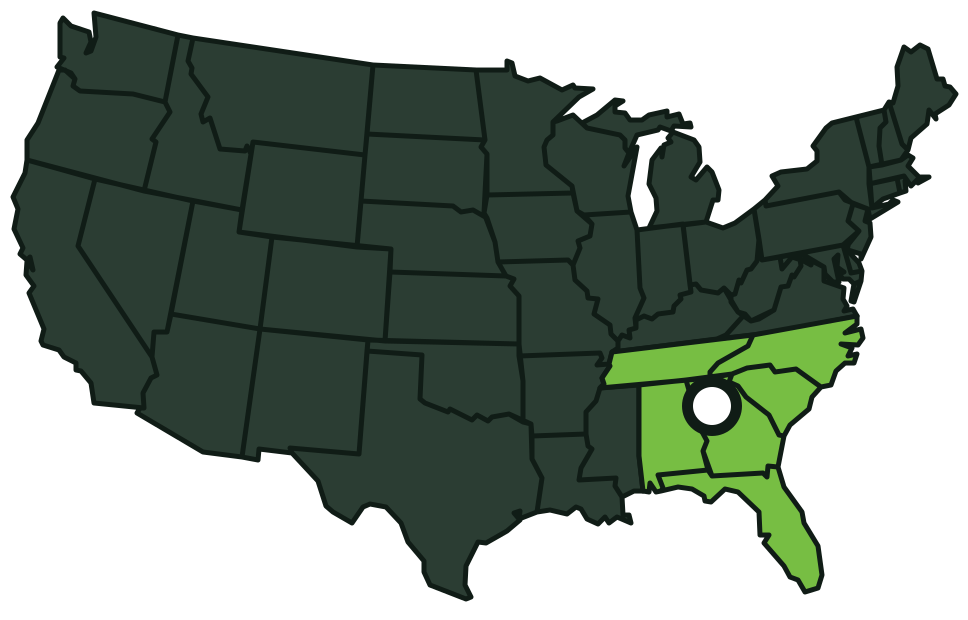 Atlanta, GA
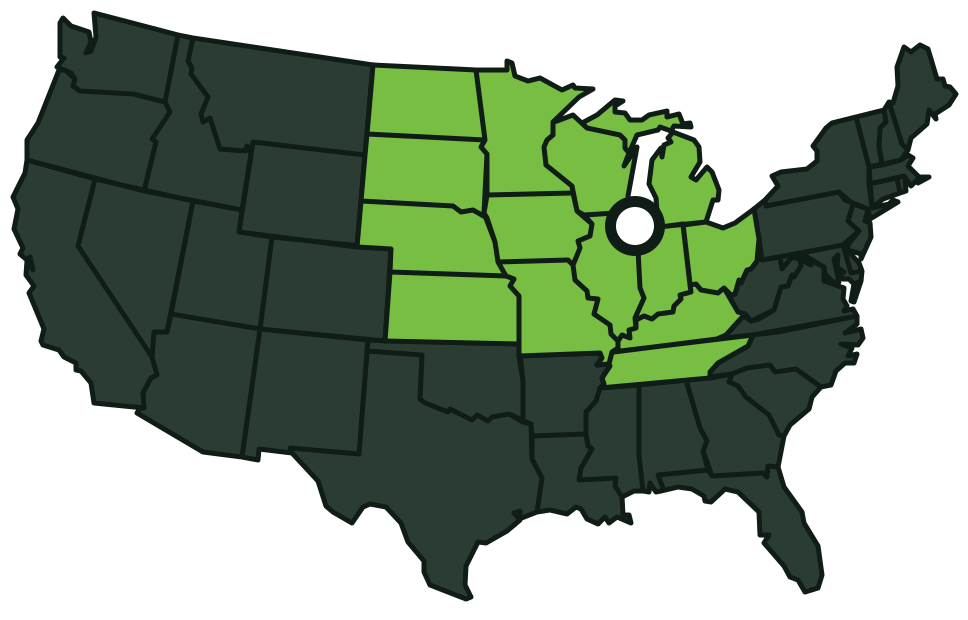 Chicago, IL
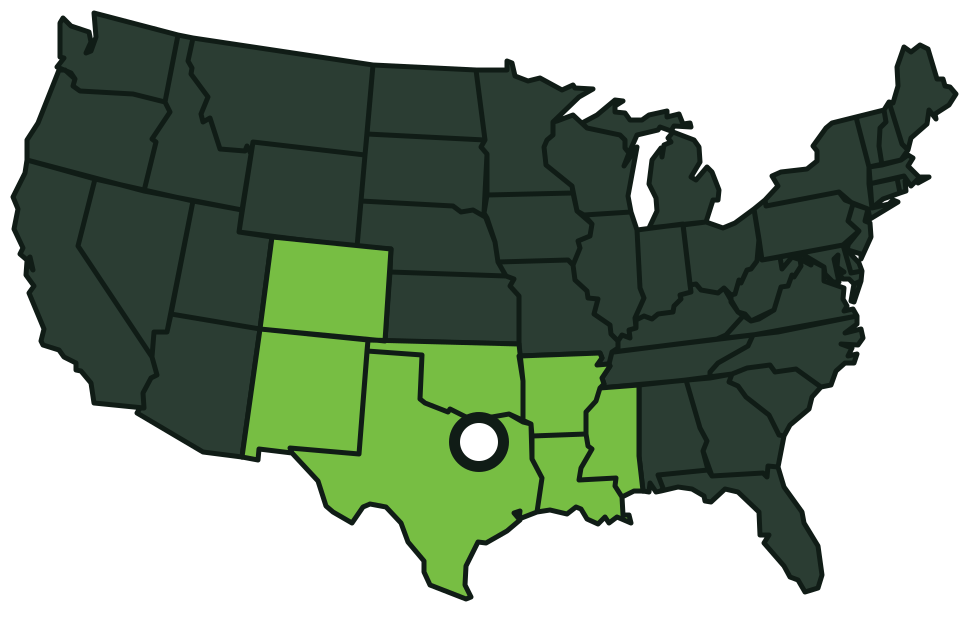 Dallas, TX
 Jackson, TN
 Los Angeles, CA
Baghouse Differential Pressure: What the Gauge Is Telling You, and When the Bags Need Changing
The differential pressure gauge on a baghouse is the cheapest diagnostic instrument in the plant. Read as a trend rather than a number, it tells you when the bags are doing their job, when they have stopped, and when the problem is not the bags at all.
What the gauge measures
Differential pressure is the difference between the air pressure on the dirty side of the filter bags and on the clean side. It is the resistance the fan has to pull against to move air through the fabric and through the layer of dust sitting on it.
That layer, the dust cake, is not a fault. On most fabrics it does a large share of the filtering. A new bag with no cake filters less well than one that has been in service for a few days, which is why the reading on fresh bags starts low and then settles at a working level.
The pulse cleaning system keeps the cake at a working thickness. A short blast of compressed air down each row of bags knocks the excess into the hopper, and the pressure drops back. In a healthy collector the reading moves within a narrow band around the same baseline, week after week.
Read the trend, not the number
Every unit has its own design figure and its own baseline. The useful question is how today’s reading compares with that baseline, and which way it is moving.
Climbing slowly over months. Normal aging. Fine particles work their way into the fabric and the cake releases a little less completely each time. Nothing is urgent, but the bags are on their way to the end of their life.
Climbing, and the pulse no longer brings it down. The bags are blinding. Moisture, condensation, oil mist or a very fine dust has plugged the fabric so that cleaning cannot restore it, and blinded bags rarely recover. Suction at the pickups falls off, and dust starts settling on the floor and the overhead instead of reaching the collector.
A sudden drop. Something is letting air through without filtering it: a torn bag, a bag that has come off its cage, a seal that has failed at the tube sheet. Lower resistance looks like good news on the gauge, and it is the opposite. Look at the stack, the clean-air plenum and the roof around the fan.
Low from the start, with dust at the outlet. A leak, or bags that were installed without a proper seal.
Erratic readings. Often not the bags at all. A pulse valve or diaphragm has failed, the sequencer is skipping rows, the compressed air is wet or low, or the gauge line has plugged with dust.
What to check before ordering bags
A high reading sends most plants straight to a bag order. It is worth ruling out the cheaper causes first, because new bags will not fix any of these.
- Compressed air. Pressure at the header, and whether the air is dry. Wet air blinds bags, and in winter it freezes.
- Pulse valves, diaphragms and solenoids. One failed valve leaves a whole row uncleaned.
- The timer or sequencer. The pulse interval and duration, and whether every row is actually firing.
- The hopper. If it has bridged, or the airlock below it has stopped discharging, the dust knocked off the bags is picked straight back up.
- The gauge itself. Pressure taps and tubing plug with dust, and a plugged line keeps showing whatever it read last.
- The fan and dampers. A damper that has moved changes the airflow, and the reading with it.
A five-minute weekly check
Most collector problems give weeks of warning to anyone who looks. A short weekly round catches them:
- The differential pressure, written down next to last week’s reading and the baseline.
- Compressed air pressure at the pulse header, and any water in the drain or the lines.
- The pulse. Stand by the unit and listen for every row firing in sequence. A gap in the rhythm is a failed valve.
- The hopper and airlock. Material should be discharging. A full hopper or a silent airlock is a bridge in the making.
- The outlet. Any visible dust at the stack or around the fan is a leak until proven otherwise.
None of it needs a lockout or a permit, and all of it is cheaper than finding out from the gauge that the bags have already gone.
When a change-out is the answer
When those checks come back clean and the pressure still will not come down, the bags are finished. The same is true when an inspection finds bags that are torn, abraded, holed, shrunk or stiff, or when dust is reaching the outlet. Many pulse-jet collectors in continuous service need new bags every two to four years, depending on the dust, the air-to-cloth ratio and how hard the unit is run.
A change-out is more than swapping fabric. The housing and hopper are cleaned out, the cages and tube sheet are inspected, the pulse components are checked while the plenum is open, and the unit is leak-tested before it goes back online. The new bags should match the unit’s own specification for fabric, finish and length. A cheaper substitute that does not match is how a collector ends up back on the gauge within a year.
What to have ready before a change-out
A change-out goes fastest when these are settled before the unit is isolated:
- The bag specification: fabric, finish, length, diameter and quantity, from the plant’s records or the unit’s manufacturer. If nobody has it, the unit is identified and filters are sourced to match it.
- The cages: whether the existing cages are reused, and spares on hand for any that turn out to be bent or corroded.
- The window: how long the collector can be out of service, and whether the line it serves can run without extraction for that time.
- The lockout procedure for the fan, pulse system, airlock and compressed air header.
- Where the dust goes: what the hopper and housing contents are, and how they will be disposed of.
Why it is a confined space and combustible dust job
The inside of a baghouse is a permit-required confined space under OSHA 29 CFR 1910.146. The fan, the pulse system, the airlock and the compressed air header are all energy sources, and each is locked out and verified before anyone opens an access door.
The collector is also the one place in the plant where an explosible concentration of dust exists by design. That puts the work squarely under NFPA 660: explosion-rated, bonded and grounded vacuum equipment, non-sparking tools, and continuous atmospheric monitoring inside the housing and the hopper.
That combination is why collector service so often goes undone. The work is straightforward. The conditions are not.
Start with a baseline
The most useful thing a plant can do for its collector costs nothing. Record the differential pressure on the day new bags go in, then log it weekly. With a baseline, a change in the trend is obvious months before it becomes an emissions problem, a suction problem or an audit finding. Without one, every reading is just a number.
Kelly records that baseline on the first visit, along with readings before and after the work, photographs, and the condition of vents, isolation devices, airlocks and ductwork. It is the record the Dust Hazard Analysis and the insurer both ask for.
Collector service with Kelly
Kelly’s baghouse cleaning and bag change-outs cover the cleanout, the inspection, removal of the old bags, new bags installed to the plant’s own specification, and a leak test before the unit goes back into service, all planned to the plant’s outage. Because dust that escapes a collector ends up on the structure, the same crews often handle the combustible dust cleaning and the overhead cleaning on the same visit.
The ones that come up
every time.
What is a normal differential pressure for a baghouse?
Can we change the bags ourselves?
How long does a bag change-out take?
Combustible dust and NFPA compliance
NFPA 660 and Combustible Dust: What Changed, and What Your Plant Has To Do About It
Six standards became one in December 2024. For most plants the underlying obligation did not change, but where you look it up did, and the questions an inspector or an insurer asks have gotten sharper.
Read moreDangers of Combustible Dust
Learn why combustible dust must be removed from your facility. We explain what combustible dust is, how dangerous it is, and how to keep your facility safe.
Read moreCombustible Dust in Pulp & Paper Mills: NFPA 654 Compliance for Fiber and Wood Dust
What NFPA 654 requires for fiber and wood dust control in pulp and paper mills, and how a structured cleaning program keeps a facility audit-ready.
Read moreTell us about the facility.
We'll tell you straight.
A specialist reviews every request, not a call center. If it is not Kelly work, we will say so and point you in the right direction.