
 Philadelphia, PA
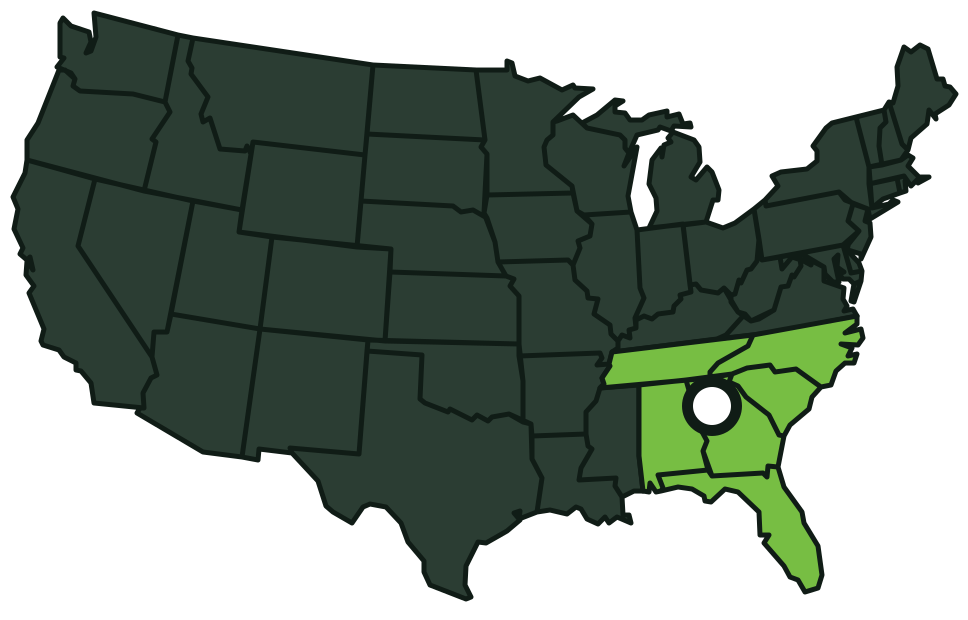 Atlanta, GA
 Chicago, IL
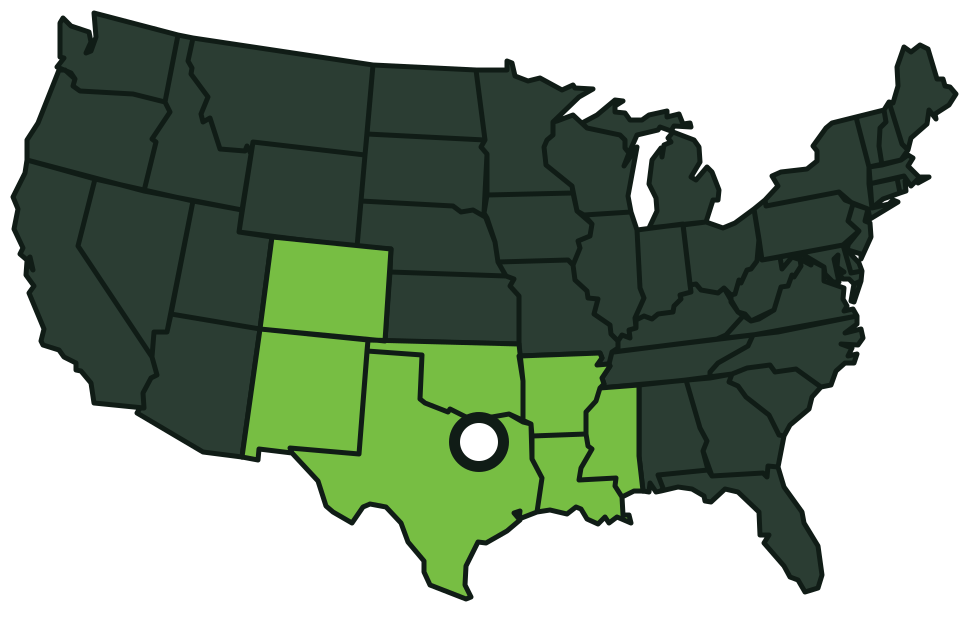 Dallas, TX
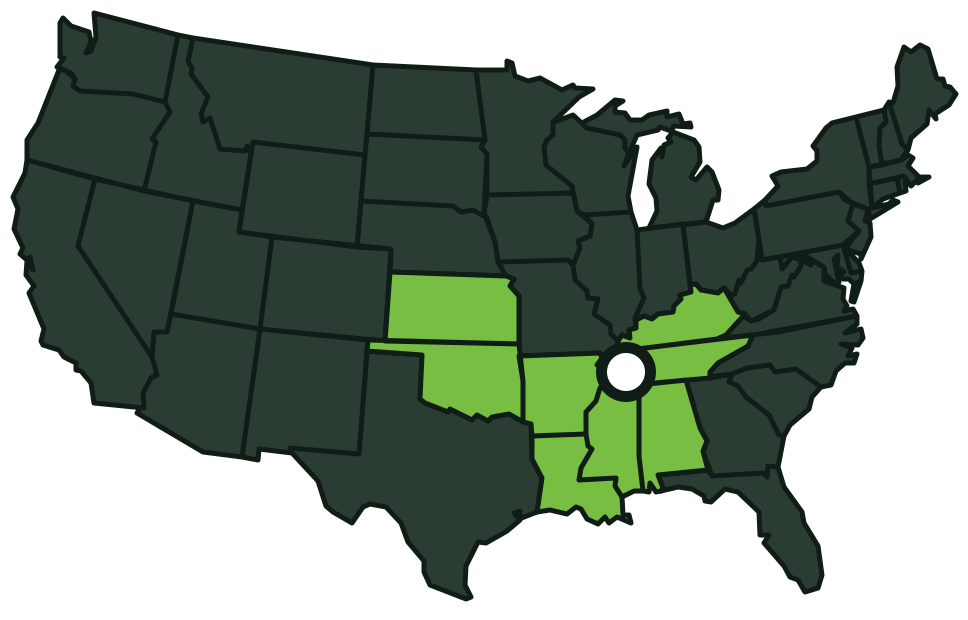 Jackson, TN
 Los Angeles, CA
Industrial Dry Ice Blasting
Cleaning that leaves nothing behind but the contamination it removed. No water, no grit, no chemical residue, and equipment that goes back into service the moment the crew steps away.
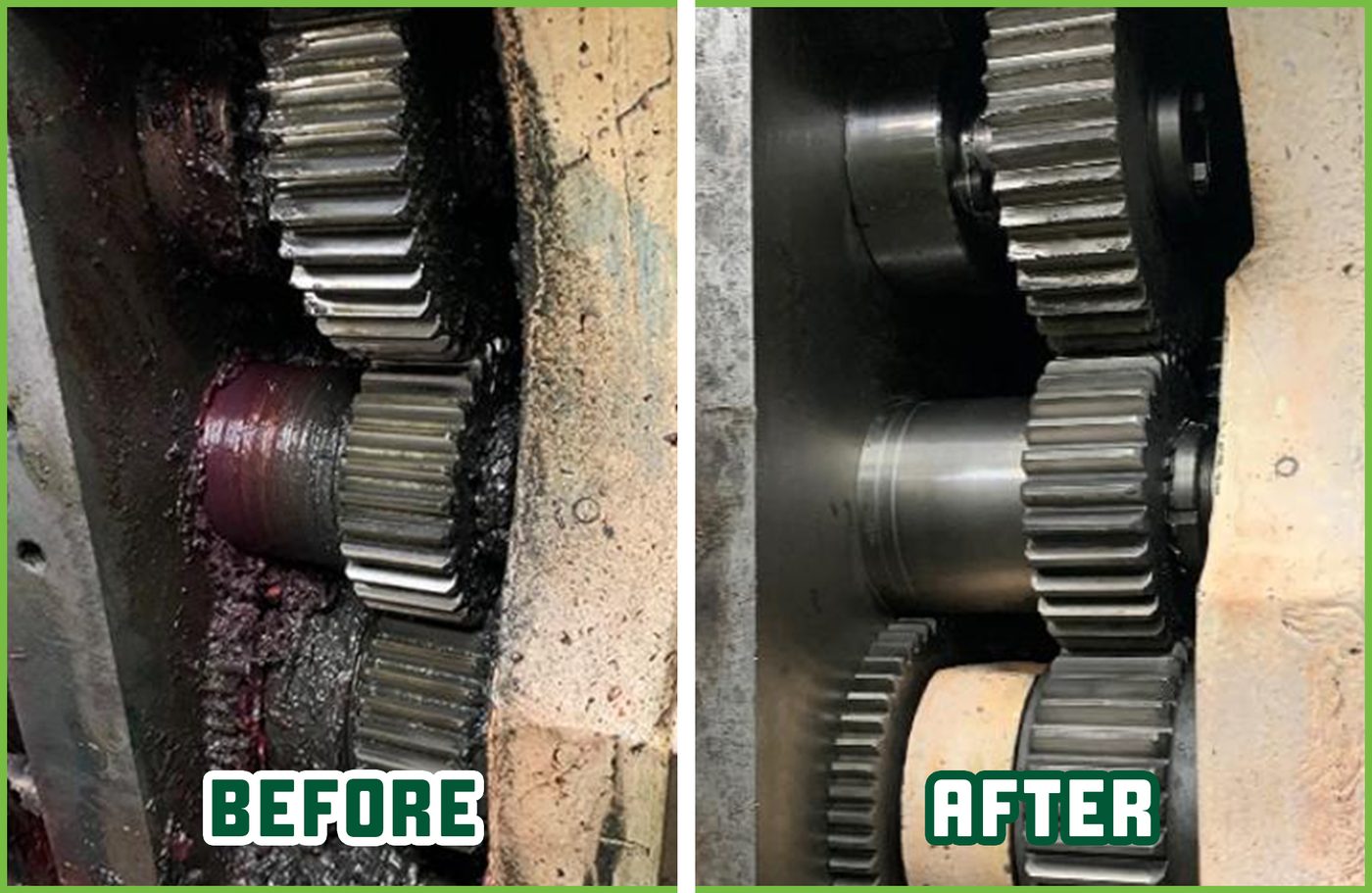
When the usual methods cannot touch it
- The equipment cannot get wet. Electrical panels, control cabinets, motors and anything with a bearing in it rules out pressure washing before the conversation starts.
- The surface cannot be abraded. Molds, tooling, precision assemblies and gasketed seals do not survive sand or soda blasting.
- The line cannot be torn down. Disassembling equipment to clean it costs more in downtime than the cleaning itself.
- Nothing can be introduced into the product zone. Food and beverage plants cannot have a cleaning method that adds moisture or leaves a residue.
- The waste stream is a problem in its own right. Grit, water and chemical runoff all have to be collected, contained and disposed of.
What it involves
inside a live plant.
What dry ice blasting is, and why plants choose it
Dry ice blasting uses compressed air to accelerate small pellets of solid carbon dioxide at a surface. On impact the pellet sublimates, converting directly from solid to gas. That instant expansion, together with the thermal shock of a pellet at roughly minus 109 degrees Fahrenheit hitting a warmer surface, breaks the bond between the contaminant and the substrate and lifts it away. The CO2 disperses into the air. What is left on the floor is the grease, the resin, the carbon, the ink or the dust that was on the equipment, and nothing else.
Four properties make it the method of choice for a specific class of industrial cleaning problems.
It is dry. No water is introduced, so there is no drying time, no corrosion risk and no wastewater to collect. Equipment can be blasted and restarted.
It is non-abrasive. Dry ice pellets are far softer than sand, grit or soda media. They clean without etching, pitting or removing material, which is why the method is used on tooling, molds, gaskets, bearings and painted surfaces that abrasive blasting would ruin.
It is non-conductive. The pellets carry no charge and leave no moisture, which is what makes cleaning live or recently energized electrical equipment possible. Panels, cabinets, switchgear, motor housings and drive components are cleaned in place.
It produces no secondary waste. Sand blasting leaves a mountain of spent media. Pressure washing leaves contaminated water. Solvent cleaning leaves solvent. Dry ice leaves only the material it removed, which means disposal is limited to what came off the equipment and containment is far simpler.
What the work involves inside a live plant
A dry ice job is planned before it is quoted. The Kelly specialist who takes the call walks the area, in person or by video with the plant contact, and identifies what is being cleaned, what it is contaminated with, what sits around it that has to be protected, and what the plant’s window is.
Assessment. Not every surface should be blasted. Some equipment carries components that cannot take the impact or the cold, and some contamination comes off better with a different method. The assessment decides where dry ice is the right tool and where vacuuming, manual cleaning or pressure washing on the surfaces that can take water is the better answer.
Isolation and lockout. Equipment that will be blasted is locked out and tagged out to the plant’s procedure. Where the job is on energized electrical gear, the plant’s electrical safety program governs, and the crew works to it. Confined spaces are permitted and monitored.
Containment. Dry ice blasting is a dry process, but the contamination it removes still has to go somewhere. The crew sets floor-level containment and protects adjacent equipment, product zones and open lines so that what comes off one machine does not land on the next one.
Ventilation. Sublimated CO2 is heavier than air and displaces oxygen in enclosed spaces. Pits, tanks, enclosures and small rooms are ventilated and, where required, monitored during the work.
The blast. Pellet size, air pressure and nozzle are set to the surface and the contaminant. A heavy build-up of cured resin on a mold takes a different setup from a film of carbon on a control panel. The technician adjusts as the surface reveals itself.
Return to service. There is nothing to dry, rinse or neutralize. Once the removed material is collected and the containment is down, the equipment is ready. In most cases the line is back up as the crew is packing.
What it is used on
The equipment and surfaces that come up most often across the plants Kelly works in:
- Electrical panels, control cabinets, switchgear and motor control centers
- Motors, bearings, drives and mechanical assemblies
- Molds, dies and tooling in plastics and rubber
- Printing, coating and packaging equipment, including anilox rolls and ink systems
- Conveyor systems, including belts, rollers and drive components
- Food-grade machinery, mixers, fillers and process equipment
- Baghouse and dust collection components
- Weld cells, robots and automation
- Ovens, dryers and thermal equipment where residue has baked on
It is common for a dry ice job to be one part of a larger scope. A corrugator line, for example, might get dry ice on the electrical and drive components, vacuuming on the overhead steel above it, and pressure washing on the floor and structural surfaces that can take water. One crew, one plan, one visit.
Industries where it earns its keep
Corrugated and packaging. Starch, ink and paper dust on machinery and electrical gear, with the added concern of combustible dust accumulation on and around equipment.
Food and beverage. Equipment cleaning without water or chemicals, inside product zones, in plants that live under FDA, USDA, SQF and BRC audit.
Plastics and coatings. Cured resin, release agents and overspray on molds, tooling and process equipment, where abrasive methods would damage the surface.
Automotive and general manufacturing. Carbon, oil, grease and weld spatter on robots, fixtures, presses and the electrical systems that run them.
Paper and tissue. Dust, fiber and pitch on machinery and drives, in an environment where combustible dust control is a permanent requirement.
What to have ready when you call
The first conversation goes faster with a few things in hand: what the equipment is, what it is contaminated with, whether it can be locked out or has to be cleaned energized, what the plant’s window looks like, and any photos. A specialist reviews every request and will tell you plainly whether dry ice is the right method for your problem. If it is not, we will say so and point you toward what is.
Performed to the standards
your plant is held to.
General industry requirements for the work: confined space entry where it applies, lockout and tagout of the equipment being cleaned, respiratory protection, and ventilation for CO2 displacement in enclosed areas.
The consolidated combustible dust standard, which absorbed NFPA 652, 654 and 664 in 2025. Dry ice blasting adds no water and no secondary media, which is one reason it is used for dust removal on electrical components and equipment that cannot take other methods.
Dry ice is food-grade CO2. The method introduces no water, chemical or abrasive into a food contact area, and it is accepted under the major food safety audit schemes when performed with the right containment and documentation.
No solvent, no chemical, no wastewater. The only material to dispose of is what came off the equipment, which is captured and handled according to what it is.
What you get that
a general contractor cannot give you.
The crew that quotes it is the crew that shows up
Every technician on a Kelly dry ice job is a full-time Kelly employee. No subcontractors, no labor agencies, no crew that has never seen the equipment before. The people running the blast nozzle inside your plant were trained by us, are insured by us and answer to us.
We know what is behind the panel
Dry ice blasting on live electrical equipment is only safe if the crew understands what they are cleaning. Forty years inside paper, packaging, food and manufacturing plants means our technicians recognize a drive, a starter, a sensor and a gasket, and know which ones can take the blast and which ones cannot.
One method in a full toolkit
Dry ice is the right answer for some surfaces and the wrong answer for others. Because Kelly also does industrial vacuuming, pressure washing, high dusting and coatings, we are not selling you dry ice. We are telling you where it belongs and doing the rest with whatever fits.
Scheduled around production, not the other way round
Most dry ice work is done on running lines, during changeovers, on nights and weekends or inside a planned shutdown. Tell us the window and we will tell you what fits in it before anything is quoted.
Dry Ice Blasting from
six service centers.
Every Kelly service is staffed from all six centers, so the crew that comes to your plant is the one based nearest to it. Coverage is all 48 contiguous states.
See the full territory map and the states each center covers on the service areas pages.
Asked before the quote.
Is dry ice blasting safe on live electrical equipment?
Does it damage the surface?
How does it work?
Can it be used in a food plant?
How fast can a crew be on site?
Tell us about the facility.
We'll tell you straight.
A specialist reviews every request, not a call center. If it is not Kelly work, we will say so and point you in the right direction.