
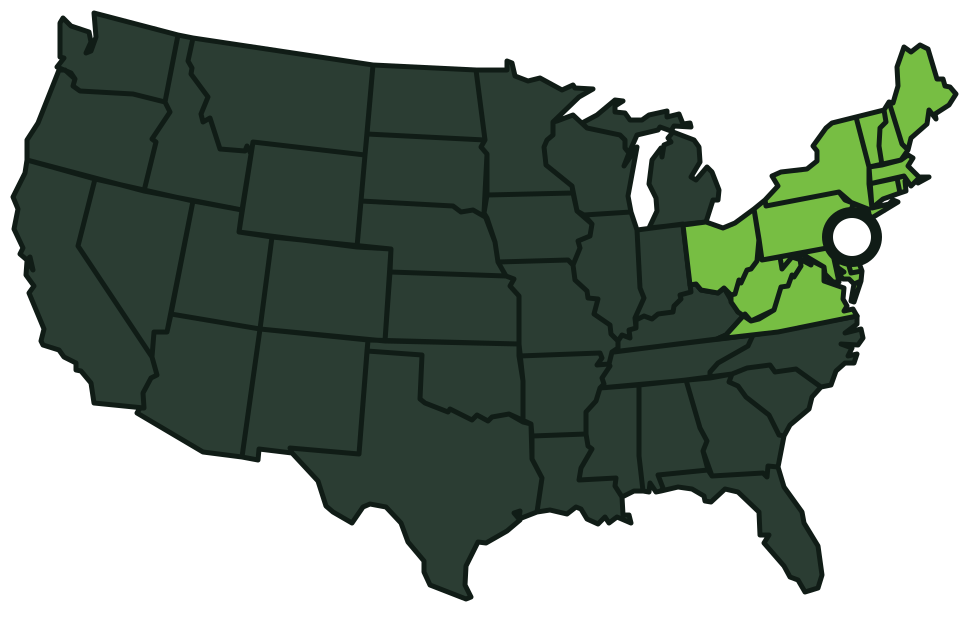
 Philadelphia, PA
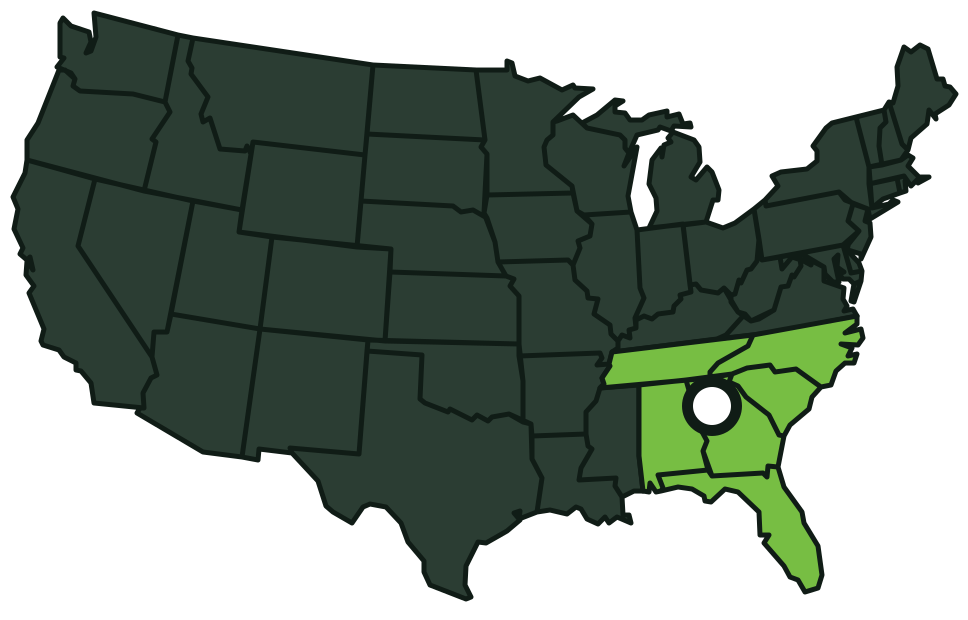 Atlanta, GA
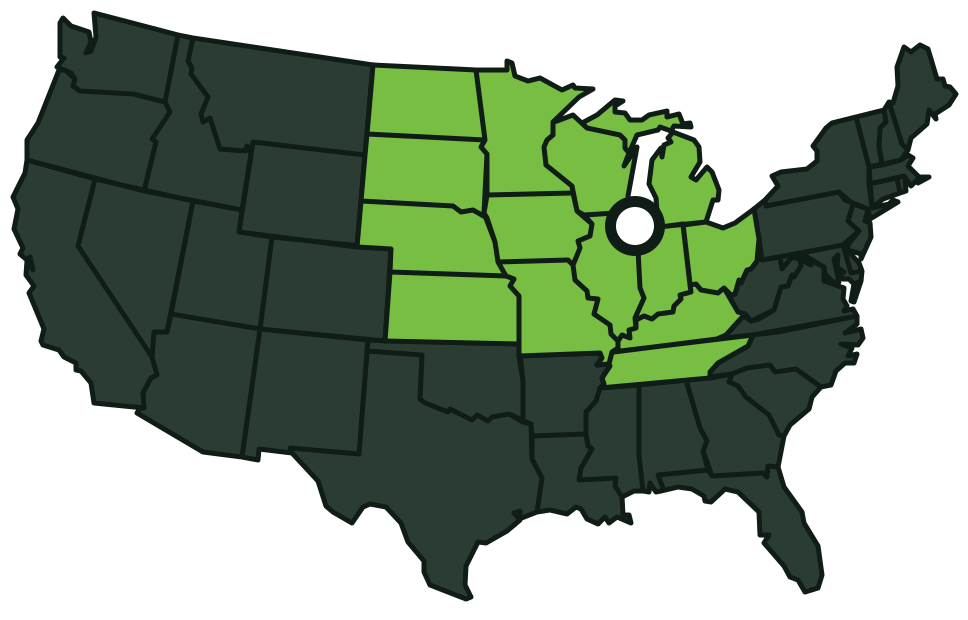 Chicago, IL
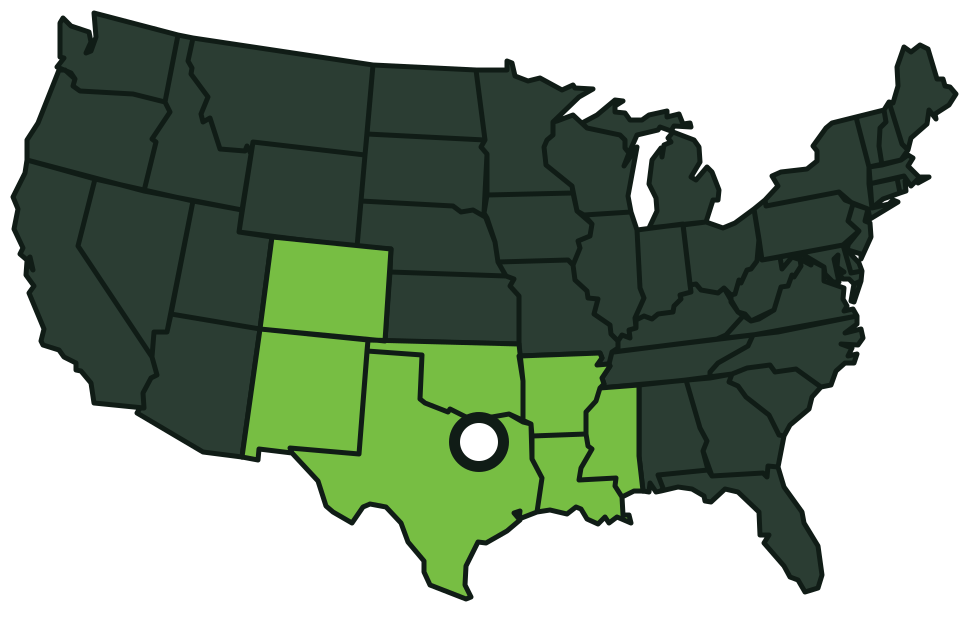 Dallas, TX
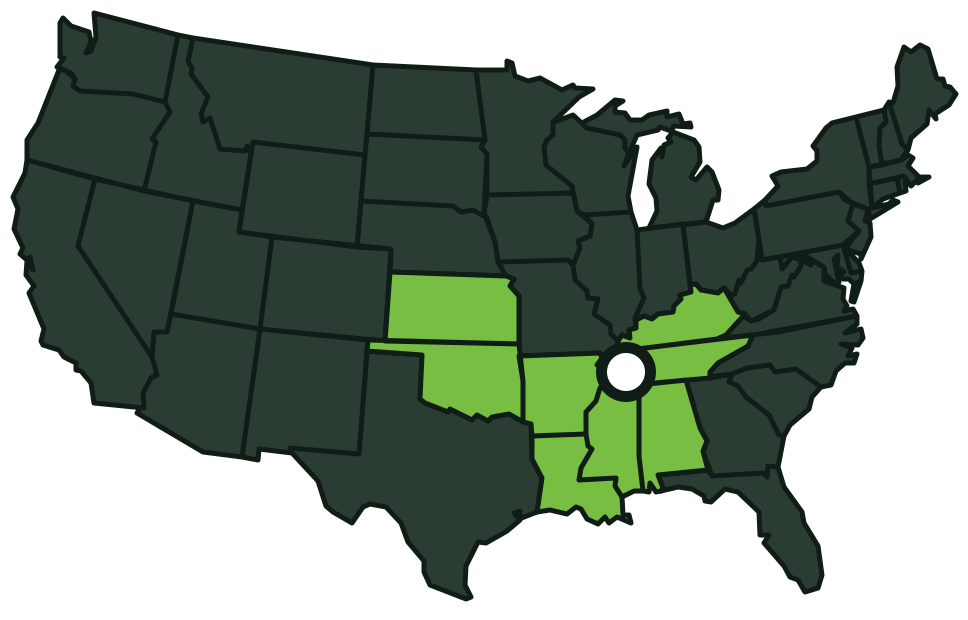 Jackson, TN
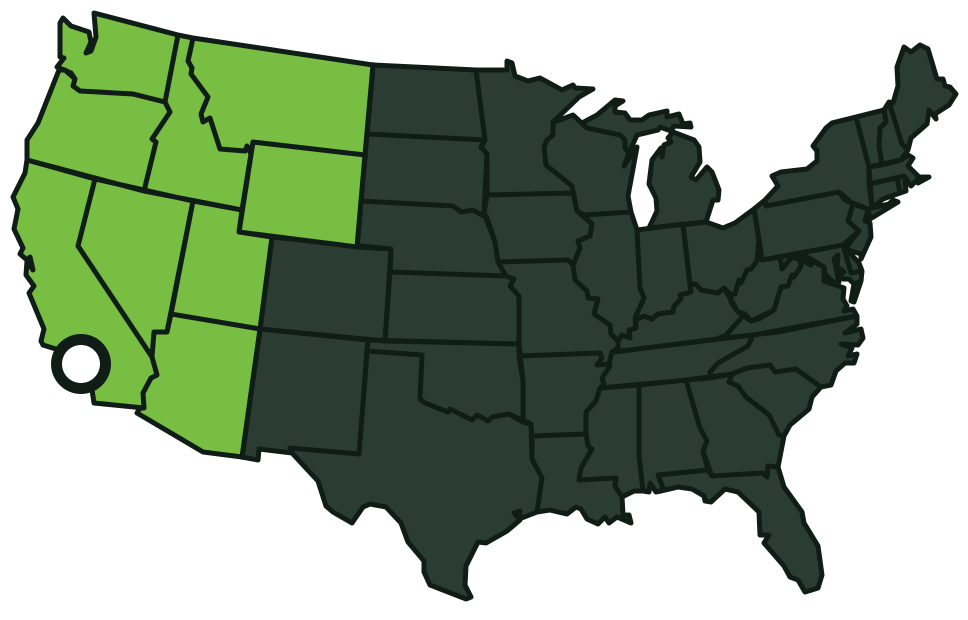 Los Angeles, CA
Combustible Dust Cleaning
The finding is on your desk. The dust is on the rafters. Kelly removes it safely, documents it properly, and puts a schedule in place so the next inspection is a formality.
How this usually starts
- Your customer requires it. If the plant makes packaging that food goes into, the customer holds it to a food safety audit such as SQF, BRCGS, FSSC 22000 or AIB, and the overhead has to pass.
- An insurance inspector, a fire marshal or an OSHA visit has written up overhead dust accumulation and given you a date.
- The Dust Hazard Analysis identified accumulation on elevated surfaces and now a documented cleaning program is required, not optional.
- The plant runs six days a week and there is no window long enough to shut it all down for a cleaning crew.
- The last contractor cleaned what they could reach from a lift and left the rest, and the accumulation on the high steel is exactly where it was.
What it involves
inside a live plant.
The hazard, plainly
A dust explosion needs five things at once: a combustible dust, that dust suspended in the air as a cloud, oxygen, some degree of confinement, and an ignition source. Inside a plant, the first four are usually present and the fifth is a matter of time. A hot bearing, a static discharge, a welding spark, a light fixture with a cracked lens.
The pattern that turns a fire into a catastrophe is the secondary explosion. A small initial deflagration, often inside a piece of equipment or a duct, sends a pressure wave through the building. That wave lifts the dust that has been settling on rafters, ductwork, beams, light fixtures and the tops of equipment for months or years, and suspends all of it at once. The second explosion is fed by every surface in the building. It is the reason the accumulation on the high steel nobody looks at is the accumulation that matters most.
Combustible dust cleaning exists to remove that fuel load before it can be lifted.
Where the dust actually is
Settled combustible dust collects on every horizontal surface above eye level and on a surprising number below it:
- Roof decking, purlins and the top flanges of beams and trusses
- Ductwork, conduit, cable trays and pipe runs
- Light fixtures, sprinkler heads and branch lines
- The tops of equipment, enclosures, control cabinets and dust collectors
- Mezzanines, elevated platforms and the roofs of in-plant offices and mechanical rooms
- Ledges, sills, wall girts and the inside of block walls
- Behind and beneath equipment where housekeeping never reaches
An honest survey of a plant that has not had a dedicated overhead cleaning in a few years usually finds far more accumulation than the floor-level view suggests. That is what the DHA is for, and it is what the first Kelly walk-through establishes.
What the work involves inside a live plant
Survey and plan. Before anything is quoted, a Kelly specialist walks the facility with the plant contact, identifies the surfaces and the accumulation, notes what sits below them, and confirms the plant’s production windows. If a Dust Hazard Analysis exists, the plan is built to it. If one does not, we will tell you that it is required and what it involves.
Sequence. Dust is removed from the top down. Roof deck and high steel first, then ductwork and fixtures, then equipment tops, then floor-level surfaces. Working in any other order moves dust from a surface that was clean back onto one that was already done.
Method. Most overhead dust is removed by blowdown, which across an entire structure is faster and more cost-effective than vacuuming. Every blowdown is planned with the plant: the timing, what is running below, and what has to be shut down or protected before the work starts. Where the plant, the material or the DHA calls for vacuum, Kelly uses explosion-rated industrial vacuum equipment with HEPA filtration, grounded and bonded to the plant to eliminate static as an ignition source. Manual cleaning handles fixtures, sprinkler components and surfaces a tool cannot reach. Where a surface can tolerate water and the plant allows it, pressure washing is used on structural steel. Dry ice blasting is used on overhead electrical components and sensitive fixtures.
Access. Lifts, scaffolding and rope access as the structure and the floor below allow. Working at height above a production line means every tool is tethered and every crew member has a plan for what happens if something drops. A dropped tool or falling debris is a hazard we plan around, not one we react to.
Containment. Floor-level containment and protection for equipment, product zones and open lines below the work, so that what comes off the rafters is captured, not redistributed.
Documentation. Every area cleaned is recorded with date, method and photographs before and after. The record is delivered at the end of the job in a form you can hand directly to your insurer or inspector.
Return. Containment comes down, the area is inspected with the plant contact, and the line is back in service.
The standards a plant is held to
Most plants come to combustible dust cleaning through one of four doors. The biggest is usually their own customer. A plant making boxes that food goes into is held to its customer’s food safety audit, SQF, BRCGS, FSSC 22000 or AIB, and that audit expects a clean plant and a record to prove it. The other three are an insurance inspection, a fire marshal visit, or an OSHA inspection under the Combustible Dust National Emphasis Program.
The technical standard behind those three is now NFPA 660, the Standard for Combustible Dusts and Particulate Solids, which took effect in December 2024 and consolidated the six commodity-specific standards that preceded it, including NFPA 652 (fundamentals), NFPA 654 (manufacturing and processing of combustible particulate solids) and NFPA 664 (wood processing). A great deal of existing paperwork, citations and insurer correspondence still references the old numbers. The requirements they pointed to now live in 660.
Two requirements matter most for cleaning. The first is the Dust Hazard Analysis, which every facility that handles combustible dust must have, and which identifies where accumulation occurs and what controls are required. The second is housekeeping: where the DHA identifies accumulation on elevated surfaces, a documented, scheduled cleaning program is required. Not recommended. Required.
OSHA enforces through its own housekeeping standard, the General Duty Clause, and the National Emphasis Program, which directs inspectors toward the industries where dust incidents concentrate: food and grain, wood, paper and packaging, plastics, metals and chemicals. Kelly’s core customer base sits squarely inside that list.
Industries where this is a standing requirement
Corrugated and paper packaging. Paper dust and starch accumulate fast on corrugators, converting lines and the steel above them. Most corrugated plants Kelly serves are on a recurring program.
Paper and tissue mills. Fiber and dust on machine frames, overhead structure and drives, in an environment that never stops producing it.
Wood products. Sawdust and sanding dust, the original subject of NFPA 664, on every surface in the building.
Food and beverage. Flour, sugar, starch, grain and powdered ingredients, with the added requirement that the cleaning itself meets food safety audit standards.
Plastics and coatings. Resin dust and fine particulate from grinding, compounding and finishing.
Metals. Aluminum, magnesium and other metal fines, which carry their own specific hazards and handling requirements.
After the first clean
The finding is resolved by the first job. The risk is resolved by the program. Once the baseline is established, Kelly sets a recurring interval matched to your DHA, your measured accumulation rate and your production calendar, and returns on schedule. Each visit is documented the same way as the first. Over time, the record itself becomes evidence of a controlled program, which is what an insurer wants to see and what an inspector stops asking about.
Performed to the standards
your plant is held to.
For many plants this is the requirement that matters most. A plant that makes packaging for food is held to whatever food safety audit its customer requires, usually SQF, BRCGS, FSSC 22000 or AIB, and the auditor expects a clean plant and a record that proves it. Kelly documents every cleaning so that record exists when the auditor asks.
The Standard for Combustible Dusts and Particulate Solids, effective December 2024, which consolidated NFPA 61, 484, 652, 654, 655 and 664 into one document. It carries the Dust Hazard Analysis requirement and the housekeeping requirements that a cleaning program is built to satisfy. The older numbers are still referenced in a lot of insurance paperwork and citations; the requirements now live in 660.
OSHA's National Emphasis Program for combustible dust directs inspectors to facilities in the highest-risk industries and cites accumulation under the general housekeeping standard and the General Duty Clause. It is the mechanism behind most of the citations Kelly is called in to resolve.
General housekeeping and materials handling. Dust accumulation that creates a fire or deflagration hazard is a citable condition under these, independent of NFPA.
The Dust Hazard Analysis defines which surfaces matter and how often they must be cleaned. Insurers frequently impose their own accumulation limits and inspection intervals on top of it. Kelly documents each cleaning against both, so the record exists when someone asks for it.
What you get that
a general contractor cannot give you.
Full-time Kelly crews, trained for this specifically
Combustible dust work is not general labor. The crew has to understand where dust hides, what can and cannot be used to remove it, and how to work at height above a running line without dropping anything into it. Every person on the job is a Kelly employee trained to our program. We do not subcontract this work, and we never will.
The right method for the plant
Most plants Kelly cleans are blown down. Across an entire structure it is faster and more cost-effective than vacuuming. Every blowdown is planned with the plant: the timing, what is running below, and what has to be shut down or protected before the work starts. Where the plant, the material or the DHA calls for vacuum, Kelly brings explosion-rated industrial vacuum equipment with HEPA filtration, grounded and bonded to the plant. A conventional vacuum is an ignition source with a bag on it.
The record you need afterward
Every combustible dust cleaning is documented: which areas were cleaned, on what date, by what method, with photographs before and after. That record is what you hand to the insurer, the fire marshal or the OSHA compliance officer, and it is what your DHA-driven schedule is built on.
A schedule, not a rescue
The first clean resolves the finding. The program keeps it resolved. Kelly sets a recurring interval matched to your DHA, your accumulation rate and your production calendar, so overhead dust never reaches a citable level again.
Combustible Dust Cleaning from
six service centers.
Every Kelly service is staffed from all six centers, so the crew that comes to your plant is the one based nearest to it. Coverage is all 48 contiguous states.
See the full territory map and the states each center covers on the service areas pages.
Asked before the quote.
What counts as combustible dust?
Do you blow down or vacuum?
How much accumulation is too much?
Can the plant keep running during the cleaning?
How often does it need to be done?
Tell us about the facility.
We'll tell you straight.
A specialist reviews every request, not a call center. If it is not Kelly work, we will say so and point you in the right direction.