
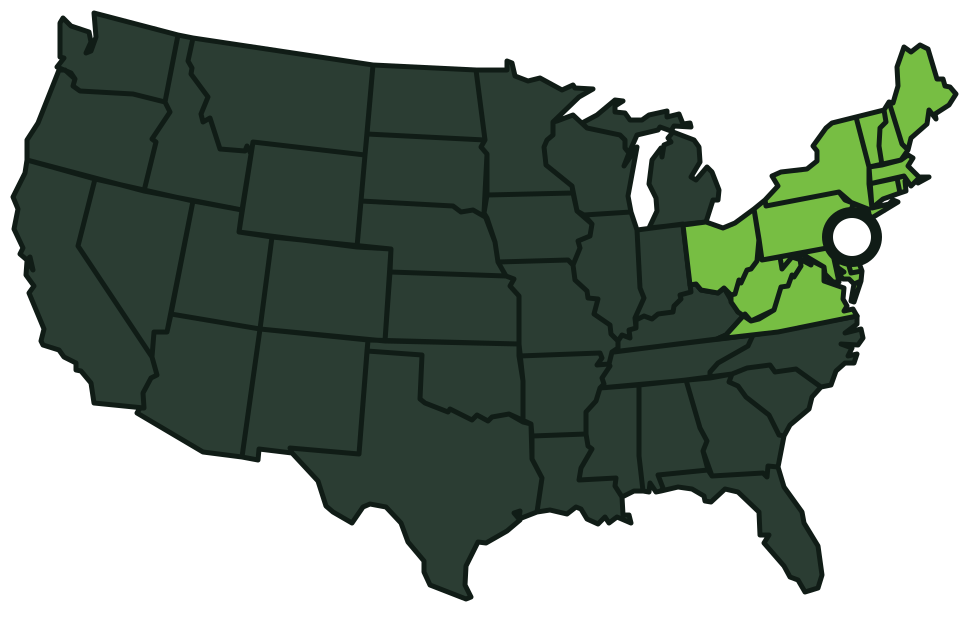
 Philadelphia, PA
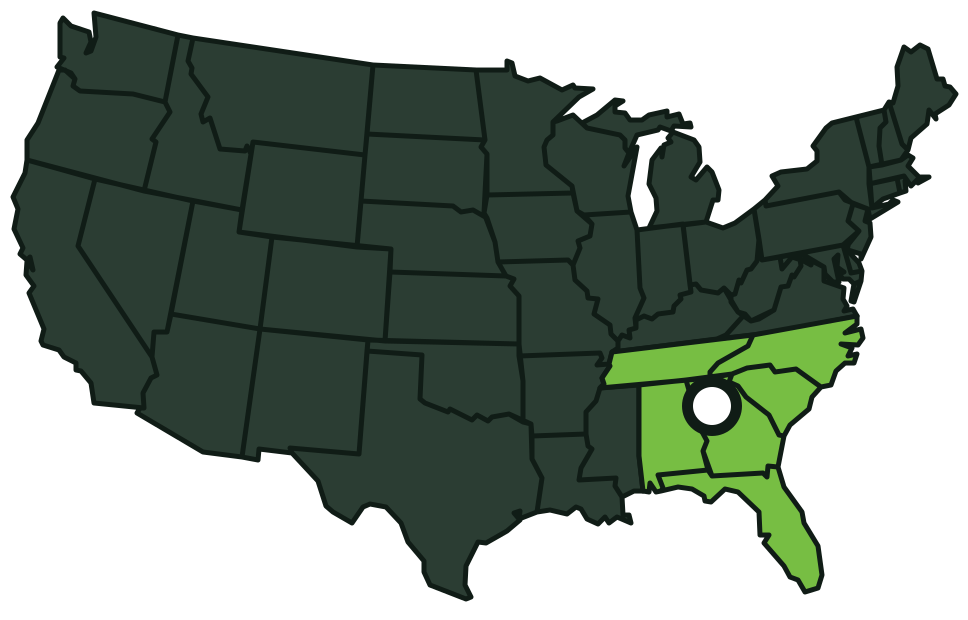 Atlanta, GA
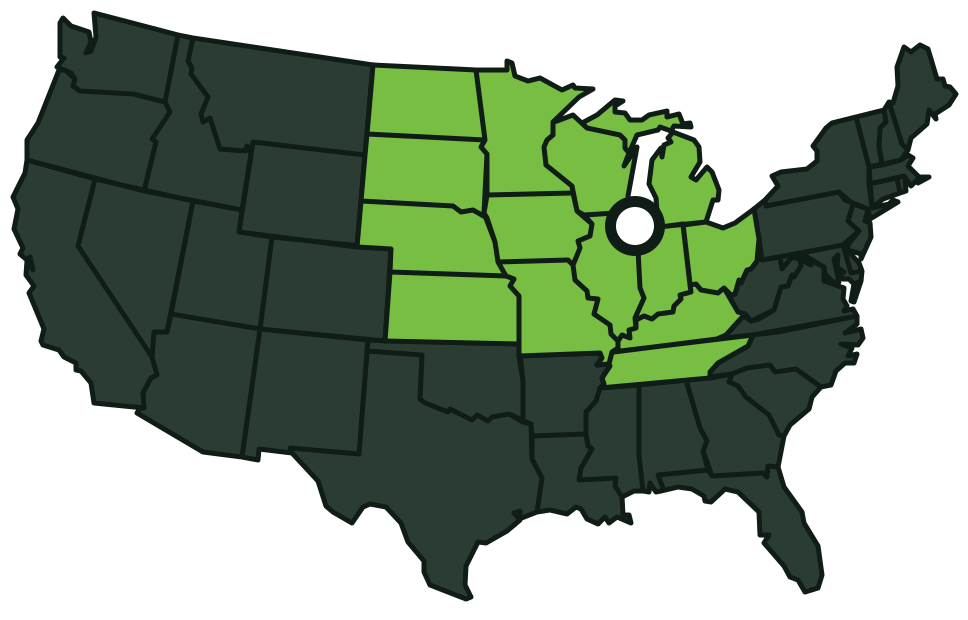 Chicago, IL
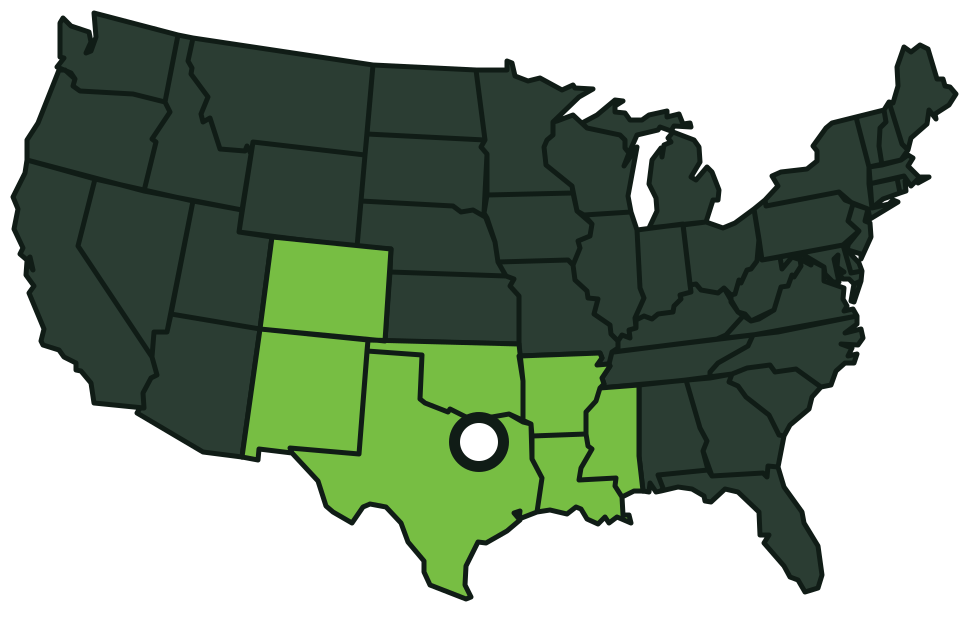 Dallas, TX
 Jackson, TN
 Los Angeles, CA
Ceiling, Overhead and High Dusting
Everything above the line collects what the line produces. Kelly cleans the rafters, the ductwork, the fixtures and the steel, above production and without a single thing landing in it.
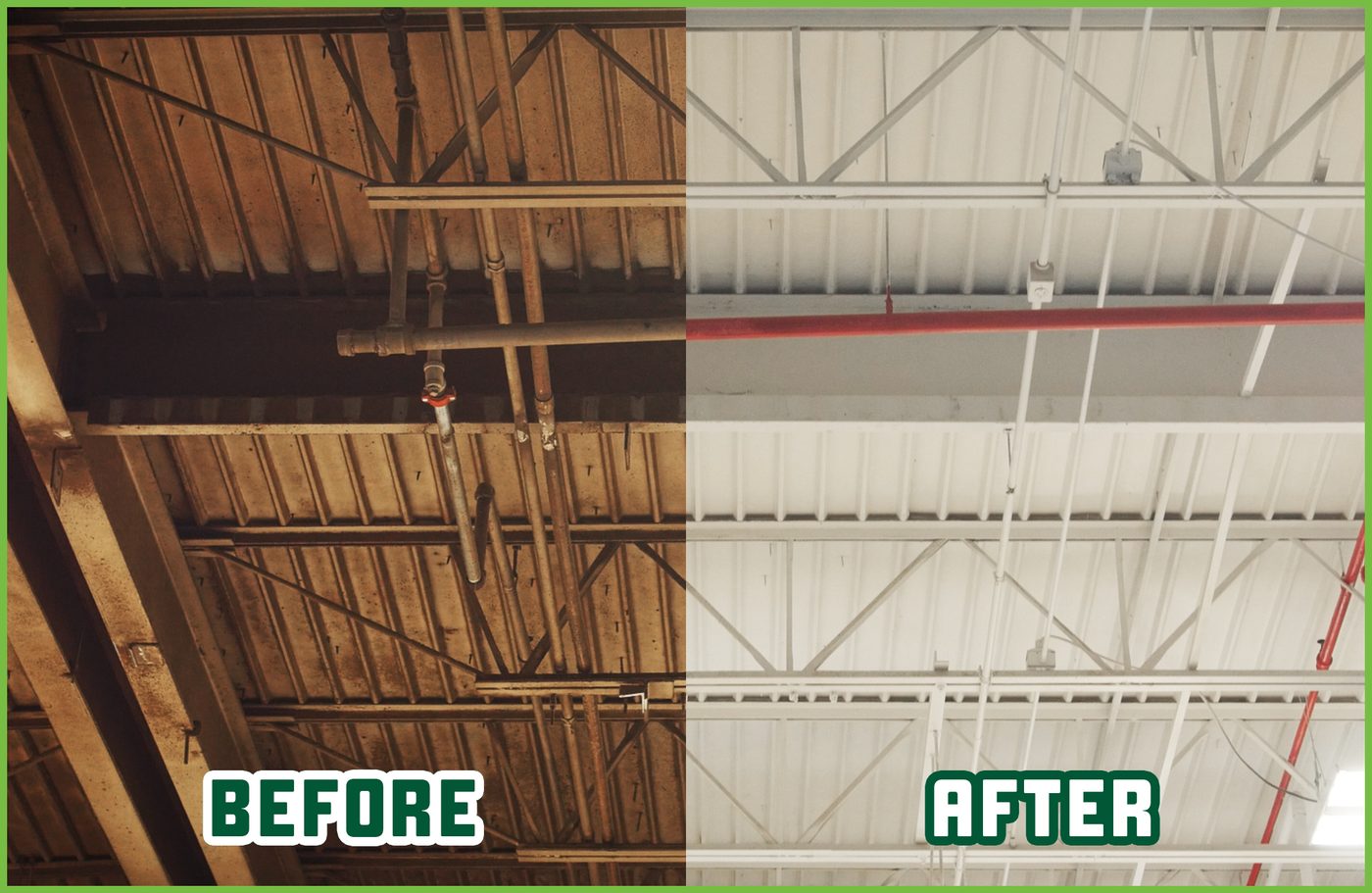
What the overhead looks like from below
- Your customer requires it. A customer audit, a customer visit or a food safety audit is on the calendar, and the dust and debris on the rafters and ductwork are visible from the floor.
- Light output has dropped because the fixtures are coated, and nobody has been up there in years.
- The overhead is accumulating combustible dust and the insurer has noticed.
- The plant cannot shut down for a week so a cleaning crew can work over an idle floor.
- Somebody tried to do it in-house from a scissor lift, got the reachable ten percent, and stopped.
What it involves
inside a live plant.
What accumulates overhead, and why it matters
Every process in a plant throws something into the air. Paper dust, starch, flour, fiber, oil mist, weld smoke, product particulate. What does not get captured at the source rises, settles, and stays. The surfaces above eye level are the ones nobody cleans in the normal course of a shift, and over months and years they build a layer that becomes a problem in one of four ways.
It is what your customer checks. A plant making packaging for food is held to its customer’s food safety audit, SQF, BRCGS, FSSC 22000 or AIB, and customer audits, corporate visits and plant tours all happen under the rafters. For many plants the customer’s requirement is the reason the overhead gets cleaned at all.
It is a food safety finding. In a plant that runs under FDA, USDA, SQF, BRC or AIB, dust and cobwebs above a product zone are an audit item. Condensation drips through them. Flaking paint falls through them. An auditor looks up.
It is a fire load. If the accumulation is combustible dust, the overhead is the fuel for a secondary explosion, and the plant is subject to NFPA 660 and OSHA’s combustible dust enforcement program.
It is a lighting and HVAC problem. Fixtures coated in dust lose output. Ductwork and ventilation surfaces coated in dust move less air and move the dust around when they do.
What the work involves
Walk-through. A Kelly specialist surveys the overhead with the plant contact, identifies the surfaces and the accumulation, notes what is below each area, and confirms the production calendar. The plan is built to the plant’s window, whether that is off-shift, weekends, a planned shutdown or live production with containment.
Sequence. Top down, always. Roof deck and high steel, then ductwork and pipe runs, then fixtures and sprinkler systems, then equipment tops and platforms. Dust removed from a high surface must not land on one that has already been cleaned.
Method, by surface. Dry accumulation on steel, ductwork and decking is blown down from the top, which across a whole structure is faster and more cost-effective than vacuuming, and is how Kelly cleans most plants. Every blowdown is planned with the plant: the timing, what is running below, and what has to be shut down or protected before the work starts. Where the plant or the material calls for vacuum, industrial equipment fitted with HEPA filtration captures particulate at the source, explosion-rated and bonded where the dust is combustible. Structural steel and surfaces that can tolerate water, in plants where water is acceptable, are pressure washed. Overhead electrical components, sensors and sensitive fixtures are cleaned with dry ice blasting, which adds no moisture and no abrasive. Sprinkler heads, light fixtures and awkward corners are cleaned by hand.
Access. Aerial lifts, scaffolding or rope access, chosen for the structure and for what is on the floor beneath it. Every technician working at height is trained and equipped to OSHA fall protection and aerial lift requirements. Tools are tethered.
Containment. Floor-level protection under the work zone, coverage over equipment and open product lines, and debris capture so that what comes down is collected rather than redistributed. In food plants the containment plan is written to the plant’s sanitation program.
Inspection and handback. The area is inspected with the plant contact, containment is removed, and the line is returned to service. For plants on a recurring program, the visit is documented with dates, areas and photographs so the record accumulates alongside the cleaning.
High ceiling cleaning: the surfaces the job covers
- Rafters, trusses, joists, purlins and roof decking
- Structural steel, columns, beams and wall girts
- Ductwork, HVAC surfaces, conduit and cable trays
- Overhead piping, pipe racks and supports
- Light fixtures, lenses and housings
- Sprinkler heads, branch lines and mains
- Mezzanines, catwalks and elevated platforms
- The tops of equipment, enclosures, control cabinets and dust collectors
- The roofs of in-plant offices, break rooms and mechanical rooms
- Ledges, sills and the tops of block walls
Industries where warehouse ceiling and overhead cleaning is routine
Food and beverage. Overhead cleanliness is a permanent audit requirement. Kelly’s overhead work in food plants is planned to the scheme the plant runs under and documented for the file.
Corrugated and paper packaging. Paper dust and starch on the steel above corrugators and converting lines, where it is a combustible dust issue as well as a housekeeping one.
Paper and tissue mills. Fiber and dust on overhead structure in an environment that produces it continuously.
Manufacturing and automotive. Weld smoke, oil mist and process particulate on steel and ductwork above cells and lines.
Warehousing and distribution. Dust and debris on racking tops, roof structure and fixtures across large footprints.
Overhead cleaning as a program
A single overhead cleaning resolves what is there today. Most plants that generate dust need it on a schedule, and the right interval is not a guess. Kelly measures accumulation on the first job, recommends an interval matched to the process and to any audit or insurer requirement, and returns on that schedule with the same crew and the same documentation. Over time the overhead stops being a finding and becomes an item that is simply handled.
Performed to the standards
your plant is held to.
Overhead cleanliness is a standing audit item in food and beverage. Dust, cobwebs, flaking paint and condensation on surfaces above product zones are findings. Kelly's overhead work in food plants is planned to the audit scheme the plant runs under.
Where the overhead accumulation is combustible dust, the work falls under the consolidated combustible dust standard and OSHA's enforcement program. The work is planned around the plant's ignition sources and documented against the Dust Hazard Analysis.
General housekeeping. Accumulation on elevated surfaces that creates a fire, health or falling-object hazard is citable regardless of what the material is.
Aerial lift, scaffold and fall protection requirements govern how the crew gets up there. Every Kelly technician working at height is trained and equipped to them.
What you get that
a general contractor cannot give you.
Ceiling cleaning is where Kelly began
The company was founded in 1985 as National Clean Ceiling. Forty years later, overhead and high-level cleaning is still one of the six core services, and it is the one we have done longest, in more plants, than anyone we know of.
Above a running line, nothing drops
Working over production means tethered tools, planned lifts, floor-level containment and a crew that treats a dropped fastener as a serious event. Kelly regularly cleans overhead structure above lines that never stop. The plan is built so that nothing reaches the floor that the crew did not put there on purpose.
The right method for each surface
Blowdown for dry dust on steel, decking and ductwork, which is how Kelly cleans most plants. Rated vacuum where the plant or the material calls for it. Pressure washing on structural surfaces that can take water. Dry ice blasting on overhead electrical and sensitive fixtures. Manual cleaning for sprinkler heads, lights and the corners a machine cannot reach. One crew carries all of it and uses the right one for each surface.
Full-time Kelly employees, every job
No subcontractors, no day labor, no crew that has never been above a corrugator before. Every person on a lift inside your plant is a trained Kelly technician who has done this work in facilities like yours.
High Dusting and Overhead from
six service centers.
Every Kelly service is staffed from all six centers, so the crew that comes to your plant is the one based nearest to it. Coverage is all 48 contiguous states.
See the full territory map and the states each center covers on the service areas pages.
Asked before the quote.
Can you clean the overhead while the plant is running?
What surfaces are included?
Do you clean the light fixtures?
How is the debris kept out of the product?
How often should overhead cleaning be done?
Tell us about the facility.
We'll tell you straight.
A specialist reviews every request, not a call center. If it is not Kelly work, we will say so and point you in the right direction.