
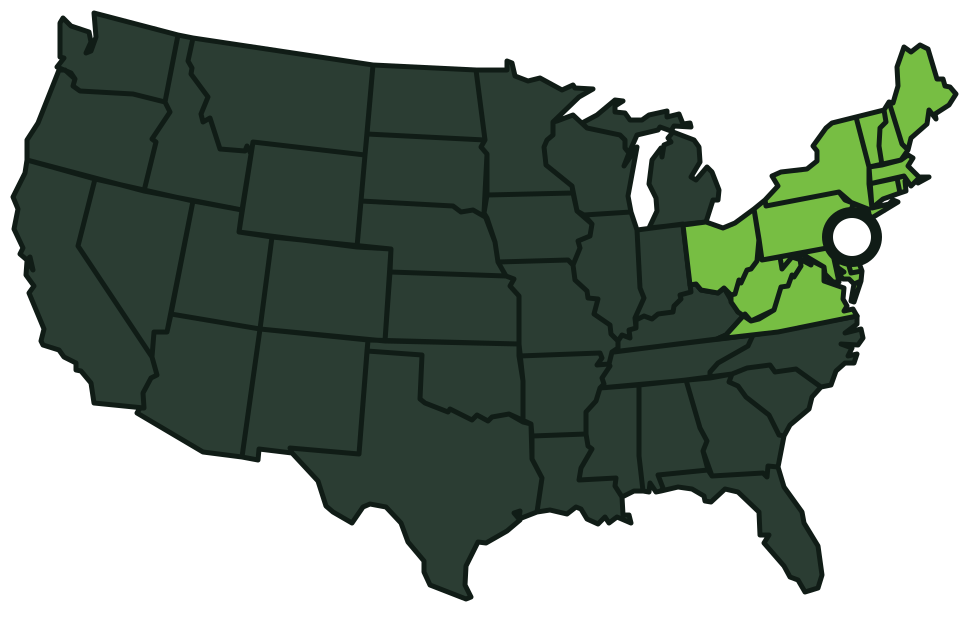
 Philadelphia, PA
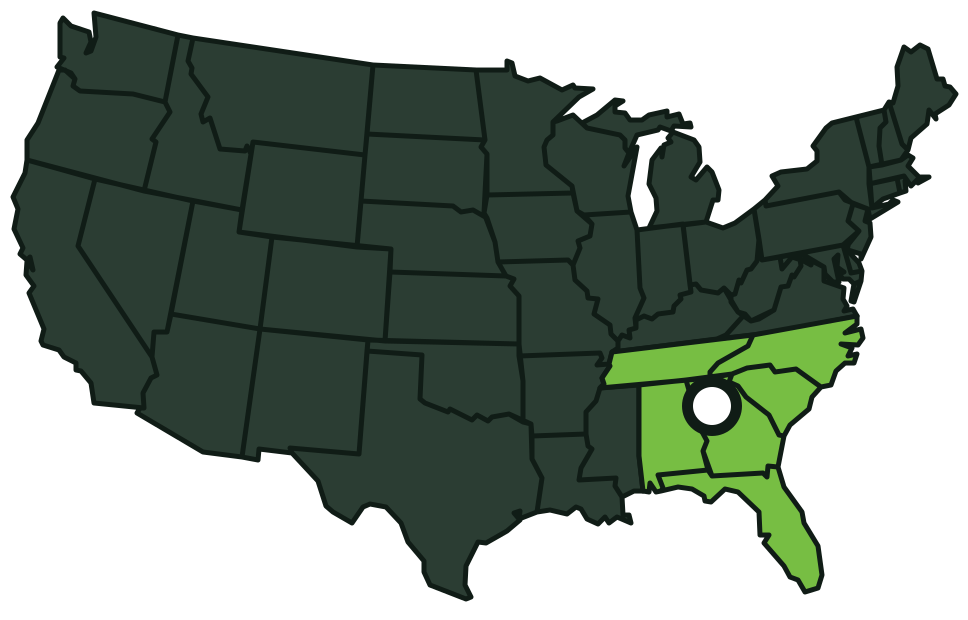 Atlanta, GA
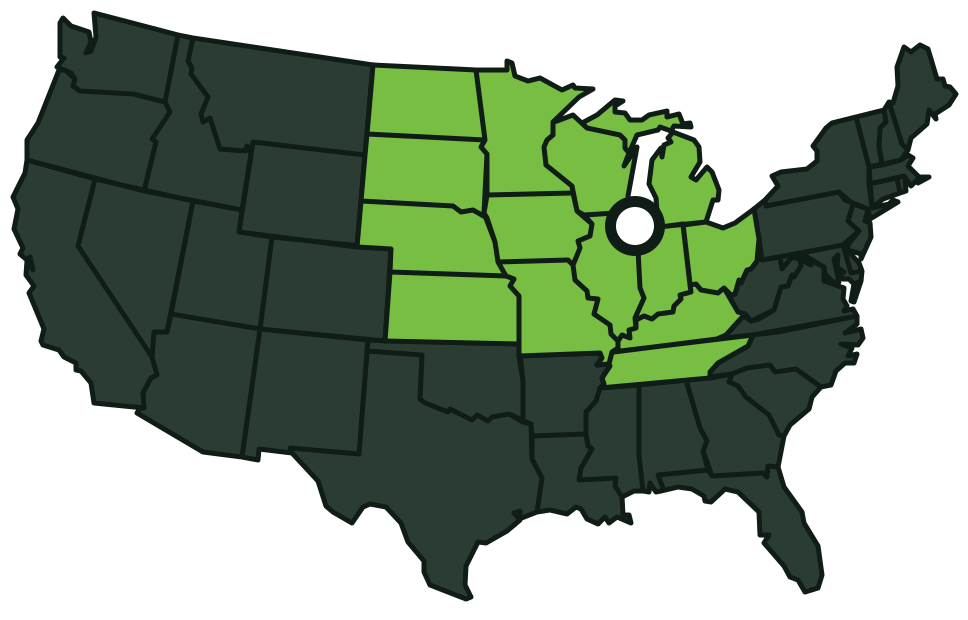 Chicago, IL
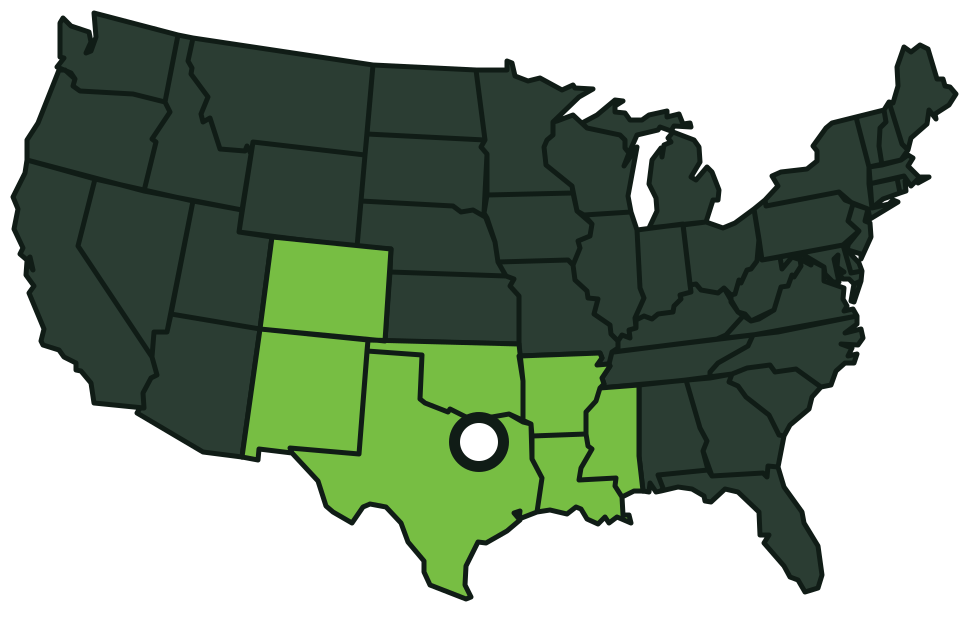 Dallas, TX
 Jackson, TN
 Los Angeles, CA
Boiler and Equipment Coatings
Coatings specified for the temperature they will actually see, applied inside the outage window you already have, on assets that rust quietly until they do not.
Why heat-exposed assets get missed
- The boiler can only be painted cold, and the only cold window is the outage, which is already full.
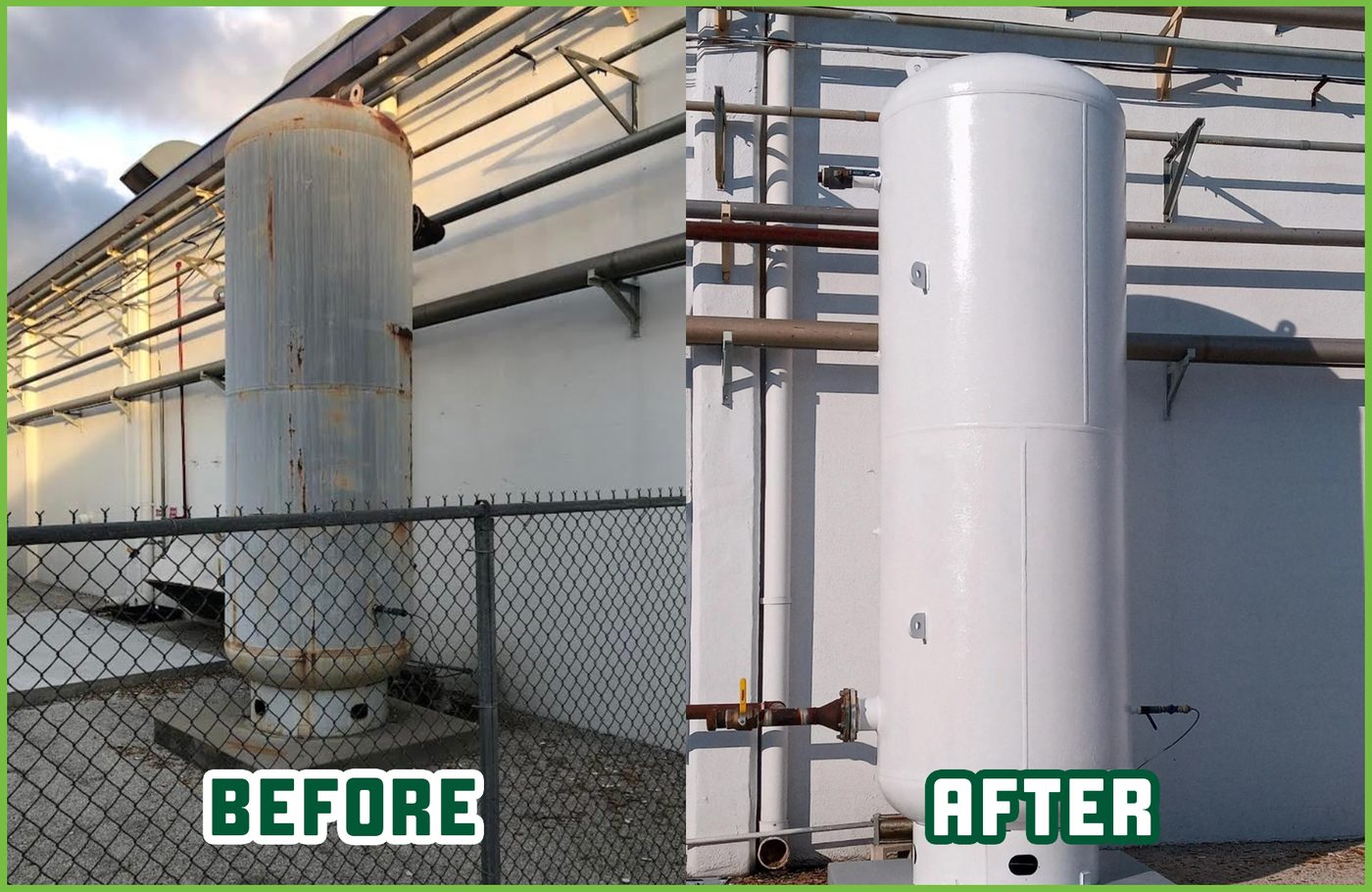
- Ordinary industrial coatings were used on a hot surface and have discolored, blistered or peeled within a year.
- Corrosion is running under insulation and jacketing where nobody can see it.
- The boiler room looks like nobody has been in it since commissioning, and an insurance inspection is coming.
- Stacks, breeching and piping are rusting and the plant has no access equipment to reach them.
What it involves
inside a live plant.
What high-heat coating work actually protects
Boilers, stacks, breeching, process piping and thermal equipment sit in the hottest, wettest and most chemically aggressive part of most plants. They are also among the least visited. A boiler room gets attention when something fails in it, and corrosion works quietly for years before that happens.
A correctly specified coating system does three things on this equipment. It stops corrosion at the steel surface, which is the only thing that matters structurally. It survives thermal cycling without blistering, chalking or peeling, which ordinary industrial coatings do not. And it makes the asset inspectable, because you cannot assess the condition of steel you cannot see.
What gets coated
- Boiler shells, casings and fronts
- Stacks, breeching and flue connections
- Steam and condensate piping
- Process piping carrying hot media
- Platforms, ladders, handrails and access structures
- Pumps, housings and mechanical enclosures
- Heat exchangers and thermal equipment
- Surrounding walls, floors and structure in the boiler room
The temperature question
Everything about this work follows from one number: the actual service temperature of the surface being coated. Not the rating of the equipment, not the design temperature, but what the steel reaches in operation.
Up to around 500F. Silicone alkyd systems. Well-proven, good color retention, straightforward application, suitable for the majority of boiler shell and piping work.
Up to around 1200F. High-temperature aluminum coatings. Reflective, protective and formulated to survive sustained high heat, used on stacks, breeching and the hottest sections.
Primers. Epoxy primers where temperature allows, providing the corrosion-resistant foundation that the topcoat depends on. Zinc-rich primers in moisture-heavy environments where galvanic protection is worth having.
Specifying a system below the surface’s real service temperature is the single most common failure in this work, and it fails visibly and quickly: discoloration in the first heating season, then blistering, then peeling. Kelly specifies to measured or documented temperature and will ask for the data rather than estimating it.
What the work involves
Survey and specification. Surfaces identified, service temperatures established, existing coating condition and corrosion assessed, access requirements determined, and the outage window confirmed. From that comes the specification: preparation standard, primer, topcoat, thickness and coat count.
Scheduling against the outage. Boilers can only be coated cold. Kelly builds the plan backwards from the cold window: how long the unit takes to come down to working temperature, how long preparation takes, cure time between coats, and when the unit is needed back. If the window is too short for the full scope, we say so before the outage rather than during it.
Isolation and entry. The unit is isolated and locked out to the plant’s procedure and verified cold. Where the scope includes internals, breeching or ductwork, confined space entry procedures apply: permit, atmospheric testing, attendant and rescue provision.
Preparation. Existing failed coating and corrosion removed to the standard the system requires, from solvent cleaning and power tool cleaning through to abrasive blast where the surface and the room allow it. Thermal cycling punishes adhesion, so preparation on high-heat work is less forgiving than on ambient surfaces, not more.
Containment and protection. Dust and debris from preparation contained. Adjacent equipment, controls, instruments and insulated surfaces protected. Ventilation established for the room.
Application. Primer and topcoats applied at specified thickness within the manufacturer’s application and cure conditions. Thickness verified as work proceeds.
Cure and return to service. High-heat coatings typically require a controlled first heat-up to fully cure. That schedule is coordinated with the plant so the first firing after the outage does the curing rather than damaging the work.
Documentation. Product data and safety data sheets, surface preparation records, thickness readings and inspection records.
Corrosion under insulation
The most consequential thing a coating crew finds on a boiler is what is happening under the insulation and jacketing. Moisture trapped against warm steel produces corrosion that is invisible from outside and often far worse than anything on the exposed surfaces.
Where jacketing comes off as part of a coating scope, Kelly documents what is underneath. Removal and reinstatement of insulation is coordinated with the plant and its mechanical contractor rather than done by the coatings crew, but the finding belongs in the report either way, because it is usually the most valuable thing the outage reveals.
Using the outage well
An outage is expensive and short, and most plants under-use it. Because Kelly performs high dusting, equipment cleaning, pit cleaning and facility painting as well as heat-exposed coatings, a single shutdown can carry several scopes on one plan with one point of contact and one crew moving between them.
That is worth raising at the survey, even when the call was only about the boiler.
Performed to the standards
your plant is held to.
A high-heat coating is only rated to the temperature it is specified for. Silicone alkyds serve up to around 500F. High-temperature aluminum coatings serve up to around 1200F. Specifying below the actual service temperature is the most common cause of failure on this work.
High-heat systems are less forgiving of poor preparation than ordinary coatings, because thermal cycling will find any adhesion failure. Preparation is to the standard the system specifies, which on boiler work usually means abrasive or power tool cleaning to a defined profile.
Confined space entry and lockout. Boiler internals, breeching and ductwork are confined spaces, and the unit is isolated and verified cold before any work begins.
Respiratory protection during preparation and application, and fall protection for stack, platform and elevated work.
What you get that
a general contractor cannot give you.
Planned around the outage, not around us
Boilers can only be painted shut down and cool. Kelly schedules against your planned maintenance and outage calendar, sequences the work so preparation and coating fit the cold window, and is off the unit before it is needed back.
Specified for the actual service temperature
The single question that decides this work is what temperature the surface actually reaches, not what the equipment is called. Kelly specifies to measured or documented service temperature, with the right primer underneath, because a 500F system on a 900F surface fails in one heating season.
Certified technicians, direct employees
No subcontracted painters. Every technician on heat-exposed work is a Kelly employee trained in industrial coatings application, confined space and elevated work.
The whole room, not just the vessel
Boiler shells, stacks, breeching, piping, platforms, handrails, housings, enclosures and the surrounding walls. Coating the vessel and leaving the structure around it rusting is half a job.
Boiler and Equipment Coatings from
six service centers.
Every Kelly service is staffed from all six centers, so the crew that comes to your plant is the one based nearest to it. Coverage is all 48 contiguous states.
See the full territory map and the states each center covers on the service areas pages.
Asked before the quote.
Does the boiler have to be shut down?
What coatings do you use?
How often should a boiler be repainted?
Do you handle insulation and jacketing?
Can you do this at the same time as other work?
Tell us about the facility.
We'll tell you straight.
A specialist reviews every request, not a call center. If it is not Kelly work, we will say so and point you in the right direction.