About Kelly

Forty years inside
other people's plants.

Kelly Industrial Services has been cleaning, painting and coating industrial facilities since 1985. The company has grown from one service to twelve and from one location to six, and the thing that has not changed is who walks through your gate.

The company

It started with
one job nobody wanted.

Cleaning forty feet above a running production line is awkward, slow and unforgiving of mistakes. It is also where the material that ends up in your product, your audit and your insurer's photographs actually sits. Kelly started there and worked outward.

  1. 1985

    Founded as National Clean Ceiling

    The company started doing exactly one thing: cleaning the ceilings and overhead structure of manufacturing plants, in the Philadelphia area. It was specialist work then for the same reason it is now. The material that matters is above the line, and reaching it safely while a plant runs is a trade of its own.

  2. Through the 1990s and 2000s

    The service list grew out of the work

    Customers who trusted a crew above their production line started asking what else it could do. Combustible dust cleaning, equipment and conveyor cleaning, industrial painting and coatings, food-grade work and vacuum services were added because plants asked for them, not because a market study suggested them.

  3. 2010

    Renamed Kelly Industrial Services

    The original name had stopped describing the company. By then the work covered far more than ceilings, and the name changed to match what crews were actually doing inside plants. Overhead and high dusting is still one of the core services.

  4. Today

    Six service centers, 48 contiguous states

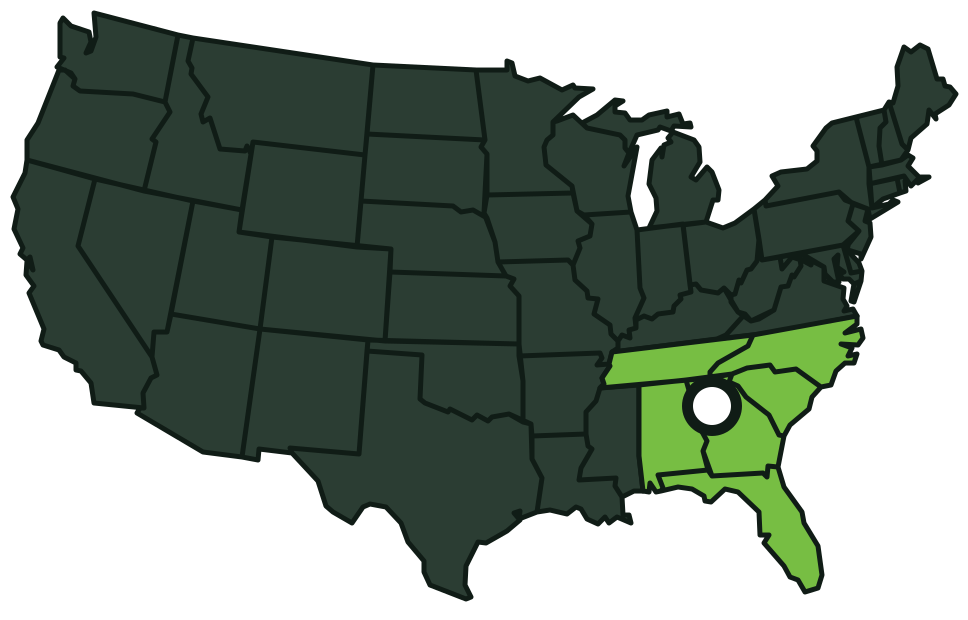
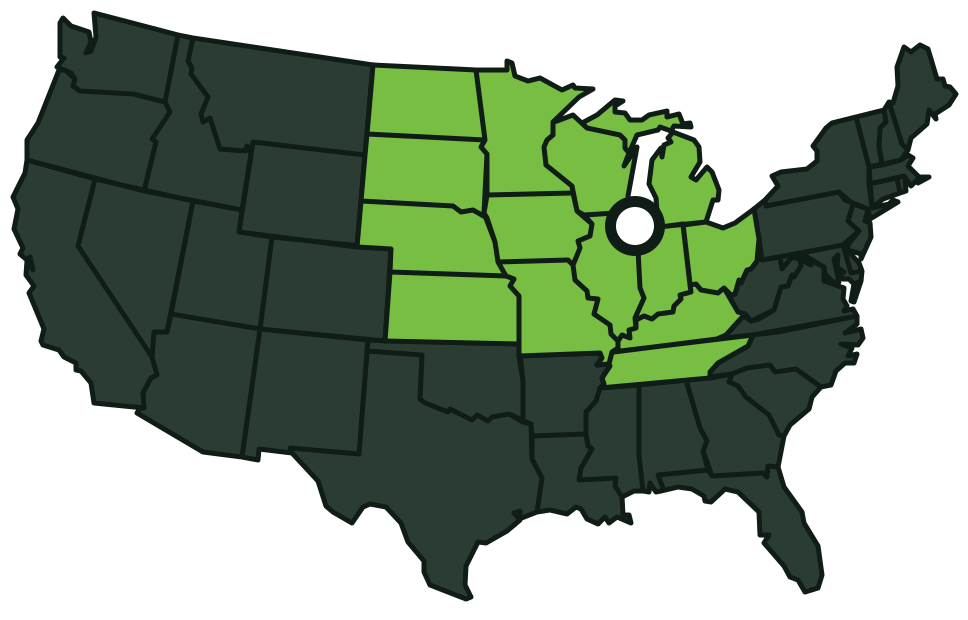
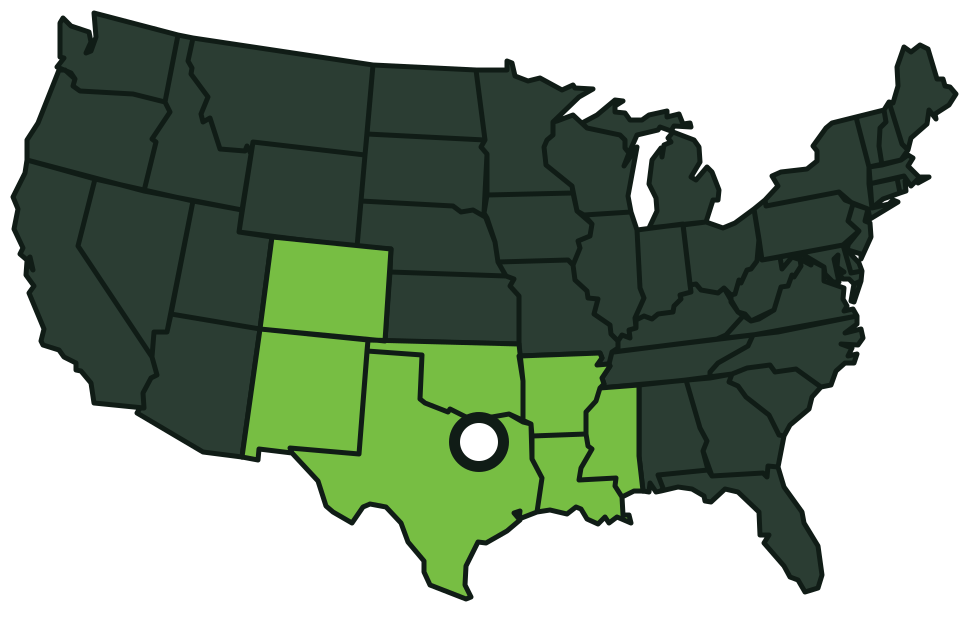
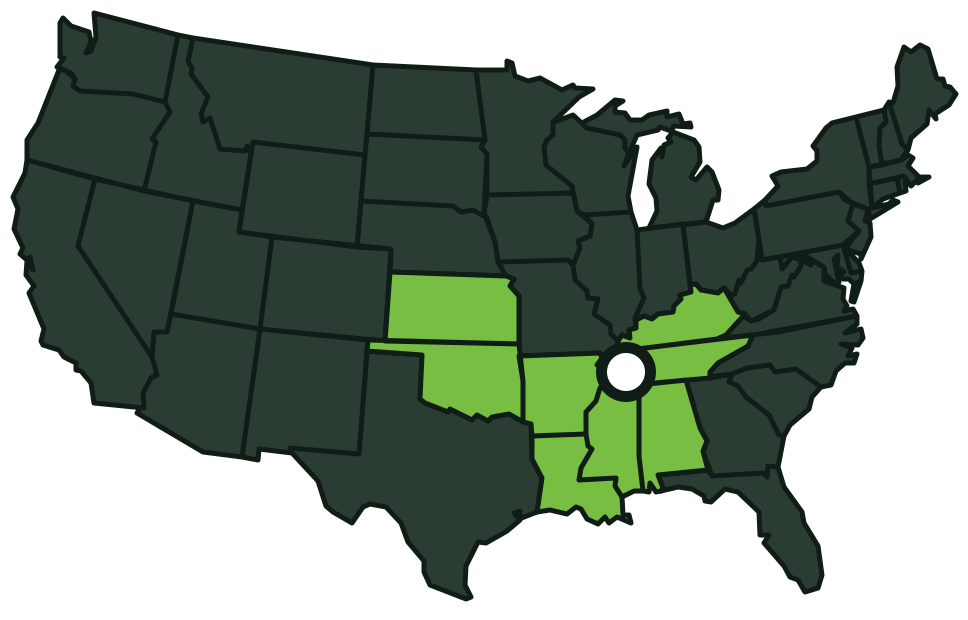
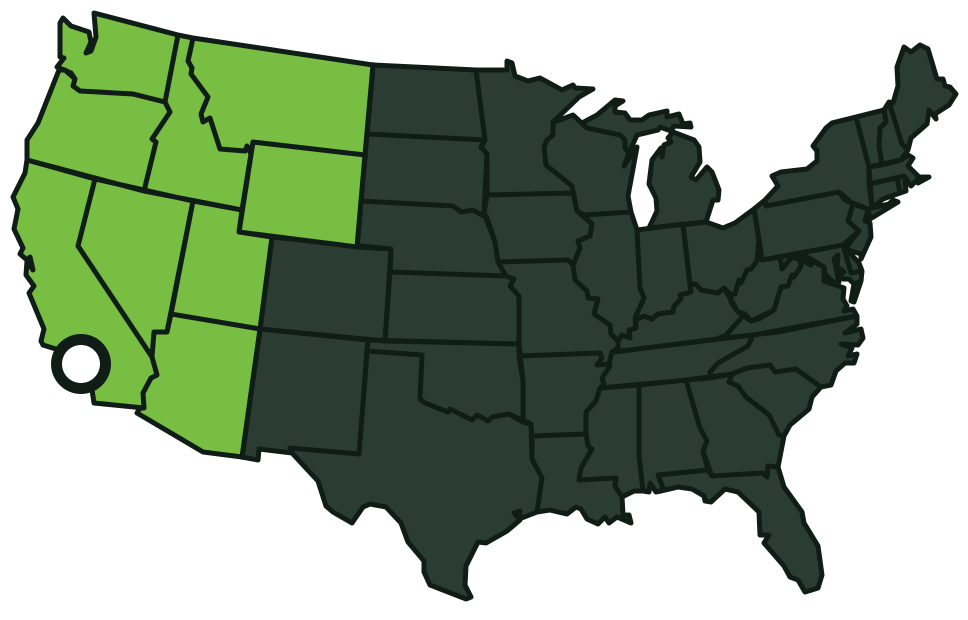
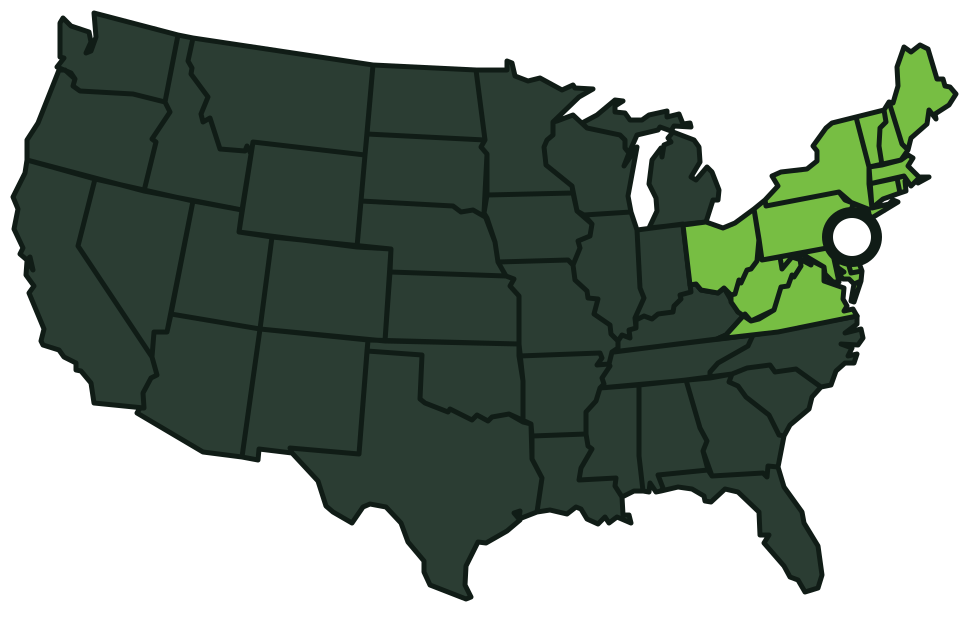
    Philadelphia, Atlanta, Chicago, Dallas, Jackson in Tennessee and the Los Angeles area, each running its own crews and holding an assigned territory. Every state in the contiguous United States is assigned to one of them.

How Kelly works

Four decisions that
shaped the company.

Every technician is a Kelly employee

No brokered labor, no subcontracted crews, no different faces each visit. The crew that quotes the job is the crew that arrives. It is the most expensive way to run this business and the only way to be accountable for what happens on your floor.

The documentation is part of the job

Entry permits, atmospheric logs, disposal records, thickness readings and dated photographs come back with the work. Most of this is commissioned because something has to be closed out, and cleaning that cannot be evidenced closes nothing.

The plant keeps running

Work is scheduled into the window that already exists: the sanitation shift, the changeover, the weekend down, the planned outage. A scope that needs a window the plant does not have is a scope that gets deferred, so we plan against the real calendar.

We will tell you when it is not our work

Some jobs need a mechanical contractor, an engineer or a different method than the one we sell. Saying so costs a quote and keeps a customer, which over forty years has turned out to be the better trade.

The one that matters most

Why there are
no subcontractors.

Most industrial cleaning capacity in this country is brokered. A contractor wins the work, a staffing firm supplies the bodies, and the person on the lift above your line was hired that week by someone you have never spoken to. It is cheaper, it scales instantly, and it is why plant managers have the stories they have.

Kelly does not work that way, and the cost of not working that way is real. Crews have to be carried between jobs. Training is an overhead rather than someone else's problem. Turning down work that cannot be staffed properly is a regular occurrence rather than a hypothetical.

What it buys is the only thing that matters in a plant that cannot afford a mistake: the same people, trained on the same procedures, insured by the same company, returning to the same building. When a food plant's auditor asks who was above the line and what they were trained on, there is an answer. When a customer audit extends to contractor personnel, the records exist. When a crew arrives at a corrugator they worked on last quarter, they already know the building.

It is also why the answer to "how fast can you be here" is sometimes not the answer a caller wants. A company that subcontracts can promise tomorrow. Kelly will tell you when a trained crew is genuinely available, which is occasionally further out and always accurate.

Who Kelly works for

Plants where the standard
is set by someone else.

Kelly's customers are mostly facilities under continuous external scrutiny: their own customers, a food safety scheme, a property insurer, an OSHA program, or all of them at once. Among the customers Kelly names publicly are International Paper, Georgia-Pacific and Mercedes.

Reviews from the plants we serve

Verified on Google
"Matt's team at Kelly Industrial is awesome! Punctual, prepared and do great work. We have used them dozens of times through the years for industrial plant cleaning, blowdown, painting, COVID-19 sanitation, etc."
PRPatrick RansonGoogle review
"Kelly industrial has been a vendor for quite some time and I have always been pleased with their work. The workmanship and professionalism of the team members really stands out. Keep up the good work!"
ECErik CorbyGoogle review
Where it is available

Every service from
six service centers.

Every Kelly service is staffed from all six centers, so the crew that comes to your plant is the one based nearest to it. Coverage is all 48 contiguous states.

See the full territory map and the states each center covers on the service areas pages.

What Kelly does

Twelve services,
one point of contact.

Most jobs combine two or three of these in one visit, on one plan. That is the practical argument for a single contractor rather than four: the sequencing is settled before anyone arrives, not negotiated in an aisle at two in the morning.

Request a quote

Tell us about the facility.
We'll tell you straight.

A specialist reviews every request, not a call center. If it is not Kelly work, we will say so and point you in the right direction.

Prefer to talk 888-422-2623 Emergency and shutdown response, nationwide.
The more you can tell us about the facility and the timeline, the better a specialist can scope the job before calling you back.
Reviewed by a Kelly specialist. No mailing lists, no spam.
888-422-2623 Request a Quote