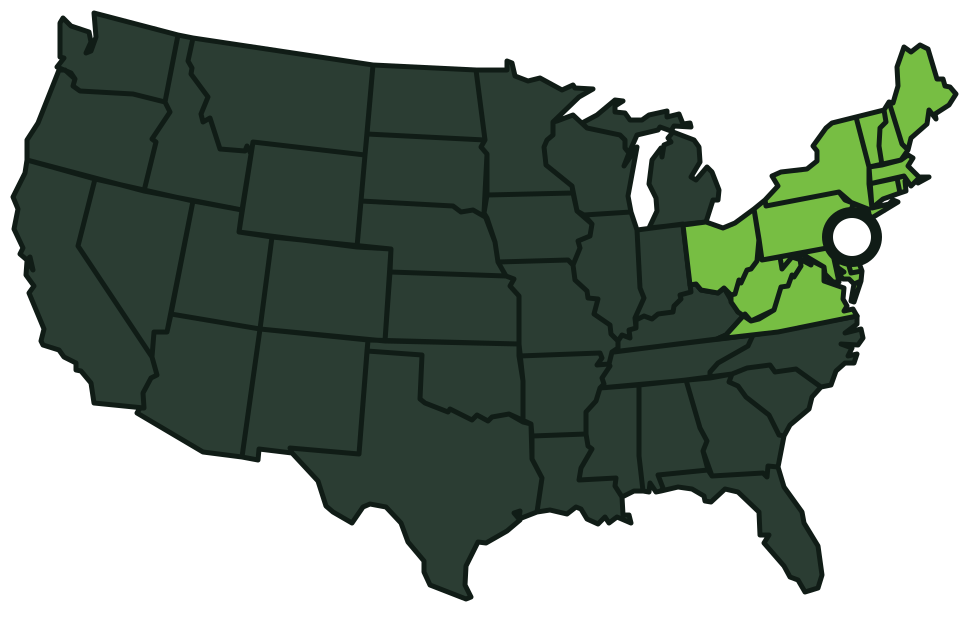
 Philadelphia, PA
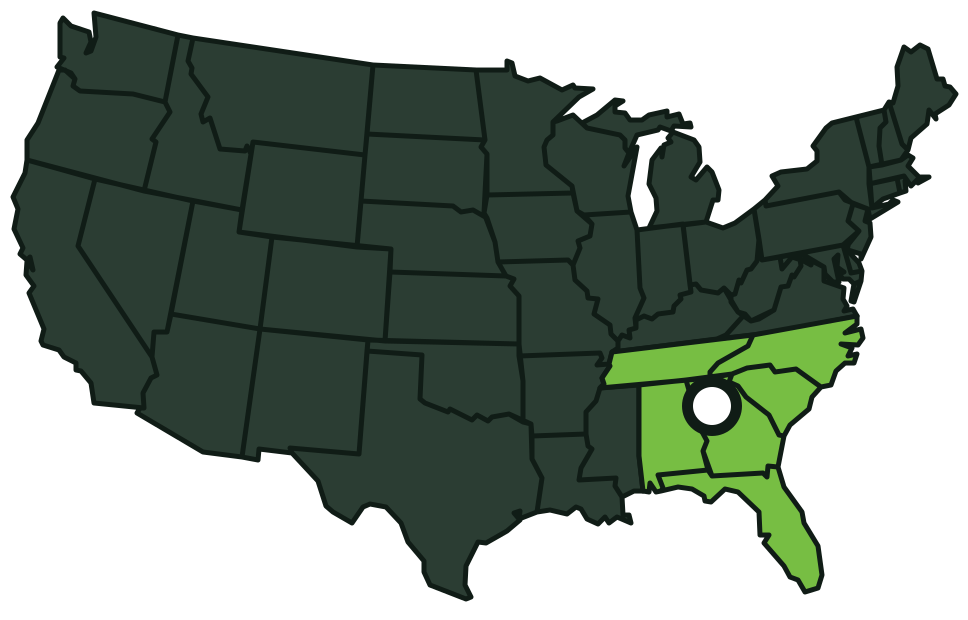 Atlanta, GA
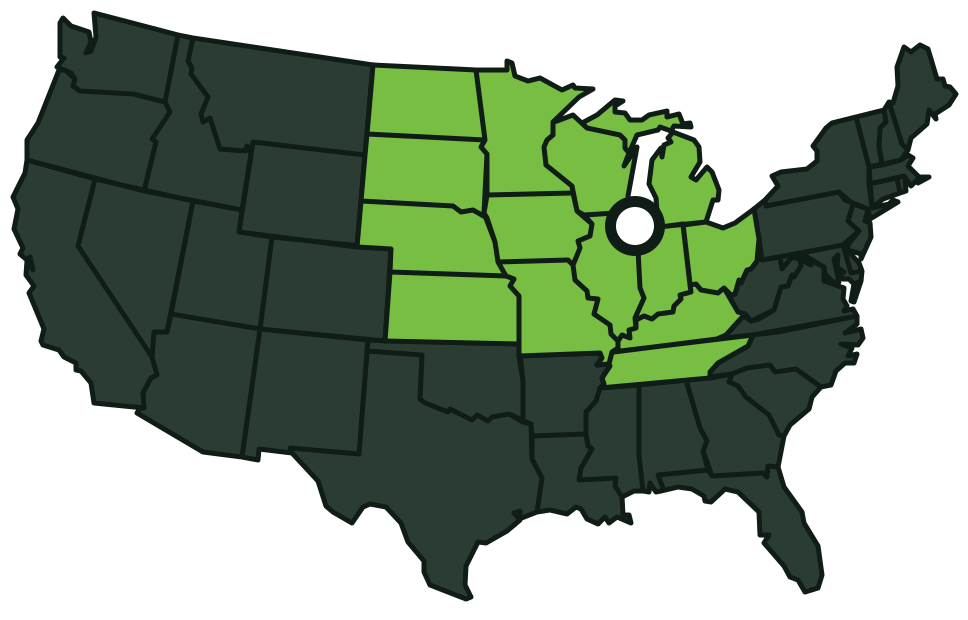 Chicago, IL
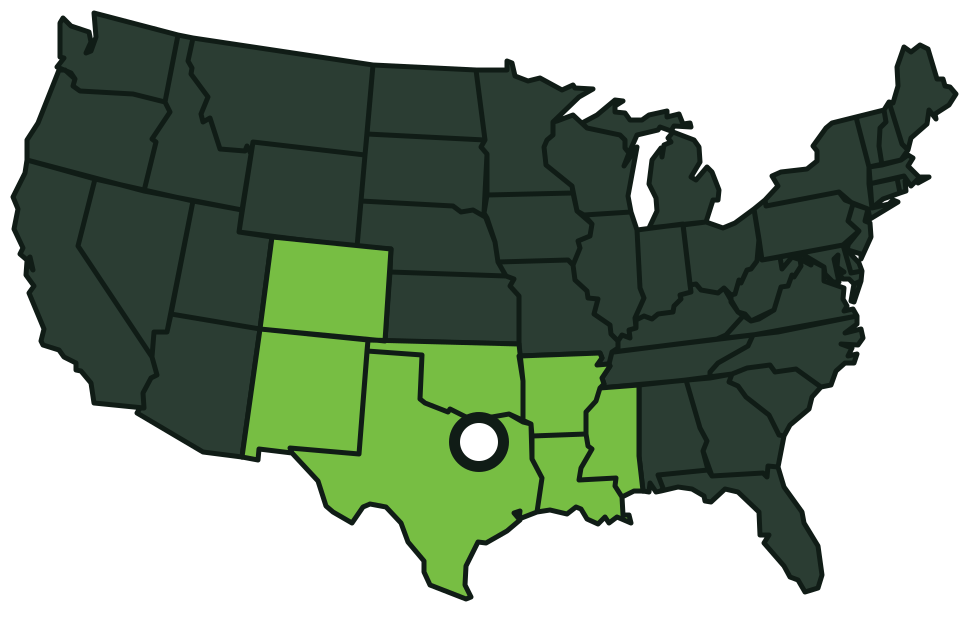 Dallas, TX
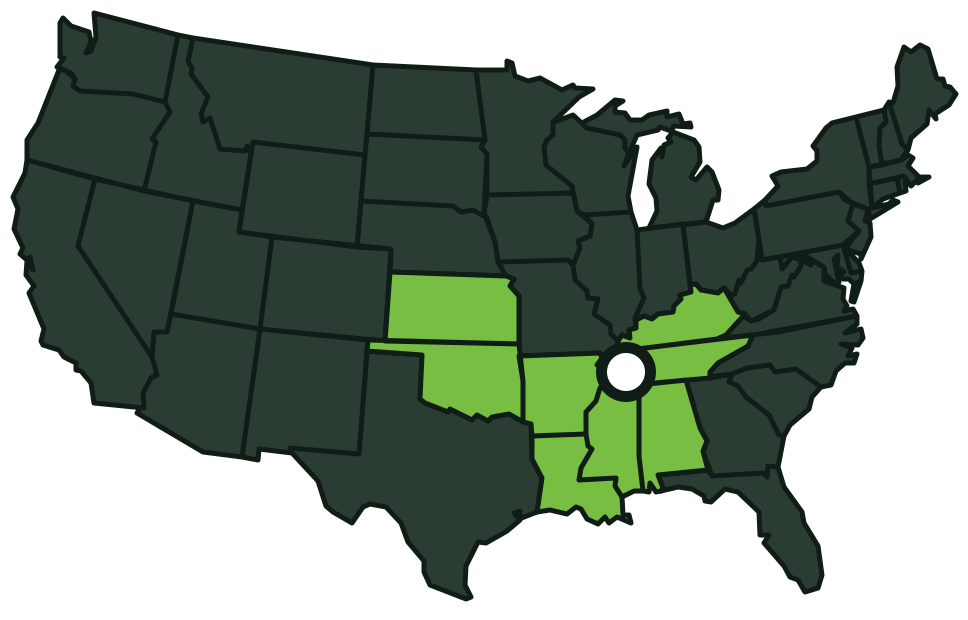 Jackson, TN
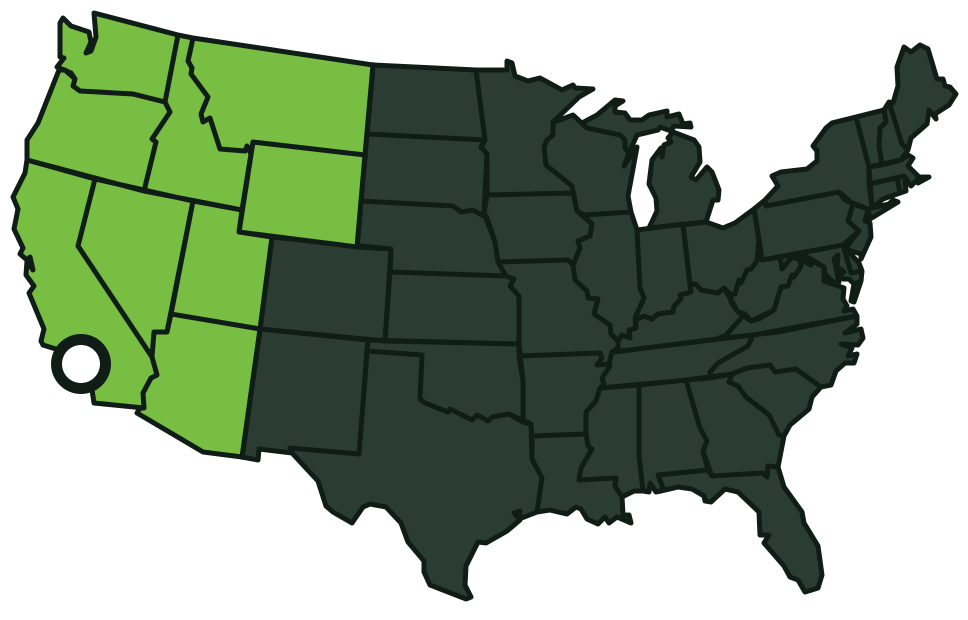 Los Angeles, CA
Equipment, Conveyor and Line Cleaning
The line is the asset. Kelly cleans conveyors, machinery and production equipment inside the window you already have, so the changeover you planned is the only downtime you take.
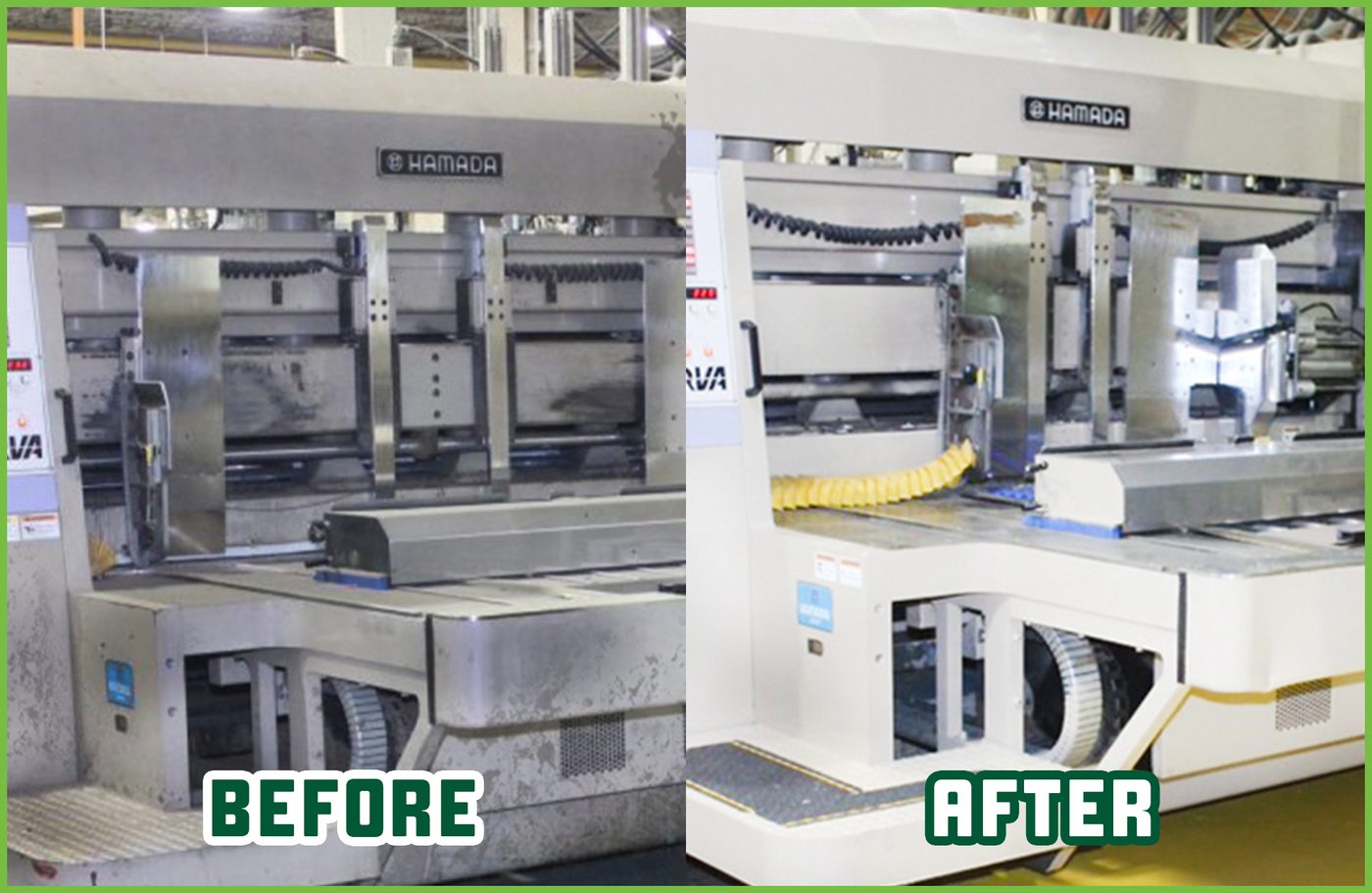
What the line looks like by the time we get the call
- Product residue, adhesive and fiber have built up on rollers and belts until the line is dropping product or jamming on changeover.
- Lubricant and oil have collected on frames and guards, and the housekeeping crew cannot get into the equipment to reach it.
- An allergen or product changeover is coming and the line has to be clean enough to document, not just clean enough to look at.
- Maintenance is finding wear that turns out to be contamination, and nobody can tell which until it is cleaned.
- The only window is the changeover, and the last contractor needed twice that long.
What it involves
inside a live plant.
Machinery cleaning: what gets cleaned, and what it is contaminated with
Production equipment accumulates whatever the process handles, plus whatever keeps it running. On a corrugator it is starch, adhesive, ink and paper fiber. On a filling line it is product, sugar and packaging debris. On a molding line it is release agent, resin and flash. Everywhere, it is lubricant, hydraulic oil and the grease that migrates out of bearings and drives.
The equipment Kelly cleans most often:
- Conveyor systems, belts, rollers, chains, drive components and take-ups
- Packaging, filling, capping and labeling lines
- Mixers, blenders, hoppers and feed systems
- Molds, dies and tooling
- Machine frames, housings, guards and bases
- Ovens, dryers and thermal equipment with baked-on residue
- Extruders, rolls and converting equipment
- Dust collection and pneumatic conveying components
The work ranges from a single machine that has become the plant’s bottleneck to a full line stripped and cleaned during a planned shutdown.
What the work involves inside a live plant
Scope against the window. The first conversation establishes two things: what has to be clean, and how long the line is down. Those set everything else. Kelly sizes the crew and selects the methods to fit the window you already have, rather than quoting a scope and then asking for a longer stop.
Isolation. Equipment is locked out and tagged out to the plant’s own energy control procedure. Where the scope includes a mixer, hopper, tank or large housing, the confined space program applies, and entry is permitted, attended and monitored. Nothing goes inside a machine that has not been isolated by the people whose procedure governs it.
Protection. Adjacent lines, open product, controls, sensors and electrical are covered before anything is cleaned. On a line that is partially running, containment separates the work from the product.
Cleaning, by surface. Dry ice blasting on molds, tooling, electrical components and anything that cannot take water or abrasion. Pressure washing on frames, bases and surfaces that tolerate water. Manual degreasing for oil and lubricant on drives, chains and housings. Industrial vacuum for dry residue, dust and debris in and around housings, with rated equipment where the dust is combustible. Most lines need three of the four in a single visit, which is the reason Kelly carries all of them.
Verification. In food and regulated environments, the cleaning is followed by the plant’s own verification step, whether that is visual inspection, swabbing or an ATP check. Kelly’s crew supports it and documents what was cleaned, when and how.
Handback. Protection comes down, the area is walked with the plant contact, lockout is released by the plant, and the line restarts.
Working to the changeover window
Most equipment cleaning is not a shutdown job. It happens in the gap that already exists: a changeover, a product run-out, a weekend, a maintenance day. The constraint is not what can be cleaned but what can be cleaned in the time available.
Kelly plans backwards from the window. A four-hour changeover with a six-hour scope means either more technicians, a narrower scope for this visit, or a different window, and we will say which before the quote rather than after the line fails to restart. Crews work nights, weekends and holidays because that is when the windows are.
For plants running a recurring program, the cleaning is scheduled against the production calendar for the year, which usually means it stops competing with production at all.
Industries
Corrugated and packaging. Starch, adhesive, ink and fiber on corrugators, converting lines and conveyors, with combustible dust as a parallel concern on and around the same equipment.
Food and beverage. Product residue, sugar and fats on filling lines, conveyors and process equipment, under the plant’s own sanitation scheme with allergen protocols where they apply.
Plastics and coatings. Release agents, cured resin and flash on molds, tooling and process equipment, where abrasive methods are not an option.
Automotive and manufacturing. Oil, grease, weld spatter and process debris on cells, presses, conveyors and automation.
Consumer goods and pharmaceutical. Equipment cleaning to documented standards in plants where the record matters as much as the result.
Equipment cleaning as a program
A line that is cleaned once returns to where it was. Plants that put equipment cleaning on a schedule see the difference in changeover times, in jam rates and in what maintenance finds during inspections. Kelly sets the interval from what the first visit reveals, matches it to the production calendar, and returns with the same crew and the same documentation each time.
Performed to the standards
your plant is held to.
Lockout and tagout. Every piece of equipment Kelly cleans is isolated to the plant's own energy control procedure before a technician puts a hand or a tool inside it. Where cleaning has to happen on a running line, the scope is written so that no one reaches past a guard.
Permit-required confined spaces, which is what a mixer, hopper, tank or large housing usually is. Entry is permitted, attended and monitored to the plant's program.
In food and beverage plants the cleaning itself is part of the food safety system. Methods, chemicals and sequence are chosen to the plant's scheme, allergen changeover protocols are followed, and the work is documented for the file.
Where the residue on and around equipment is combustible dust, the consolidated combustible dust standard governs how it is removed: the work is planned around the plant's ignition sources, any vacuum used is rated for the material, and the equipment cleaning is coordinated with the overhead program rather than treated separately.
What you get that
a general contractor cannot give you.
Built to the window, not to a day rate
Kelly sizes the crew and picks the methods to fit the changeover you already have. If the window is four hours, the plan is four hours of work with the right number of technicians, not an eight-hour job that runs over and costs you a shift.
Four methods on one truck
Dry ice for molds, tooling and anything electrical. Pressure washing for frames and surfaces that take water. Manual degreasing for oil and lubricant. Vacuum for dry residue and dust. Most lines need three of the four, and a contractor who only owns one of them will use it everywhere.
Technicians who know what they are cleaning
Forty years on corrugators, fillers, packaging lines, mixers and conveyors means a Kelly crew recognizes a sensor, a bearing seal, a drive and a load cell. They clean around what must not be touched and know when to stop and ask.
Full-time Kelly employees, no exceptions
No subcontractors and no labor agencies inside your line. Every technician was trained by us, is insured by us and answers to us, which is the only way a crew is allowed inside equipment that costs more than the building.
Equipment and Conveyor Cleaning from
six service centers.
Every Kelly service is staffed from all six centers, so the crew that comes to your plant is the one based nearest to it. Coverage is all 48 contiguous states.
See the full territory map and the states each center covers on the service areas pages.
Asked before the quote.
Can you clean the line during a changeover?
Do you disassemble equipment?
What about allergen changeovers?
Which method do you use?
How quickly can a crew mobilize?
Tell us about the facility.
We'll tell you straight.
A specialist reviews every request, not a call center. If it is not Kelly work, we will say so and point you in the right direction.