
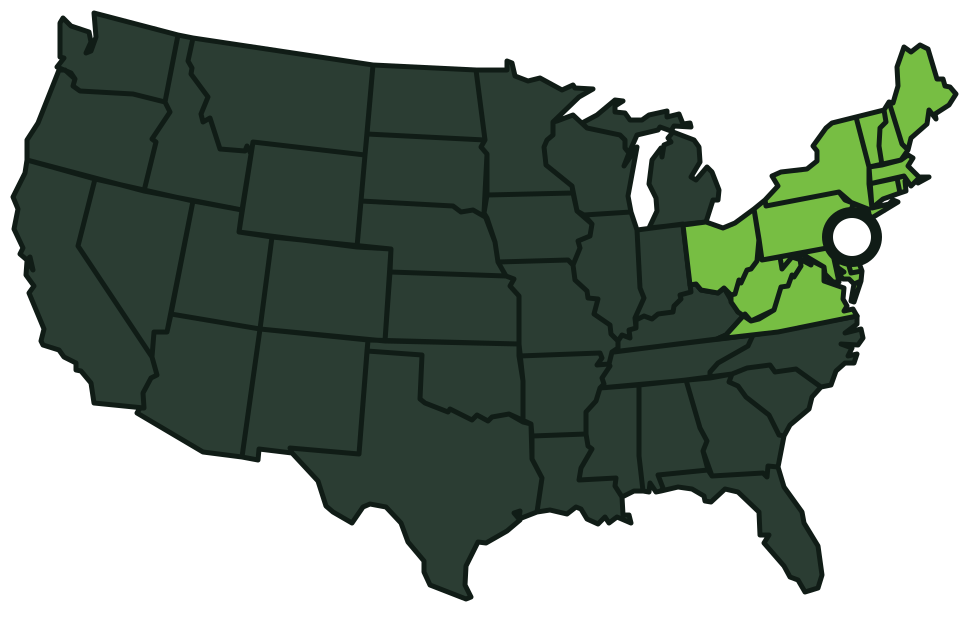
 Philadelphia, PA
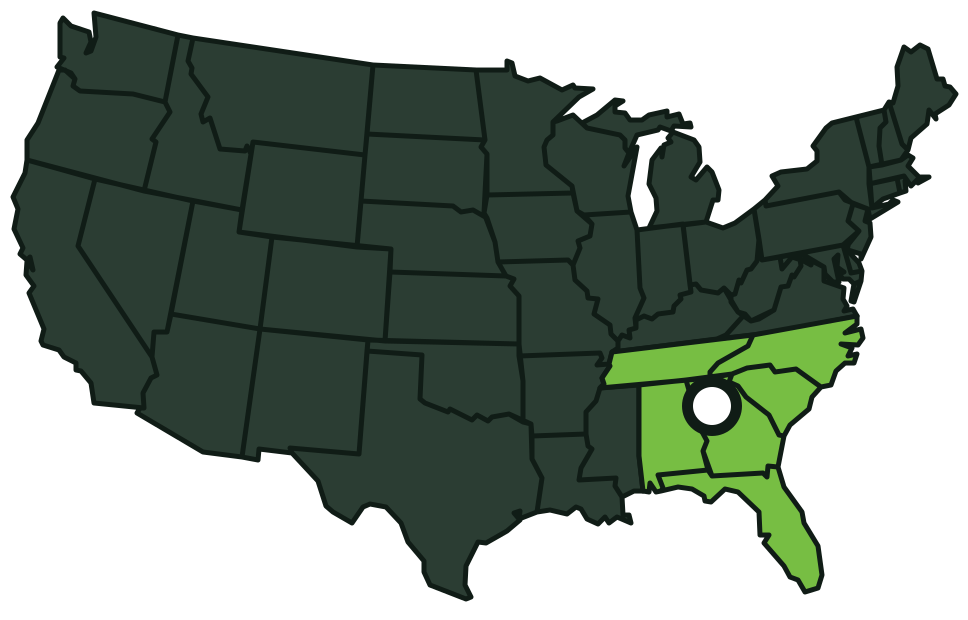 Atlanta, GA
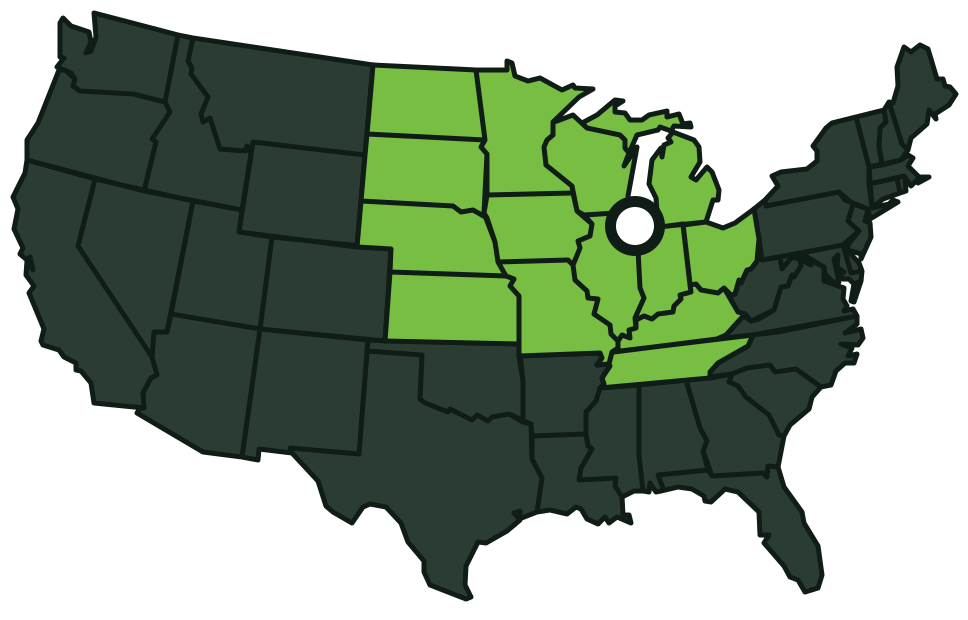 Chicago, IL
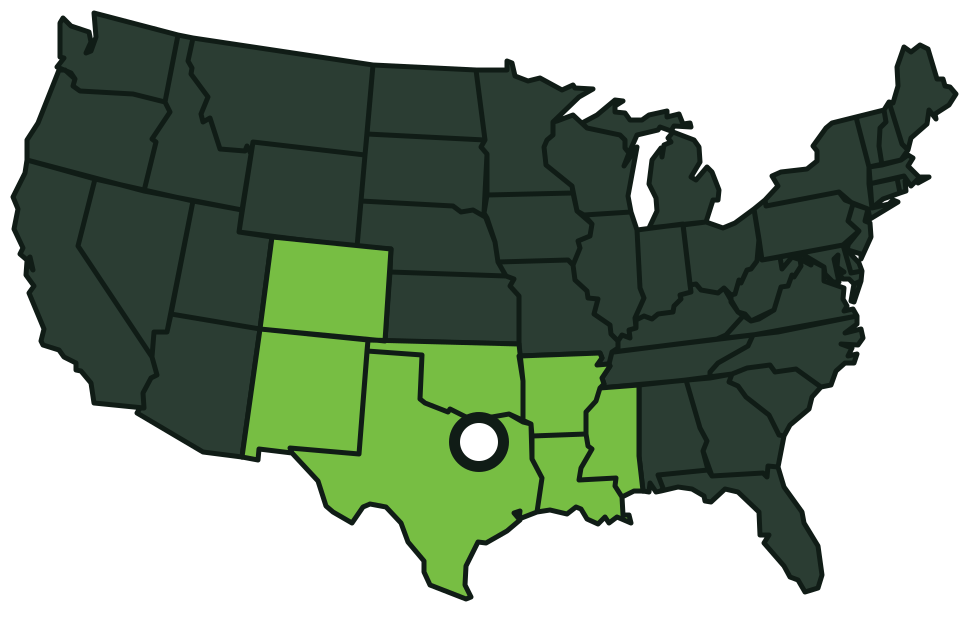 Dallas, TX
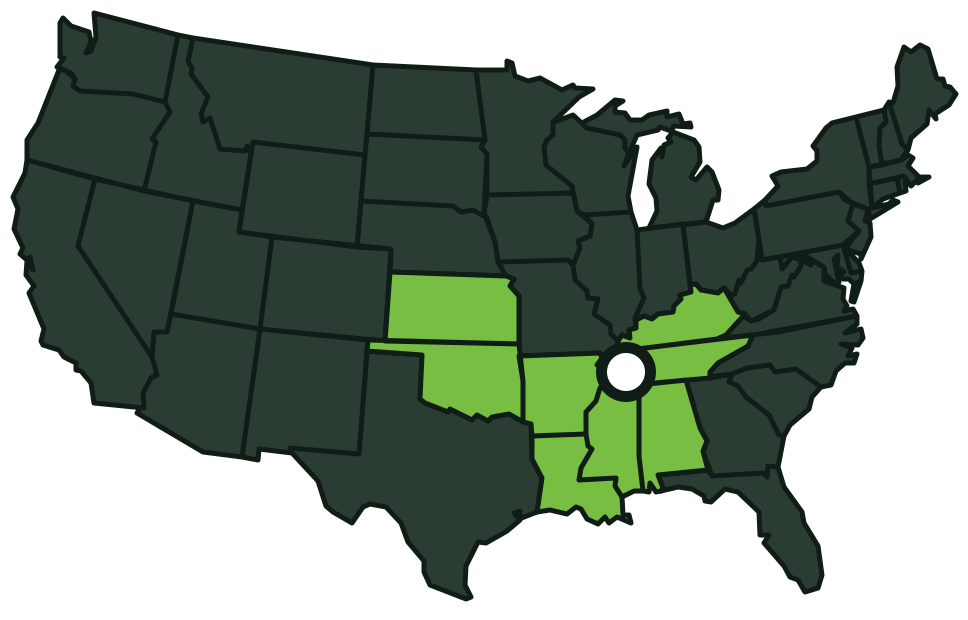 Jackson, TN
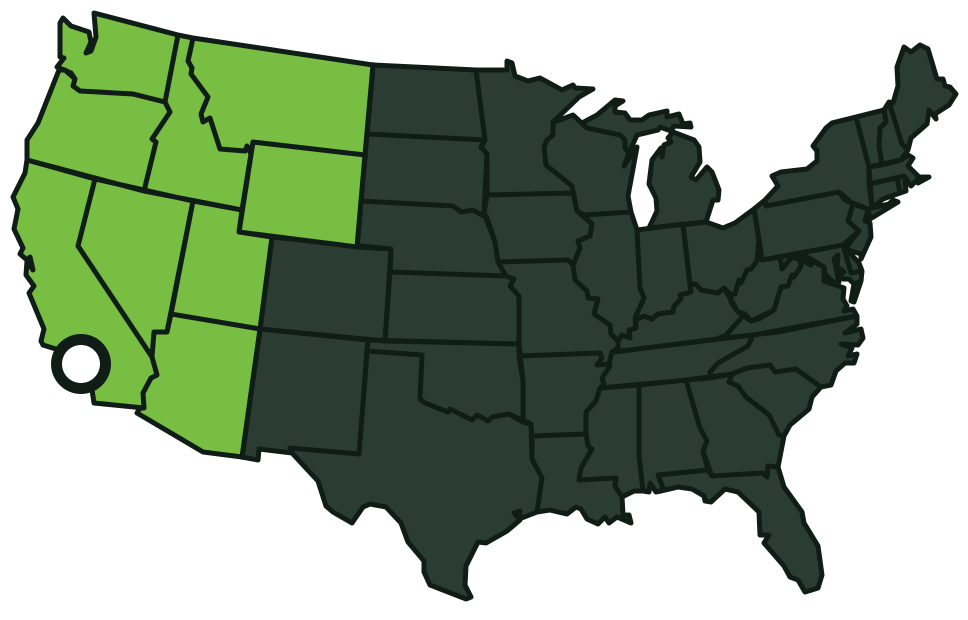 Los Angeles, CA
Food-Grade Cleaning and Disinfecting
Cleaning that survives the audit. Overhead, equipment, drains and structure, done to your scheme, documented the way the auditor wants to see it, and scheduled around production.
What brings a food plant to this call
- A customer audit is coming and the plant will be walked by someone who is looking for reasons to score it down.
- An audit is scheduled and the overhead, the drains or the structure will not pass a close look.
- A previous audit produced a finding on ceilings, condensation, flaking paint or dust above a product zone, and the corrective action is due.
- The sanitation crew handles the daily clean well, but nobody is equipped for the high-level work, the drains or the equipment interiors.
- A Listeria or Salmonella environmental result has come back positive and the response needs a deeper clean than a shift can deliver.
What it involves
inside a live plant.
What the scope covers in a food plant
A food plant is cleaned every day by people who work there. What Kelly is called for is the layer above and behind that: the surfaces the daily clean cannot reach, on a cycle measured in months rather than shifts.
Overhead and structure. Ceilings, roof decking, rafters, joists, structural steel, ductwork, pipe runs, light fixtures and sprinkler systems above production and packaging areas. In a food plant this is the highest-scoring area on most audits and the hardest for a plant to handle in-house, because it needs lifts, vacuums and a crew trained to work above product.
Walls, floors and junctions. Wall surfaces, floor and wall junctions, floor cracks, the tops of block walls and the areas where moisture and residue collect out of sight.
Drains. Drain interiors, covers, trenches and the surrounding floor. In a plant responding to an environmental monitoring positive, drains are usually the reason for the call.
Equipment. Fillers, conveyors, mixers, blenders, hoppers, tanks and process equipment, inside and out, using methods chosen for the surface and the product contact status.
Silos, tanks and confined spaces. Interior cleaning under the plant’s confined space program.
Coatings. Where a ceiling or wall is no longer cleanable because the surface has failed, cleaning alone will not close the finding. Kelly also coats, with systems appropriate to a food environment.
What the work involves
Pre-entry. Before a technician enters, the crew is briefed on the plant’s GMP rules: garments, hair and beard nets, jewelry, footwear, tool control, glass and brittle plastic policy, traffic routes and where they may and may not go. Tools are inventoried in and out. This is not paperwork; it is the part that keeps a contractor from becoming the contamination event.
Sequencing. Top down and dirty to clean, always. Overhead first, then structure, then equipment, then floors and drains. Areas are isolated section by section so that production continues where it can and no cleaned zone is recontaminated by the next one.
Protection. Product zones, open lines, packaging and ingredient storage are covered or cleared before work begins above or beside them. In an operating plant this is the bulk of the setup time and it is not where to save money.
Method. Dry vacuum with HEPA filtration for dust and dry residue, rated and bonded where the dust is combustible. Dry ice blasting for equipment, electrical and surfaces that cannot take water, with no moisture or chemical introduced into the product zone. Manual cleaning and approved chemicals for surfaces that need them. Pressure washing where the area and the plant’s rules allow water. Electrostatic disinfectant application for broad surface coverage where disinfection is in scope, using EPA-registered products suitable for food environments.
Verification. The plant’s own verification governs, whether that is visual, swabbing or ATP. Kelly’s crew makes the area available for it and re-cleans anything that fails before handing back.
Documentation. Areas, dates, methods, chemicals, technicians and photographs before and after, delivered in a form that goes into the sanitation file.
Audits, and what actually gets scored
Most food plants Kelly works in hold SQF, BRC or AIB, and are additionally subject to FDA preventive controls or USDA inspection. The recurring findings that bring us in are consistent across all of them:
- Dust, cobwebs or debris on overhead structure above product or packaging
- Condensation, and what has grown where condensation has been dripping
- Flaking or peeling paint on ceilings and overhead steel
- Drain condition and the floor around drains
- Equipment interiors and the areas underneath equipment
- Structural condition: gaps, damaged surfaces, unsealed junctions
None of these are resolved by cleaning harder on the daily shift. They need a periodic scope, the right equipment, and a record. That is the service.
Environmental monitoring and pathogen response
When an environmental monitoring programme returns a positive for Listeria or Salmonella, the response is not a normal clean. It is a targeted deep clean of the implicated zone and its harborage points, sequenced to avoid spreading the organism, followed by re-swabbing. Kelly works to the plant’s own response protocol and its microbiologist’s direction. The crew’s job is execution and documentation, and knowing not to improvise.
Sectors
Protein processing. Meat, poultry and seafood plants under USDA inspection, where sanitation is continuous and the overhead is difficult.
Bakery and snack. Flour and sugar mean combustible dust on top of food safety, usually in the same overhead scope. AIB inspection is common.
Dairy and beverage. Filling and bottling lines, tanks, pasteurization areas and the structure above them.
Confectionery. Sugar dust, sticky residue and equipment that is difficult to clean without water.
Cold storage and distribution. Racking, structure, ceilings and floors across large footprints, often with condensation as the underlying issue.
Ingredient and co-packing. Allergen changeovers, multiple products and a documentation burden higher than most.
Putting it on a cycle
Audits are annual or semi-annual. The cleaning that passes them should not be. Kelly sets an interval from the plant’s scheme, its audit calendar and what the first visit finds, usually quarterly or semi-annual for overhead and structure, with drains and equipment on their own rhythm. The plant stops preparing for audits and starts simply being ready for them.
Performed to the standards
your plant is held to.
The benchmarked schemes most Kelly food customers certify to. Overhead cleanliness, structural condition, drain sanitation and documented cleaning programs are all scored items. Kelly plans the work to the scheme the plant actually holds, not to a generic checklist.
Widely used for bakery, snack and ingredient plants, and notably strict on overhead, structural and equipment cleanliness. Kelly's overhead and structural work in AIB plants is planned to the inspection categories.
The Food Safety Modernization Act preventive controls and, in meat and poultry, USDA inspection requirements. Sanitation is a preventive control, and the records are part of the plan.
Good Manufacturing Practices govern how a contractor behaves inside a food plant, from garments and jewelry to tools and traffic. Every Kelly technician entering a food plant works to the plant's own GMP program, and the cleaning is sequenced around HACCP critical control points.
Flour, sugar, starch, grain and powdered ingredients are combustible dust. Overhead cleaning in a food plant is usually a food safety job and a combustible dust job at the same time, and Kelly handles it as one scope with rated equipment.
What you get that
a general contractor cannot give you.
One crew for the work sanitation cannot reach
Your sanitation team owns the daily clean and does it well. Kelly does the part that needs lifts, rated vacuums, confined space entry and a crew trained for height: the overhead, the structure, the equipment interiors, the drains and the areas that only get touched on a deep-clean cycle.
Documented the way an auditor reads it
Every area is recorded with date, method, chemical where one was used, and photographs before and after. The record is handed over in a form that goes straight into the plant's sanitation file, which is what turns a clean into a closed corrective action.
GMP-trained, full-time Kelly employees
No subcontractors and no agency labor inside a food plant, ever. Every technician is a Kelly employee trained to GMP, briefed on the plant's own rules before entry, and accountable to us.
Scheduled around production, including the third shift
Most food plant work happens on sanitation shift, on a weekend, or inside a planned stop. Kelly crews work those hours as standard, and the plan is built so the line starts on time.
Food-Grade Cleaning and Disinfecting from
six service centers.
Every Kelly service is staffed from all six centers, so the crew that comes to your plant is the one based nearest to it. Coverage is all 48 contiguous states.
See the full territory map and the states each center covers on the service areas pages.
Asked before the quote.
Can you work during production?
Do you use your own chemicals?
What does the audit documentation include?
Do you clean drains?
How does this fit with our sanitation crew?
Tell us about the facility.
We'll tell you straight.
A specialist reviews every request, not a call center. If it is not Kelly work, we will say so and point you in the right direction.