
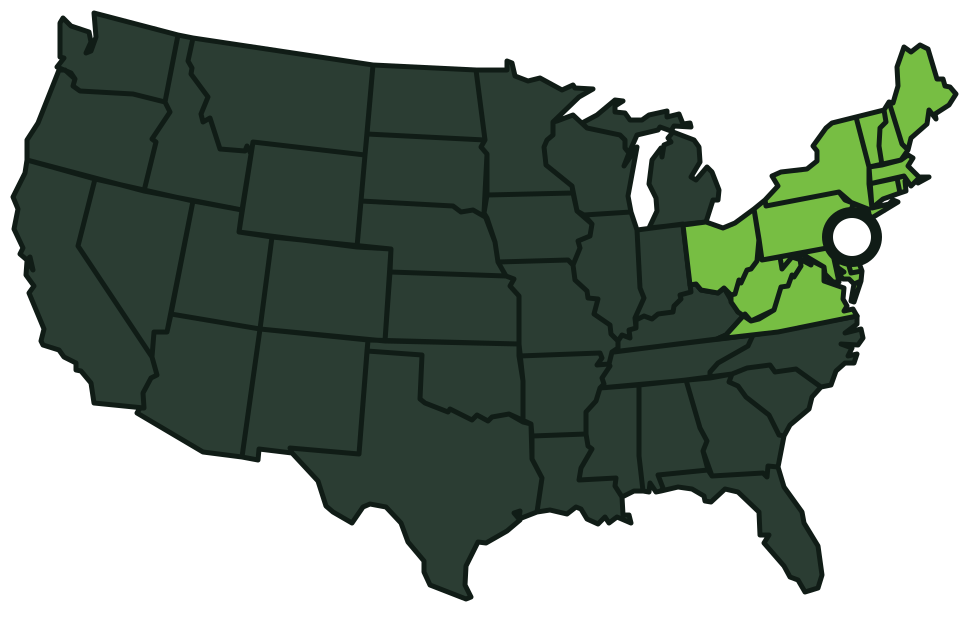
 Philadelphia, PA
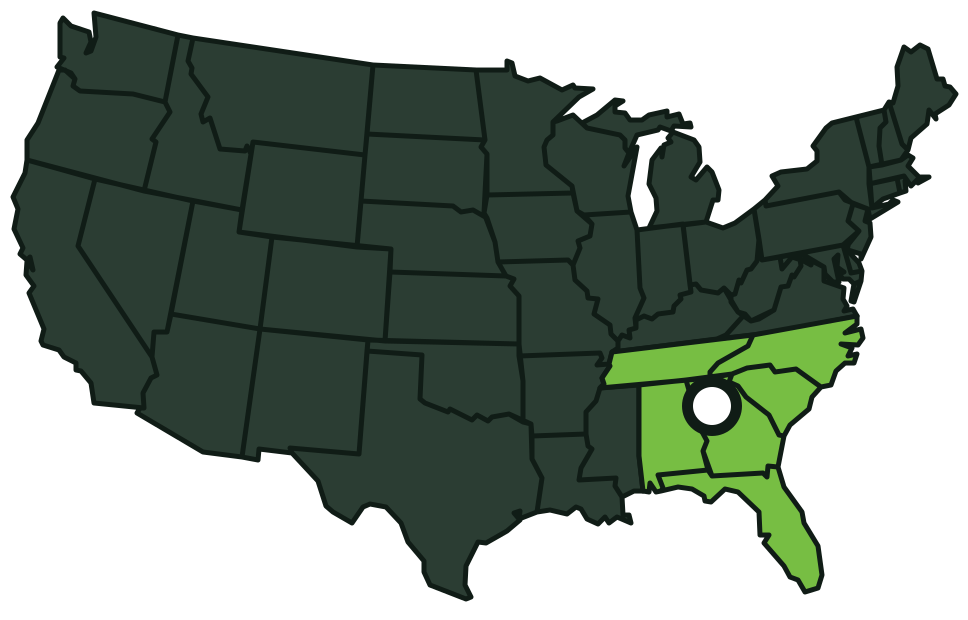 Atlanta, GA
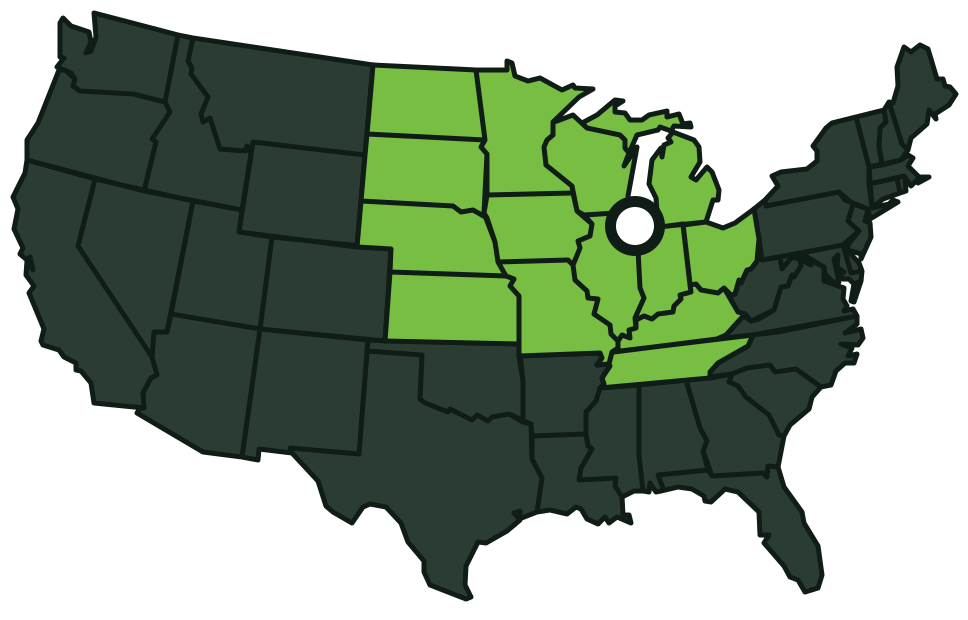 Chicago, IL
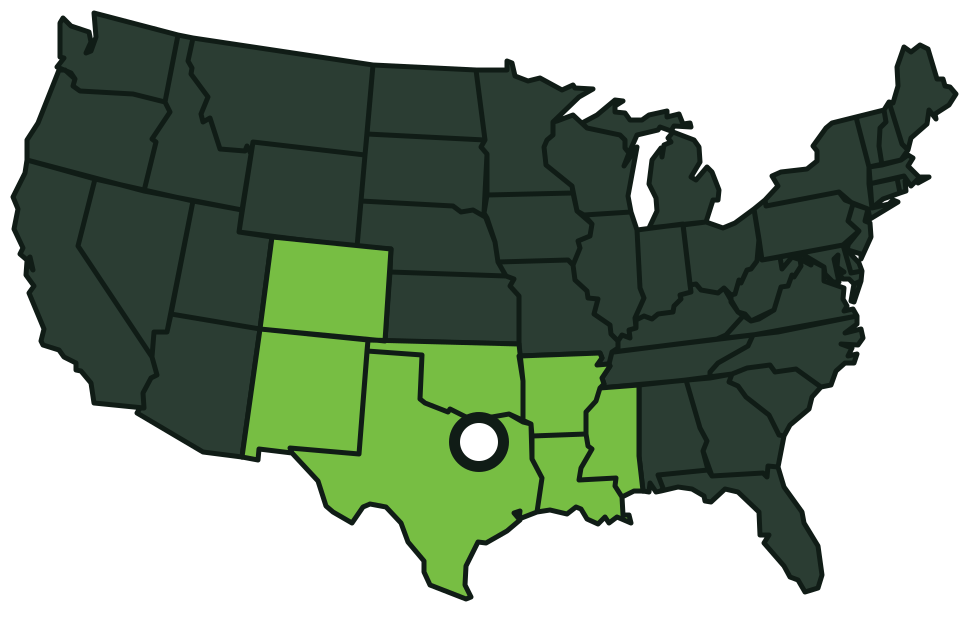 Dallas, TX
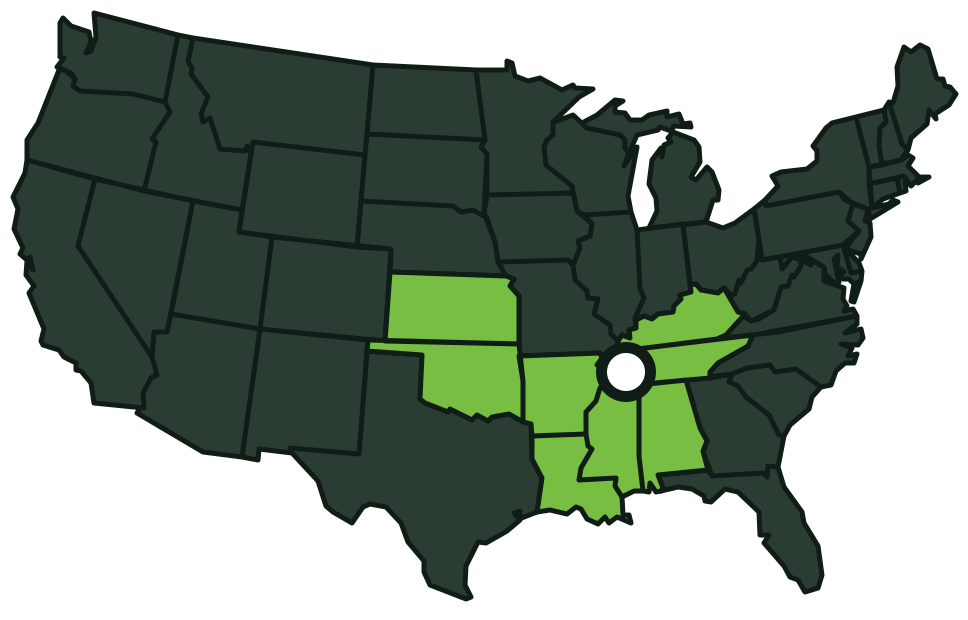 Jackson, TN
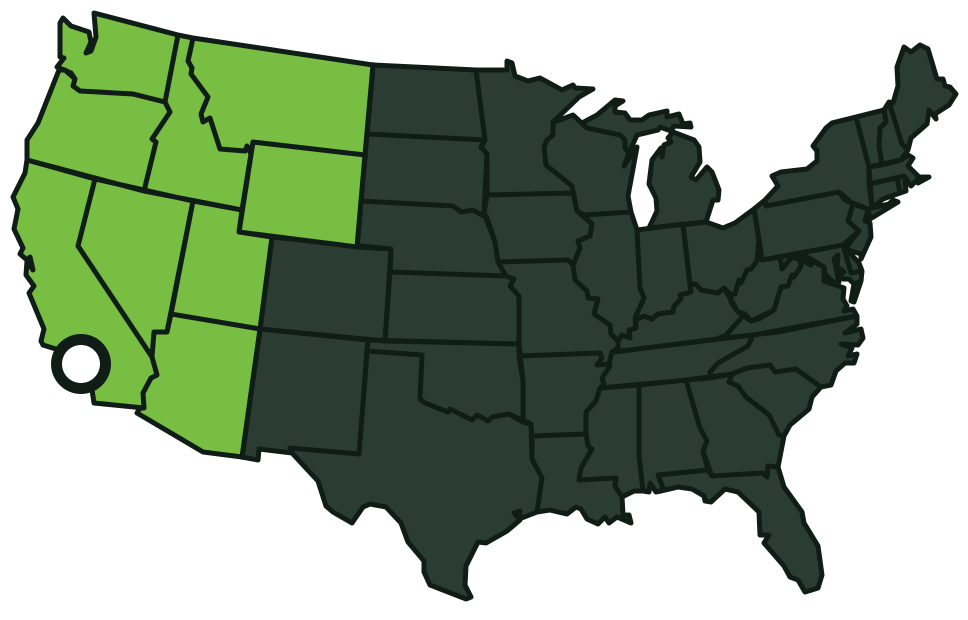 Los Angeles, CA
Food and Beverage Plants
The sanitation shift owns everything it can reach. This is the work above that line, done to the same standard, on a schedule your audit can evidence.
What the audit finds that sanitation cannot reach.
- Overhead steel, ductwork and utilities above open product carry dust, condensate residue and buildup that nobody is equipped to reach.
- Flaking paint, corrosion or failing coatings on overhead structure have become a foreign material risk directly above a line.
- Drains, floor trenches and lift stations are the finding that keeps recurring on every audit.
- Flour, sugar or starch dust has accumulated to a level that is both a food safety issue and a combustible dust issue at the same time.
- An unannounced audit is on the calendar and the overhead has not been documented in years.
What the work looks like
in your building.
The line the sanitation shift cannot cross
Every food plant has a sanitation program, and most of them are good. Sanitation owns the line, the equipment, the floors and everything a crew can reach and return to service before the next run. What sanitation does not own is the part of the building that requires lifts, fall protection, a longer window and a different set of methods: the steel, ductwork, utilities and ceilings above production.
That is the work Kelly does, and it is almost always the part of the building an auditor looks at when they want to know what the plant is like when nobody is preparing for a visit.
The difficulty is not technical. It is that this work happens above open product, in a building that runs, in a window that sanitation has already claimed. Everything about how it is planned follows from that.
Where the findings come from
- Overhead steel, purlins, joists and roof structure above production
- Ductwork, HVAC, refrigeration lines and utilities
- Lighting, cable trays, conduit and sprinkler lines
- Ceilings, panels and the voids above them
- Catwalks, platforms, stairs and mezzanine undersides
- Drains, floor trenches, washdown pits and lift stations
- Grease interceptors and traps
- Dry areas: milling, blending, sifting, bagging and powder handling
- Coatings and paint on any surface above an exposed line
Condensate, which is the finding nobody solves by cleaning
In a refrigerated or high-humidity plant, the recurring overhead finding is usually condensate rather than dirt. Moisture forms on cold surfaces, it collects material, and it drips. Cleaning removes what is there and the condition regenerates, which is why the same line item appears on audit after audit.
Kelly will clean it, but the honest answer is that cleaning is the symptom-level fix. What the report should tell you is where the moisture is forming and why: uninsulated or failing insulation on refrigeration lines, air movement pushing humid air into a cold zone, a ceiling panel joint that is no longer sealed, or a coating that has failed and is holding moisture against steel.
Some of that is coatings work, which Kelly does. Some of it is mechanical or building work, which Kelly does not, and it goes in the report rather than being quietly cleaned around. A finding that keeps returning after every clean is a finding that was never a cleaning problem.
Two requirements, one accumulation
In a dry plant, the flour, sugar, starch or powder on an overhead surface is both a sanitation issue and a combustible dust issue, and the two requirements do not always point the same direction.
Sanitation wants the surface clean and wants the method to leave nothing behind. NFPA 660 wants the accumulation below a threshold and wants the cleaning not to introduce an ignition source, which means any blowdown is planned around the plant’s ignition sources and any vacuum is bonded, grounded and explosion-protected.
The two are compatible, but only if the plan accounts for both from the start. Kelly writes the scope to satisfy the stricter of the two on every surface, which in practice means the dust standard governs the method and the sanitation program governs the chemistry.
What the audit file gets
An auditor does not want to be told the plant is clean. They want to see a program: what is cleaned, how often, by whom, to what standard, and the evidence of the last several cycles.
Kelly provides dated photographs before and after by area, a written record of what was cleaned and to what condition, the chemistry used with its documentation where chemistry was used, training and insurance records for the crew on site, and for confined spaces the entry permits and atmospheric logs. Where the work was scoped against a specific finding, the report is structured against that finding.
The part that matters more than any single report is the interval. A plant that can show a scheduled overhead program with two years of records behind it is in a different conversation with an auditor than a plant that can show one deep clean performed three weeks before the visit.
Working around production rather than against it
Kelly schedules this work after the sanitation shift, on weekend downs, or into the annual shutdown, and the plan includes the time to release the area properly: containment struck, the space re-sanitized to the plant’s procedure where required, and a walk with the plant’s own contact before the line restarts.
Crews work to the plant’s GMP and hygiene rules, its allergen controls, its tool and glass policy and its gowning requirements. Every technician is a full-time Kelly employee, which is the only reliable way to keep that consistent from one visit to the next, and it is why a food plant tends to see the same faces each time rather than whoever a staffing agency sent.
The standards this
plant type is held to.
Preventive controls for human food. Plant and grounds, sanitary operations and sanitary facilities are explicit subparts. Overhead structure above exposed product sits squarely inside them, and so does the requirement to keep records that show what was done.
For meat and poultry establishments, continuous inspection and sanitation performance standards. Overhead condensate and structural condition above product are recurring findings, and they are among the harder ones to resolve around a production schedule.
The audit schemes most plants are actually measured against. Each looks at the building fabric and at overhead surfaces, and each wants evidence of a cleaning program rather than an account of the last clean.
The consolidated combustible dust standard, effective December 2024, which absorbed NFPA 61 for agricultural and food processing. Flour, sugar, starch, milk powder, spice and grain dust are combustible, which makes housekeeping in these plants a fire safety requirement as well as a food safety one.
What Kelly does here,
and in what order.
Almost every food plant scope combines overhead work with a food-grade method, because the constraint is not what needs cleaning but what may touch a surface above open product. The sequence, the chemistry and the protection below are settled before anyone goes up.
- 01 Ceiling, Overhead and High Dusting The core of it. Overhead steel, ductwork, utilities, lighting and ceilings above production, scheduled into the window the plant has and planned so nothing reaches the floor below.
- 02 Food-Grade Cleaning and Disinfecting Where cleaning is followed by sanitizing, using chemistry approved for the plant's own program, applied to the plant's own procedures and documented for the audit file.
- 03 Industrial Dry Ice Blasting Equipment, ovens, conveyors and production surfaces where water cannot be used or where downtime for drying is not available. No water, no chemical residue and no secondary waste.
- 04 Industrial Pit Cleaning Drains, floor trenches, washdown pits, lift stations and grease interceptors, under permit, with disposal arranged before anything is opened.
- 05 Combustible Dust Cleaning In milling, bakery, dry blending and powder handling areas, where the same accumulation is both a sanitation finding and a deflagration risk.
- 06 Industrial Facility Painting and Coatings Where the overhead itself is the problem. Flaking coating above a line is a foreign material hazard, and recoating with a system appropriate to a food environment resolves it properly.
The windows a food plant actually has.
Food plants have more downtime than most industries and less usable downtime than any of them, because the sanitation shift already owns it. Kelly works around sanitation rather than competing with it.
- After the sanitation shift
- The window that matters. Kelly works once sanitation is complete and before the line restarts, which means the area is already clear, and means the crew has to be off and the space released on time without exception.
- Weekend and non-production days
- Where larger overhead scopes belong. Long enough to cover a production hall properly, with time for the area to be re-sanitized and released before the first shift.
- The annual maintenance shutdown
- Plant-wide overhead, drains, structural work and coatings. Usually the only window where work above a line and work on the line can happen together.
- Against the audit date
- Scheduled backwards from an SQF, BRCGS, AIB or customer audit so the work is complete and the documentation is in the file before the auditor arrives, rather than being explained to them in person.
Every service from
six service centers.
Every Kelly service is staffed from all six centers, so the crew that comes to your plant is the one based nearest to it. Coverage is all 48 contiguous states.
See the full territory map and the states each center covers on the service areas pages.
Asked before the quote.
Are your crews trained for a food environment?
What chemicals do you use above open product?
How do you keep the work from contaminating the line below?
Can you help us close a recurring audit finding?
Is dust in our plant really a combustible dust issue?
Tell us about the facility.
We'll tell you straight.
A specialist reviews every request, not a call center. If it is not Kelly work, we will say so and point you in the right direction.