
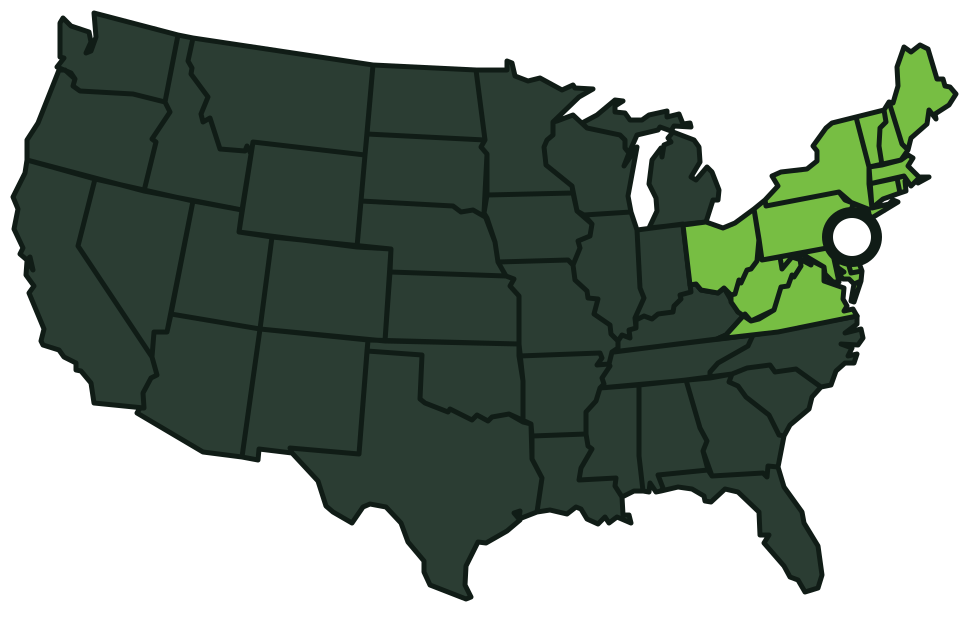
 Philadelphia, PA
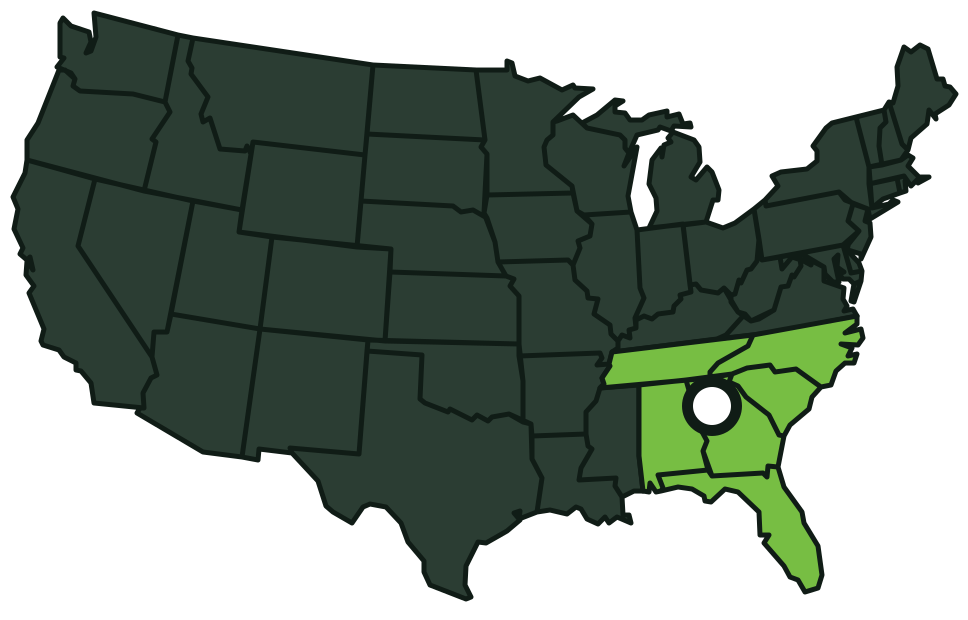 Atlanta, GA
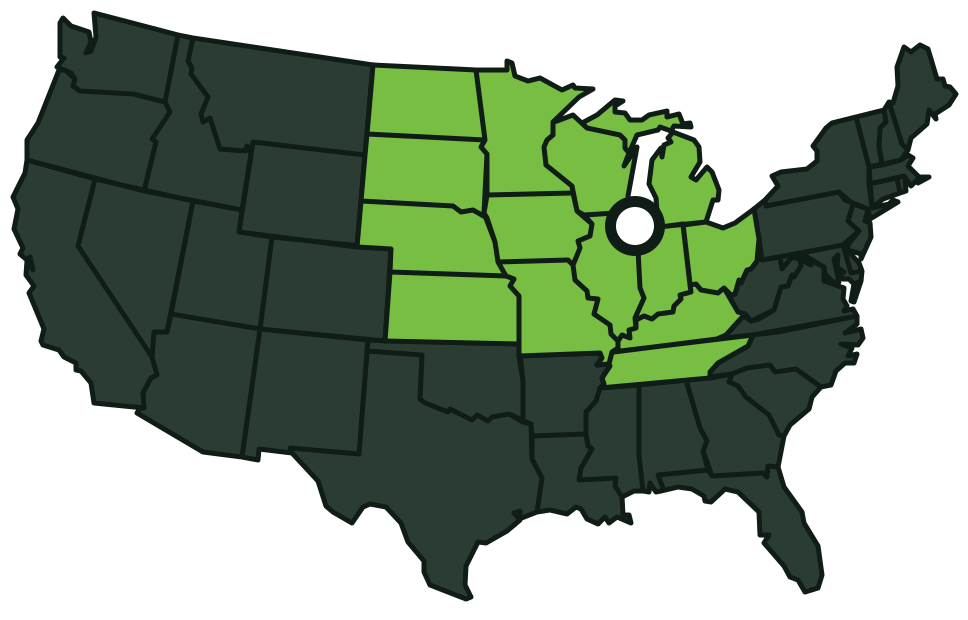 Chicago, IL
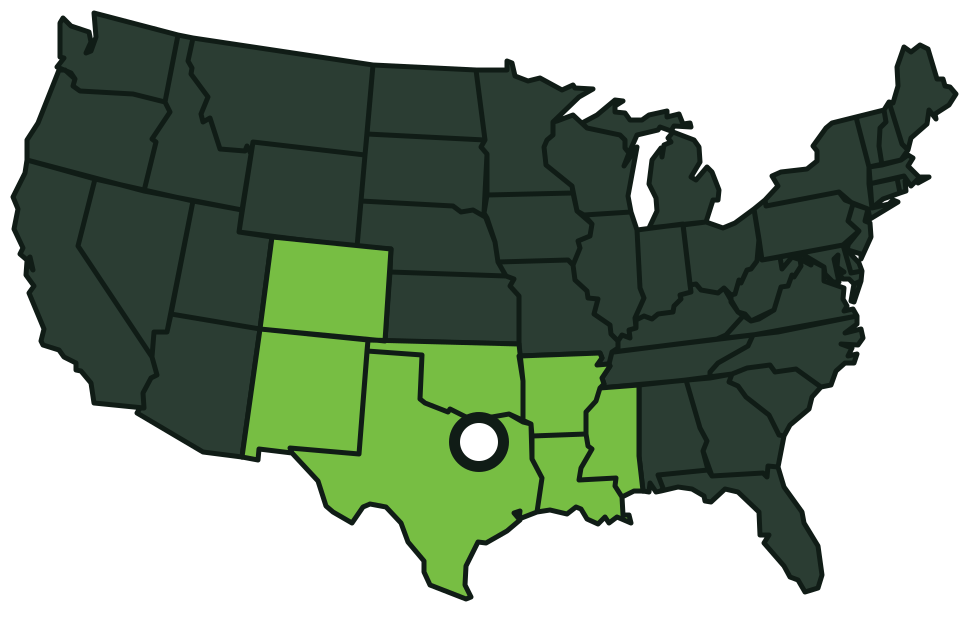 Dallas, TX
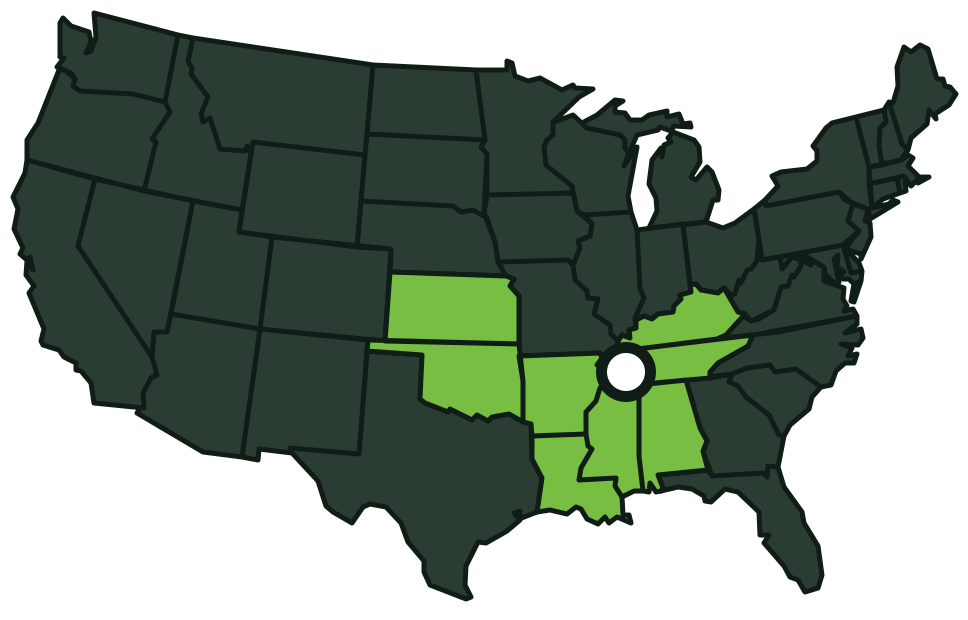 Jackson, TN
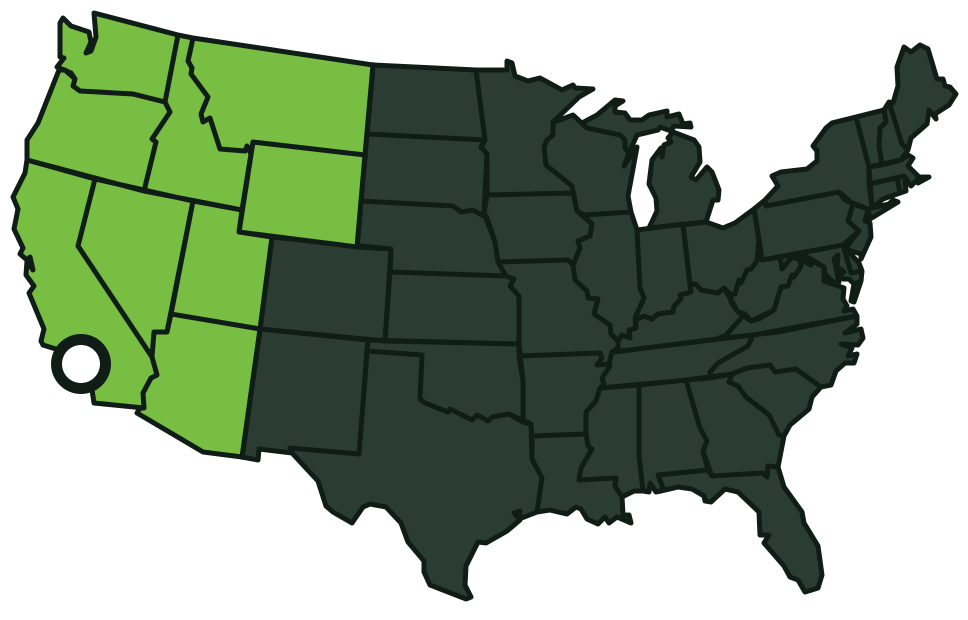 Los Angeles, CA
Paper and Tissue Mills
Fiber gets everywhere, settles on everything above the machine, and is combustible in quantity. The work is scoped around the machine, because the machine is the only thing that matters.
What a mill looks like by the time we are called.
- The sheet ends up in food packaging, so the customer requires an SQF, BRCGS, FSSC 22000 or AIB audit, and the mill has to pass it.
- Fiber and dust have loaded the overhead steel, cable trays and beams above the machine, and nobody has been up there in years.
- The broke pit or pulper is full enough that the system no longer clears, and it is a permit-required confined space.
- Dryer hoods, cylinders and the pocket areas have built up to the point where sheet quality and drying efficiency have visibly dropped.
- A Dust Hazard Analysis has come back with housekeeping findings and a date attached to them.
- The insurer walked the mill, photographed accumulation on horizontal surfaces, and the renewal conversation changed.
What the work looks like
in your building.
Why a mill is a different kind of cleaning job
Most industrial cleaning is periodic: something accumulates, it gets removed, it accumulates again. A paper mill is continuous. Fiber is produced by the process every minute the machine runs, it is light enough to travel the length of the building, and it settles on every horizontal surface it passes. The overhead steel above a machine is collecting material right now.
That changes what a good program looks like. A single deep clean resolves what is there and nothing else. What actually works in a mill is a scoped outage clean combined with a recurring interval between outages, set from how fast the building reloads. Kelly measures that on the first visit and proposes an interval from it rather than from a template.
The second difference is the machine. Everything is planned around it: what can be reached while it runs, what has to wait for a down, what falls where if it is disturbed, and what the consequences are for the sheet if something is wrong. A contractor who treats a mill like a warehouse with a paper machine in it will cause a quality event.
Where the material collects
- Overhead steel, beams, purlins and roof structure above the machine
- Cable trays, conduit, lighting and sprinkler lines
- Ductwork, hoods and the exterior of the dryer section
- Platforms, walkways, stairs and handrails
- Machine frames, drives, guards and the areas under them
- Broke pits, pulpers, chests and sumps
- Basement and sub-floor areas under the machine
- Baler, scrap handling and the conveyors feeding them
- Dust collection equipment, ducting and the areas around it
The pattern that matters is vertical. Material on high steel becomes material on the floor the moment anything disturbs it, which is why an honest scope works top down and why cleaning a floor first in a mill is money spent twice.
The combustible dust question, stated plainly
Cellulose dust is combustible. That is not a Kelly opinion, it is why paper was one of the industries named in the standards that NFPA 660 consolidated, and it is why mills carry Dust Hazard Analyses and why insurers photograph horizontal surfaces during a walk.
What NFPA 660 asks for is not complicated to state. Know where your dust is and what it can do, which is the Dust Hazard Analysis. Have a written housekeeping program with accumulation thresholds and cleaning frequencies. Clean in a way that does not itself create a hazard, which means planning the work around ignition sources, no sparking tools, and vacuums that are bonded, grounded and rated for the material wherever vacuum is used. Document what was done.
Kelly performs the cleaning half of that and provides the documentation. The Dust Hazard Analysis itself is engineering work, and where a mill has one, the scope gets written against its findings. Where a mill does not, we will say that the analysis is the first thing to commission, because cleaning without it is work with no defined endpoint.
What the dryer section costs you when it is dirty
Buildup on dryer cylinders, hoods and pocket areas is not only a housekeeping matter. It changes heat transfer, which changes drying efficiency, which shows up as steam cost and as sheet moisture variation. Mills that track it can usually put a number on what the last clean returned.
Dry ice is the method most often used here because of what it does not do. It does not introduce water into a hot section. It does not abrade the cylinder surface or the coating on it. It does not require disassembly, which is usually the expensive part of the alternative. And it leaves no secondary waste to collect afterwards, because the media sublimates and only the removed material is left on the floor.
It is not universal. Some surfaces, some coatings and some contaminants call for something else, and the survey exists to make that call before the outage rather than during it.
What comes back with the job
In a mill, the documentation is frequently the reason the work was commissioned at all. A finding was raised, an analysis identified a gap, an insurer asked a question, or an audit is scheduled. Cleaning that cannot be evidenced does not close any of those.
Kelly returns entry permits and atmospheric logs for every confined space entered, lockout records, disposal documentation and waste characterization for what was removed, photographs before and after by area, and a written record of what was cleaned, when, and to what condition. Where the scope was written against specific findings, the report is structured against those findings so the person who raised them can close them.
Working with the rest of the outage
An outage carries mechanical work, electrical work, inspection and cleaning, all inside the same hours and frequently in the same space. Kelly plans against that rather than discovering it on the day: which areas are shared, who needs access when, what lockout is already in place and whose it is, and where a coating crew and a cleaning crew would otherwise be standing in the same aisle.
Because Kelly performs high dusting, combustible dust cleaning, vacuum, pit cleaning, dry ice and coatings with its own employees, a mill can run several of those scopes on one plan with one point of contact rather than coordinating four vendors who each discovered the same conflict separately.
The standards this
plant type is held to.
Board and paper that end up in food packaging put the mill under whatever audit its customer requires: SQF, BRCGS, FSSC 22000 or the older AIB standard. That audit looks at the building as well as the process, and it wants a documented cleaning program behind what it sees.
The consolidated combustible dust standard, effective December 2024, which absorbed NFPA 652, 654 and 664. Cellulose dust is combustible, and a mill generates it continuously. The standard requires a Dust Hazard Analysis and a written housekeeping program with defined accumulation thresholds and cleaning frequencies.
Walking and working surfaces, and housekeeping in storage and process areas. Fiber on floors and platforms is a slip and fire finding, and it is one of the most commonly cited conditions in a mill.
Permit-required confined spaces. Pulpers, chests, broke pits, tanks and silos qualify. Entry requires a permit, atmospheric testing, an attendant and a rescue plan that exists before the entry, not during it.
Lockout and tagout. Nothing goes in or above a machine until the energy control procedure is complete and verified to the mill's own program.
What Kelly does here,
and in what order.
A mill outage is usually several of these at once, sequenced so that nothing done early is undone by something done later. Overhead comes down before floors go clean, and wet work follows dry work rather than preceding it.
- 01 Ceiling, Overhead and High Dusting First, and usually the largest single scope. Overhead steel, beams, cable trays, ductwork and lighting above the machine, worked from lifts or rope access depending on what the building allows.
- 02 Combustible Dust Cleaning Where accumulation is deep enough to be a documented hazard rather than housekeeping. Non-sparking tools, bonded and grounded equipment, and a report that closes the finding.
- 03 Baghouse and Dust Collector Service Dust collectors on converting, winding and trim systems: cleanout, inspection, bag change-outs and replacement of units that are past their service life.
- 04 Industrial Vacuum Services Alongside the overhead work, in collection systems and pits, and anywhere fiber has to be captured where it sits, with explosion-protected equipment.
- 05 Industrial Pit Cleaning Broke pits, sumps, trenches and chests, under permit, with the material characterized before it is pumped so disposal is settled up front.
- 06 Industrial Dry Ice Blasting Dryer sections, hoods, rolls, doctor blades and drive components, where water is unwelcome and abrasive is out of the question. No disassembly, no secondary waste.
- 07 Industrial Pressure Washing Last, on floors, structure and exteriors, with wash water contained and documented rather than sent to the nearest drain.
The windows a mill actually has.
Downtime in a mill is measured in dollars per hour and planned a year out. Kelly works to the outage calendar, not around it.
- Annual or semi-annual outage
- The one window where the machine is cold and accessible. Scope is agreed months ahead, crew size is built for the hours available rather than the budget, and the plan assumes mechanical contractors are competing for the same access at the same time.
- Short maintenance downs
- Four to twelve hours, usually weekly or monthly. Enough for targeted dry ice work on a dryer section or a specific overhead area, not enough for a mill-wide scope, and the plan should say which.
- Grade and run changes
- Short and unpredictable, but usable for machine-adjacent cleaning where the crew is already staged and the work can stop the moment the mill needs the space back.
- Between outages, on a program
- Scheduled overhead and vacuum work on a recurring interval, which is what keeps accumulation below the threshold the Dust Hazard Analysis set rather than letting it rebuild to the next outage.
Who Kelly works for in this industry.
Kelly names International Paper and Georgia-Pacific among its customers. Both are built on this industry, and both operate to the kind of documented standard that decides whether a contractor is invited back.
What that means in practice is that the crews here have worked inside mills where the audit trail matters as much as the result: entry permits, atmospheric logs, disposal records and before-and-after photographs come back with the job, because in a mill the paperwork is frequently the point.
Every service from
six service centers.
Every Kelly service is staffed from all six centers, so the crew that comes to your plant is the one based nearest to it. Coverage is all 48 contiguous states.
See the full territory map and the states each center covers on the service areas pages.
Asked before the quote.
Can any of this be done while the machine is running?
How do you handle the confined spaces?
Do you work with our insurer's findings?
Is dry ice safe on dryer cylinders and rolls?
How far ahead do you need to book an outage?
Tell us about the facility.
We'll tell you straight.
A specialist reviews every request, not a call center. If it is not Kelly work, we will say so and point you in the right direction.