
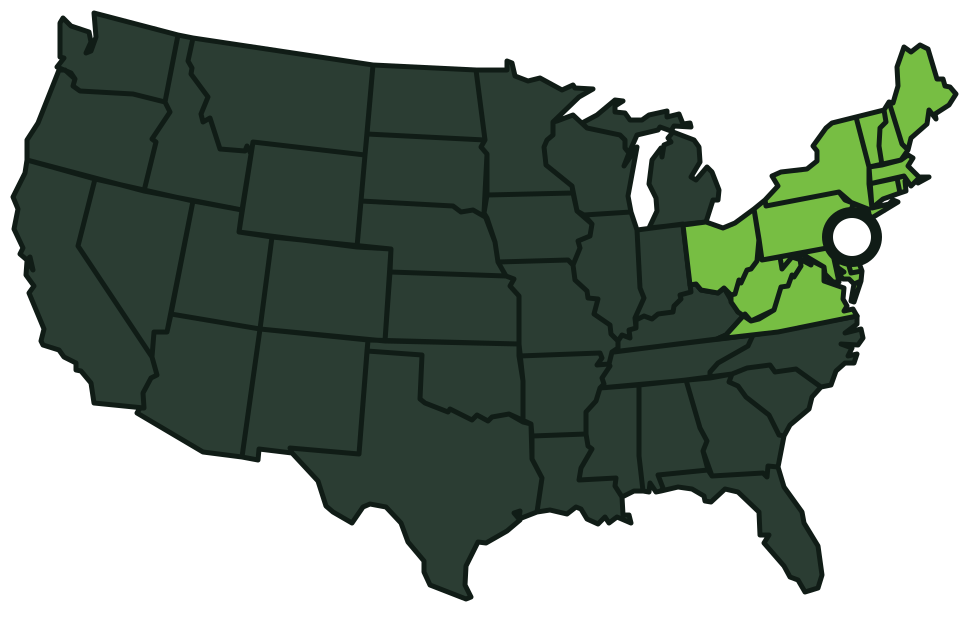
 Philadelphia, PA
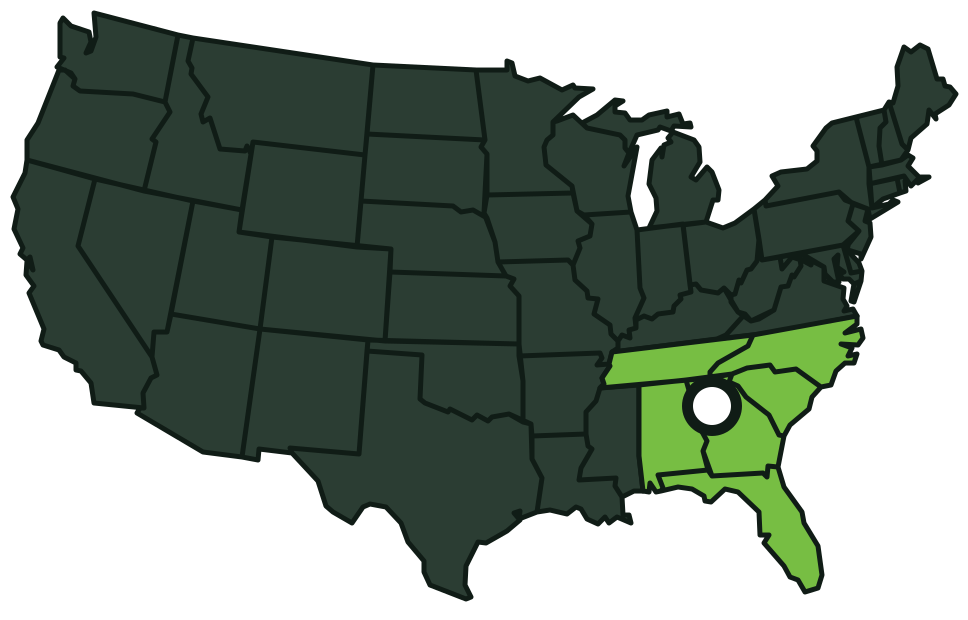 Atlanta, GA
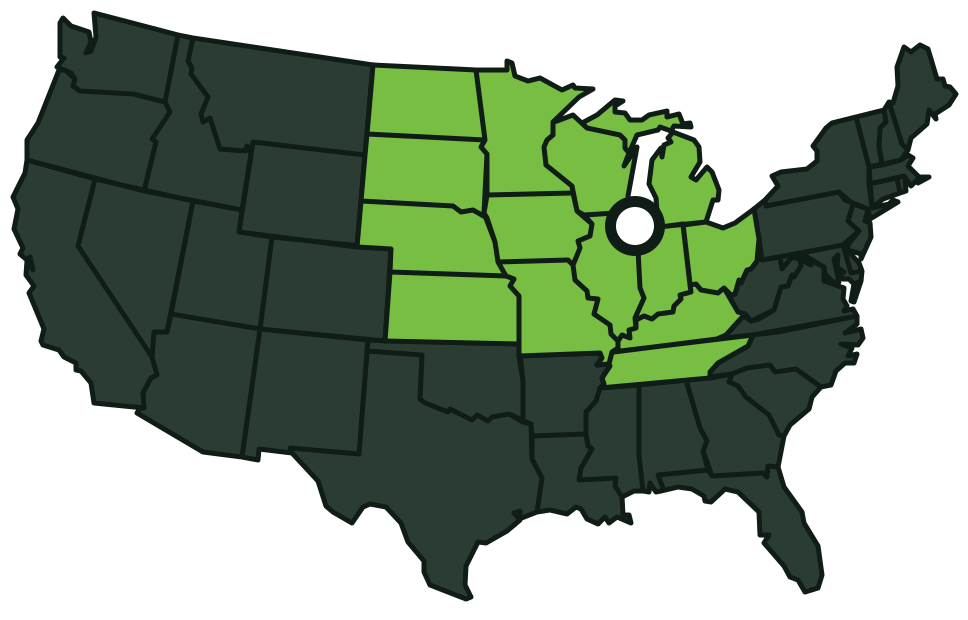 Chicago, IL
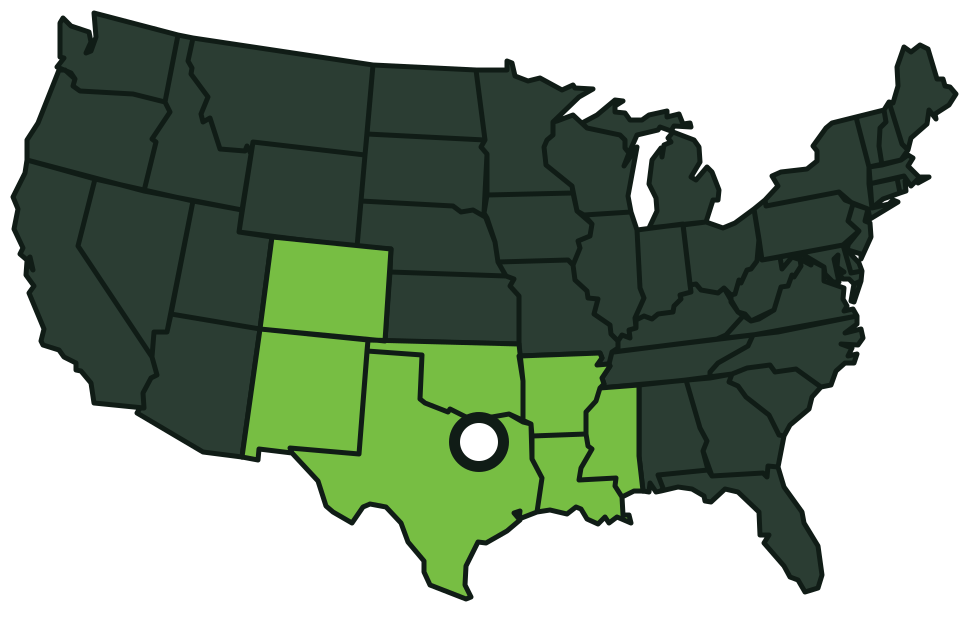 Dallas, TX
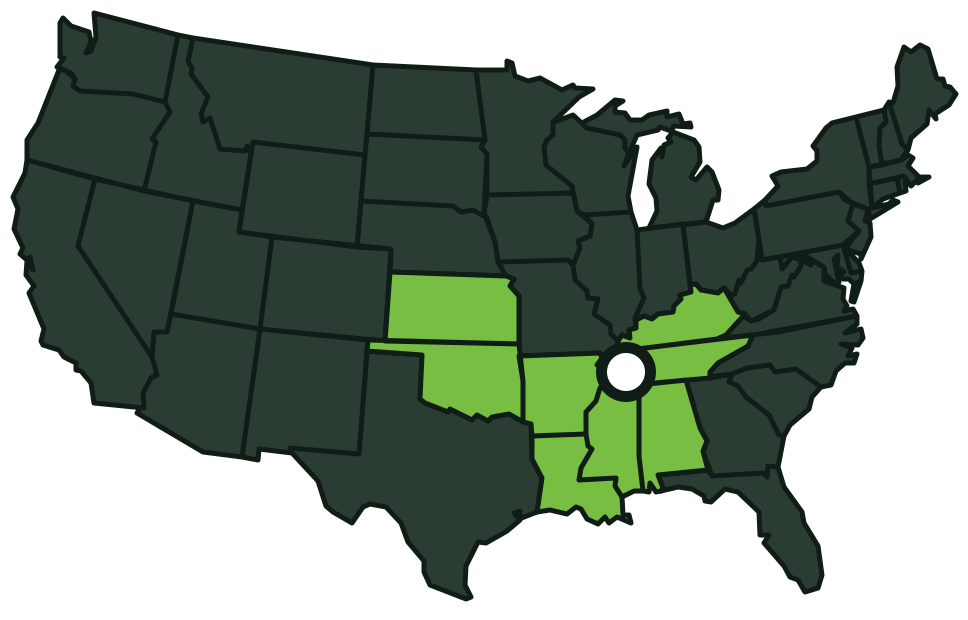 Jackson, TN
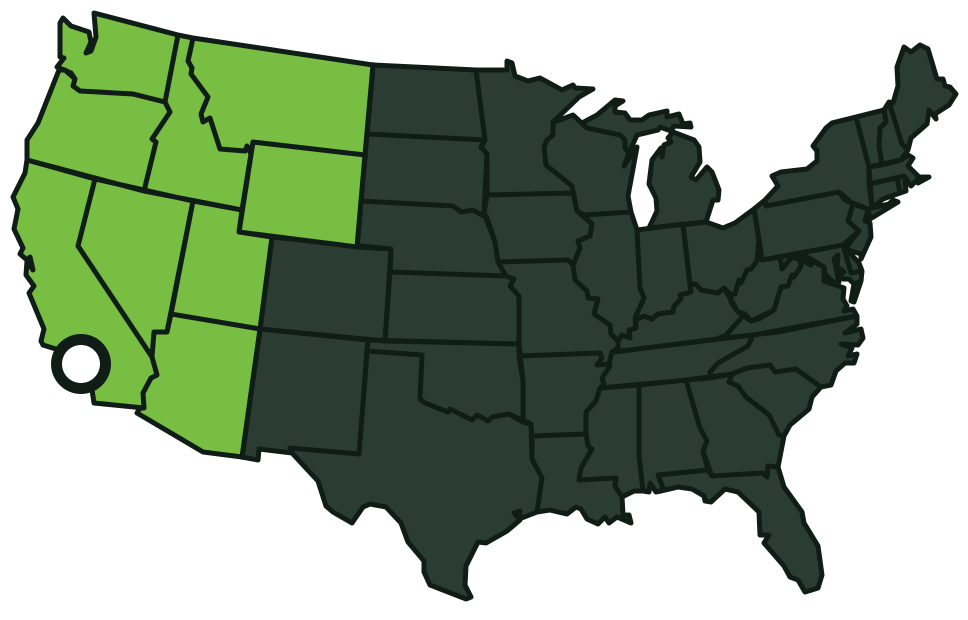 Los Angeles, CA
Industrial Silo and Bin Cleaning: Restoring Storage Capacity, Ensuring Material Flow, and Mitigating Confined Space Risk
How industrial silos & storage bins get safely cleaned: confined-space entry, NFPA-compliant dust removal, and typical turnaround times. Field notes.
In the world of industrial facility maintenance, few assets are as overlooked - and as consequential - as storage silos and bins. Whether your facility stores grain, cement, fly ash, plastic pellets, chemical powders, or bulk food ingredients, the integrity of your silo system directly determines production throughput, product quality, regulatory compliance, and worker safety.
Most facility managers understand the importance of keeping production equipment clean and operational, but the storage infrastructure that feeds those machines often goes without the same level of attention. The result is predictable: buildup, bridging, rat-holing, contamination, and - most critically - confined space hazards that put workers at serious risk.
This guide covers everything you need to know about industrial silo and bin cleaning: why it matters, what happens when it is neglected, how professional cleaning is performed, and how to build a proactive cleaning and inspection program that protects your facility, your product, and your people.
Why Silos and Bins Are Among the Most Challenging Assets to Maintain
Silos and bins are designed to hold material efficiently. But that same design - enclosed, vertical, with limited access points - creates a maintenance environment unlike almost any other in your facility. Unlike open equipment that can be visually inspected and cleaned during routine shifts, silos are largely invisible to operations teams during normal production cycles. Material goes in, material comes out, and whatever accumulates on the walls, cone, and discharge mechanisms stays there until someone specifically addresses it.
The challenge compounds over time. Residual material adheres to interior walls, especially in silos that store hygroscopic materials prone to moisture absorption. Temperature cycling causes condensation, which turns dry powder residues into hardened cake. In food-grade and chemical environments, this buildup is not just a flow problem - it is a contamination and compliance problem. A food processing facility with a silo full of degraded or cross-contaminated material will struggle to pass the rigorous sanitation audits that govern modern food manufacturing.
And then there is the confined space dimension - arguably the most serious aspect of silo maintenance and one that cannot be overstated.
Understanding the Confined Space Hazard in Silo Cleaning
OSHA defines a permit-required confined space as any space large enough for a worker to enter, has limited or restricted means of entry or exit, and is not designed for continuous occupancy. Silos meet all three criteria. What makes them particularly dangerous is the layering of hazards they can present simultaneously.
Engulfment risk is one of the most serious threats in silo entry. Bridged or crusted material can give way suddenly beneath a worker’s weight, and flowing bulk materials like grain, plastic pellets, or cement powder can bury a person in seconds. OSHA data consistently places silo engulfment among the leading causes of agricultural and industrial confined space fatalities.
Atmospheric hazards are equally severe. Grain and organic materials produce carbon dioxide during respiration and decomposition, rapidly depleting oxygen levels inside a silo. Chemical powders, resins, and plastics may off-gas volatile organic compounds or toxic fumes. Even a silo that has held inert dry material for years may contain pockets of oxygen-deficient or contaminated atmosphere.
Combustible dust is another critical factor in many silo applications. Grain dust, coal dust, powdered metals, and starch are all recognized combustible dust hazards by OSHA. Disturbance of settled material during cleaning operations can generate dust clouds with explosive potential if ignition sources are present. This is directly connected to the dangers of combustible dust in industrial facilities - a hazard that extends from the floor level all the way up into your bulk storage system.
Fall hazards inside large silos are severe. Interior walls may be coated with material that creates slip conditions, and entry hatches are often positioned at heights that make initial access dangerous without proper rigging and fall arrest systems.
Professional industrial silo cleaning contractors do not enter these spaces without a formal confined space entry program in place. That means atmospheric monitoring, lockout/tagout procedures, a trained attendant outside the space, rescue equipment on standby, and permits signed before a single worker descends. Attempting to clean a silo using untrained in-house labor without these protocols is not just inadvisable - it is a regulatory violation with potentially fatal consequences.
The Real Costs of Neglected Silo Cleaning
When silo cleaning gets deferred, the operational consequences accumulate quietly but eventually demand expensive attention. Understanding these costs in concrete terms is what motivates facility managers to build silo cleaning into their maintenance planning rather than treating it as a reactive, emergency-only task.
Reduced storage capacity and throughput losses. Buildup on interior walls measurably reduces usable volume. For a large cement or grain silo, even a few inches of caked material around the circumference can reduce effective storage capacity by thousands of cubic feet. When a silo cannot hold its rated volume, production schedules shift, reorder points change, and throughput suffers. Just as fighting downtime through effective maintenance planning is central to operational efficiency, maintaining full silo capacity is a critical - if often invisible - contributor to production continuity.
Material flow problems: bridging and rat-holing. Bridging occurs when accumulated material forms a stable arch across the silo outlet, completely blocking flow. Rat-holing describes a condition where material flows through a narrow channel in the center while surrounding buildup remains stationary. Both conditions cause erratic discharge behavior, batching errors, and the need for physical intervention - sometimes requiring confined space entry under emergency, unplanned conditions rather than controlled ones.
Product quality and contamination. In food processing, pharmaceutical, and chemical environments, silo contamination is a compliance failure waiting to happen. Old material accumulating in a first-in, first-out system means some product never fully discharges, degrading and potentially contaminating fresh incoming material. For facilities subject to GFSI, BRC, or SQF audit requirements, a contaminated silo is an audit finding that can result in product holds, recalls, or certification suspension.
Structural deterioration. Moisture-laden material in contact with steel silo walls is an active corrosion scenario. Over time, interior surfaces pit and corrode in ways that are completely invisible from outside the structure. This is where silo cleaning intersects directly with protective coating and long-term asset protection strategies - once a silo is cleaned, interior surface inspection can identify corrosion that needs to be addressed before it becomes a structural failure.
How Professional Industrial Silo Cleaning Works
Professional silo cleaning is a multi-phase operation that requires planning, specialized equipment, atmospheric monitoring, and a trained crew operating under strict confined space protocols.
Pre-entry inspection and hazard assessment. Before any work begins, the contractor performs a detailed assessment of the silo - its contents, history, geometry, access points, and any known structural issues. Material safety data sheets are reviewed. Atmospheric monitoring equipment is calibrated. The confined space entry permit system is activated. Lockout/tagout isolates all feed and discharge equipment. This is not paperwork for its own sake - it is the difference between a controlled cleaning operation and a rescue scenario.
Exterior and remote cleaning methods. Where possible, cleaning begins from outside the confined space. Industrial vibrators and pneumatic air cannons can be used externally to break up bridged material. High-pressure air lances extended through access ports can dislodge wall buildup without requiring worker entry. Remote-controlled robotic cleaning systems are increasingly used in large silos for hazardous materials, reducing or eliminating the need for human entry in the most dangerous applications. These approaches reflect the broader use of advanced cleaning technology to protect both assets and workers - modern industrial cleaning tools allow far more work to be done remotely than was possible even a decade ago.
Controlled confined space entry. When interior access is required, entry follows a strict protocol. The entry team is equipped with atmospheric monitors (oxygen, LEL, CO, H2S as appropriate to the stored material), full personal protective equipment, harness and retrieval systems, and two-way communication with an attendant stationed at the entry point. No worker enters a permit-required confined space without a non-entry attendant in position and a rescue plan active.
Interior cleaning methods include manual shoveling and scraping of hardened buildup, high-pressure water jetting against walls and cone surfaces, and industrial vacuum extraction to remove dislodged material. All extracted material is collected, properly handled, and disposed of according to its characteristics.
Post-cleaning inspection and documentation. Once cleaning is complete, the interior is inspected under adequate lighting for structural condition, coating integrity, hardware function, and any evidence of moisture intrusion. Photographic documentation is standard practice. If coating degradation or corrosion is identified, a separate structural maintenance scope is developed - in some cases involving interior coating application to protect the cleaned steel surface.
Silo Cleaning Across Different Industries and Materials
Food processing and agricultural silos. Grain, starch, flour, sugar, and other food-grade bulk materials present both combustible dust risks and sanitation requirements. For facilities running customized cleaning programs for regulated industries, silo cleaning is typically integrated into the broader scheduled maintenance and sanitation program. Post-harvest grain silos must be cleaned and treated before receiving new crop to prevent cross-contamination and pest harborage.
Cement, fly ash, and construction materials. Cement and fly ash are highly hygroscopic and will harden into concrete-like masses when exposed to moisture. Caked buildup in cement silos requires aggressive mechanical and hydraulic cleaning methods. Workers entering these silos face significant atmospheric risks as well as the physical hazards of working in a heavily dusty, enclosed environment. Respiratory protection is mandatory.
Plastics and chemical powders. Plastic resin silos and chemical powder storage bins present VOC and static electricity hazards in addition to standard confined space concerns. Cleaning protocols must address electrostatic dissipation during dry powder removal. Chemical compatibility of any cleaning agents used must be verified against both the stored material and the silo’s materials of construction.
Corrugated and converting facilities. In corrugated manufacturing operations, starch silos are critical infrastructure. Starch is highly combustible when airborne and will form hard, hygroscopic deposits on silo walls when moisture is present. Facilities that rely on preventive maintenance strategies for corrugated manufacturing should include starch silo cleaning in their scheduled maintenance cycles. A plugged or contaminated starch delivery system can halt production just as quickly as a failed press or corrugator.
Building a Proactive Silo Cleaning and Inspection Program
The facilities that manage silos most effectively treat them like production equipment - assets requiring scheduled maintenance, documented inspection, and proactive intervention rather than reactive emergency response.
Establish a cleaning frequency based on material characteristics and operational demands. High-moisture materials or those prone to buildup require more frequent attention than dry, free-flowing products. Work with your cleaning contractor to develop a schedule that addresses both routine cleaning and periodic full interior inspections.
Integrate silo cleaning into your facility’s broader preventive maintenance program. Just as routine machine cleaning protects equipment performance and extends asset lifespan, scheduled silo cleaning prevents the compounding buildup problems that eventually require emergency intervention.
Maintain detailed records for every cleaning event - date, condition found, methods used, material removed, deficiencies noted, and corrective actions taken. These records are essential for regulatory compliance, warranty management, and trend analysis that helps predict future cleaning needs.
After every cleaning, conduct a thorough interior inspection. Address coating degradation, corrosion, and mechanical wear promptly. A freshly cleaned silo that reveals significant interior coating failure needs protective work before the next fill cycle, not at the next cleaning. Keep in mind that the role of industrial cleaning in preventing equipment failure and downtime extends to storage infrastructure just as much as it does to production machinery.
What to Look for in an Industrial Silo Cleaning Contractor
Silo cleaning is not a commodity service. The confined space hazards, regulatory requirements, and operational complexity involved mean contractor selection deserves serious scrutiny.
Verified confined space entry program. The contractor should be able to produce a written confined space entry program, documentation of worker training and certification, calibrated atmospheric monitoring records, and a rescue plan. Ask for these documents before awarding any work.
Relevant industry experience. A contractor experienced with grain silos but not cement silos may not understand the specific hazards your application requires. Ask specifically about their experience with your stored material type and silo geometry.
Appropriate equipment. Verify that the contractor has industrial vacuum equipment sized for your silo volume, appropriate pressure washing equipment if wet cleaning is required, and personal protective equipment suited to your material’s hazards.
Insurance and safety record. Request the contractor’s EMR (Experience Modification Rate) and OSHA incident rate data. These numbers tell you more about a contractor’s safety culture than any sales pitch. Verify adequate liability insurance and workers’ compensation coverage.
Documentation capability. The contractor should provide complete documentation of every cleaning event, including pre-entry atmospheric readings, work completed, material removed, post-cleaning inspection findings, and photographic records.
These criteria mirror the broader principles we’ve outlined for choosing a qualified industrial cleaning company - competence, safety culture, documentation standards, and a demonstrated track record on complex industrial work.
Conclusion: Your Silo Is a Critical Asset - Treat It Like One
Industrial silos and bins are easy to ignore precisely because they are designed to work quietly in the background of your operation. But that invisibility is exactly why they deserve proactive attention. Buildup, bridging, contamination, and confined space hazards do not announce themselves - they compound silently until an emergency, a compliance failure, or a production shutdown forces the issue.
A professionally executed silo cleaning program is not an overhead cost. It is an investment in production reliability, product quality, worker safety, and the long-term structural integrity of assets that represent significant capital expenditure. When combined with the kind of strategic facility restoration and maintenance planning that high-performing industrial operations rely on, silo cleaning becomes a planned, controlled, documented activity rather than a reactive crisis.
The facilities that manage their storage infrastructure proactively are the same ones that pass audits, avoid contamination events, meet throughput targets, and send every worker home safely at the end of every shift.
Ready to develop a silo cleaning program for your facility? Contact the Kelly Industrial Services team to discuss your storage assets, the materials you handle, and the cleaning and inspection approach that best fits your operational and compliance requirements.
Industrial facility cleaning
Industrial Facility Cleaning: The Complete Guide for Safer, Cleaner, and More Efficient Operations
Cleaning frequencies, safety zones, dust control, and vendor selection for industrial facility managers. What actually gets audited. Practical playbook.
Read moreNavigating Different Industry Requirements: How Kelly Industrial Services Adapts
Kelly Industrial Services adapts to your unique industry OSHA standards and compliance requirements with precision and expertise.
Read moreProfessional Cleaning: An Investment in Health, Safety, and Productivity
Professional industrial cleaning improves health, boosts productivity, and ensures workplace safety. Invest in your facility's future.
Read moreTell us about the facility.
We'll tell you straight.
A specialist reviews every request, not a call center. If it is not Kelly work, we will say so and point you in the right direction.