
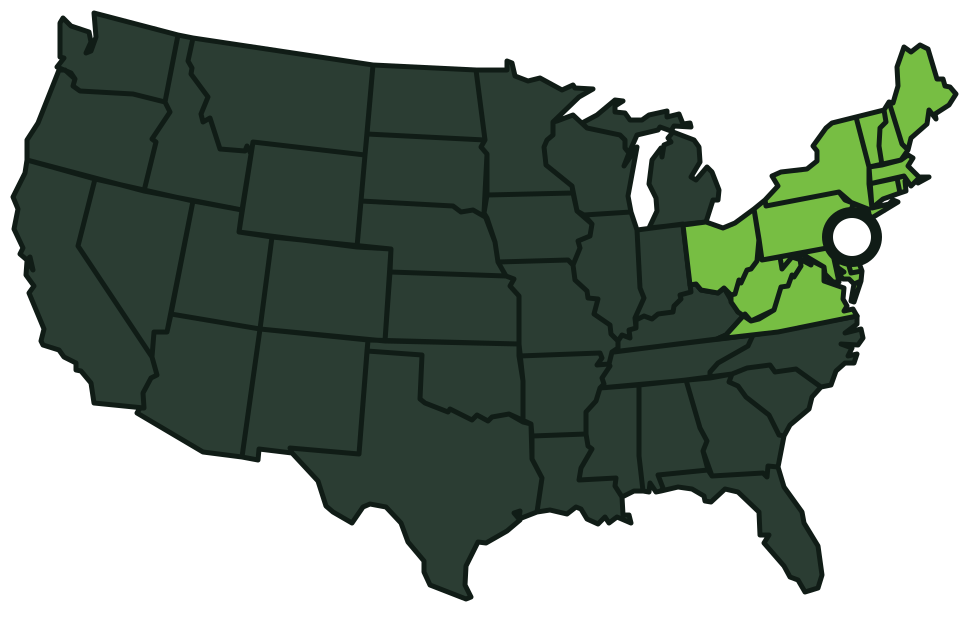
 Philadelphia, PA
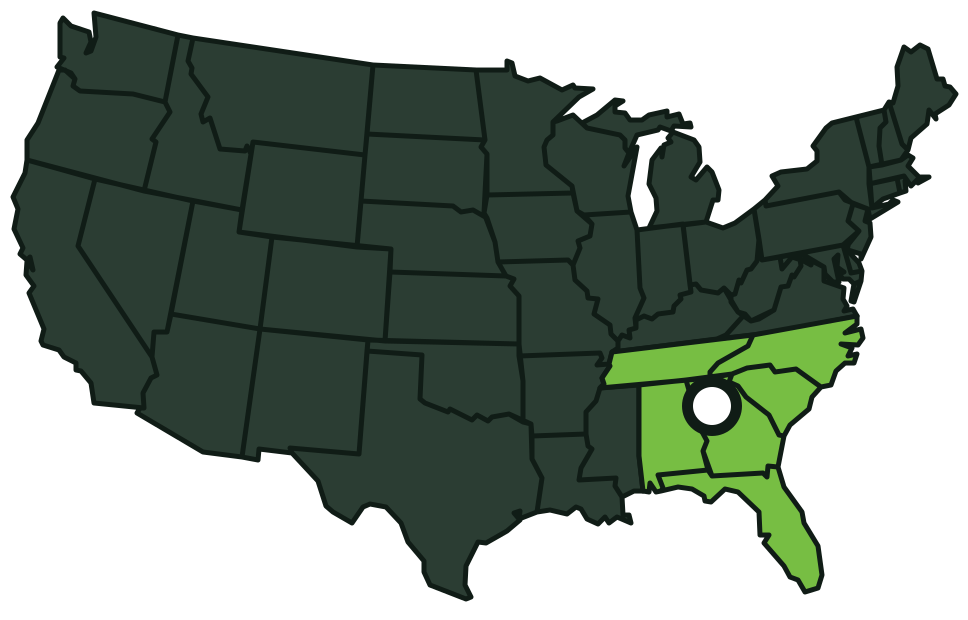 Atlanta, GA
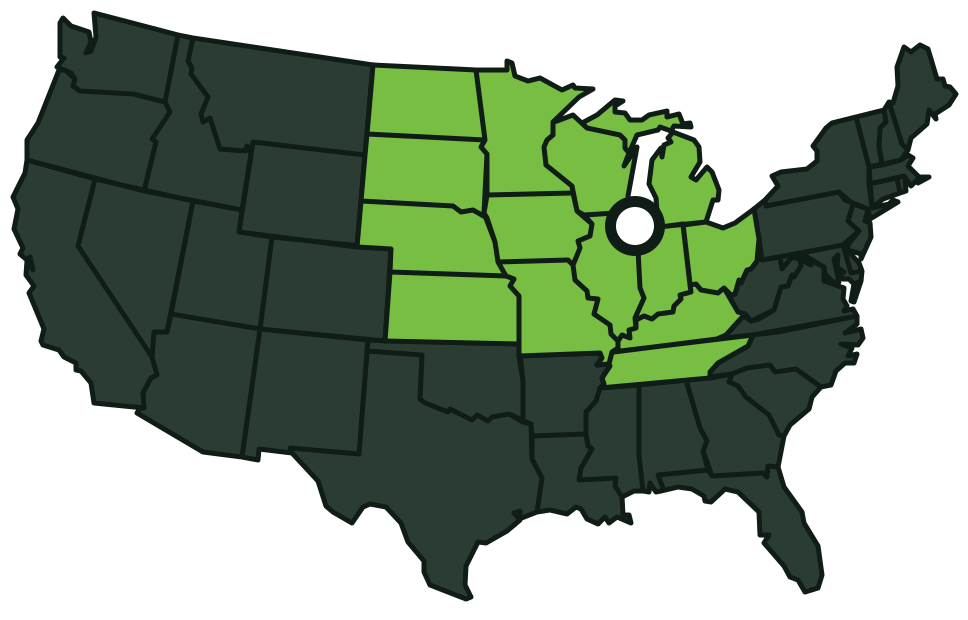 Chicago, IL
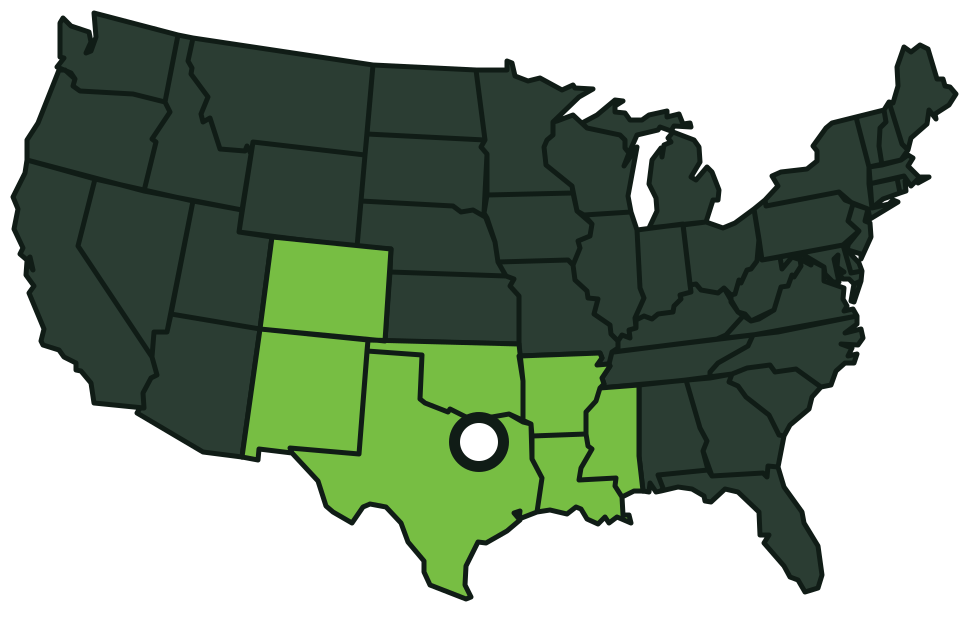 Dallas, TX
 Jackson, TN
 Los Angeles, CA
Dangers of Combustible Dust
Learn why combustible dust must be removed from your facility. We explain what combustible dust is, how dangerous it is, and how to keep your facility safe.
It’s up to facility managers to stay on top of safety and security. When you check your facility for compliance with OSHA standards as well as state and federal regulations, inspecting for industrial dust hazards is critical. The grave dangers associated with combustible dust can’t be ignored.
Combustible dust can pose serious risks for a working environment and employees. That’s why it is important to understand what combustible dust is, what creates it, how combustible dust is hazardous, and how to keep your facility safe from it.
What is Combustible Dust?
The Occupational Safety and Health Administration (OSHA) defines combustible dust as “a solid material composed of distinct particles or pieces, regardless of size, shape, or chemical composition, which presents a fire or deflagration hazard when suspended in air or some other oxidizing medium over a range of concentrations”. Basically, combustible dust is any collection of particles or chemicals that are suspended in the air and can easily catch fire and explode.
It’s interesting that it is not just any dust in our everyday understanding. Although combustible dust can be produced from “normally” not explosive materials, like many metals, wood, flour, or sugar, it requires a certain particle concentration and amount of oxygen for the dust to become flammable.
Need Help Removing Combustible Dust?
Why Combustible Dust Must Be Removed
Combustible dust is a serious fire hazard. When the dust particles are dispersed in a confined workspace or a piece of equipment, the space restriction can cause the pressure to build up and an explosion may happen.
To summarize, a dust explosion needs the “dust pentagon” for it to happen:
- Combustible dust
- Dispersion of dust particulates
- Oxygen in air
- Confinement of dust cloud
- Ignition
In a dust explosion, the extreme air pressure can blow out walls and destroy a facility.
Did you know there are often primary and secondary explosions? The first (primary) explosion can disturb the settled dust accumulated on the flat surfaces. When that previously settled dust gets suspended in air, it also ignites and becomes the second (secondary) explosion. Oftentimes, the secondary dust explosion is even more dangerous and destructive.
Request a Quote for Combustible Dust Removal
How to Keep Your Facility Safe from Combustible Dust?
While certain steps should be made to design appropriate explosion protection and mitigation, it is as important to avoid combustible dust reaching dangerous concentrations.
Luckily, it can be achieved through an appropriate housekeeping plan. To clean up your facility from combustible dust, you can hire an industrial cleaning services company that knows how to keep your facility clean and safe from dangerous amounts of combustible dust.
Dust is common in any industry, and combustible dust is no exclusion. Ignoring combustible dust hazards can result in fire and fatal accidents at your facility.
Need help removing combustible dust from your facility? Kelly Industrial Services is here to help. Contact us for a quote.
Combustible dust and NFPA compliance
NFPA 660 and Combustible Dust: What Changed, and What Your Plant Has To Do About It
Six standards became one in December 2024. For most plants the underlying obligation did not change, but where you look it up did, and the questions an inspector or an insurer asks have gotten sharper.
Read moreCombustible Dust in Pulp & Paper Mills: NFPA 654 Compliance for Fiber and Wood Dust
What NFPA 654 requires for fiber and wood dust control in pulp and paper mills, and how a structured cleaning program keeps a facility audit-ready.
Read moreMitigating NFPA 652 Risks: Essential Dust Control in Corrugated Facilities
Combustible paper dust puts corrugated plants inside the scope of NFPA 652. Learn what compliance actually requires and how high-level cleaning reduces risk.
Read moreTell us about the facility.
We'll tell you straight.
A specialist reviews every request, not a call center. If it is not Kelly work, we will say so and point you in the right direction.