
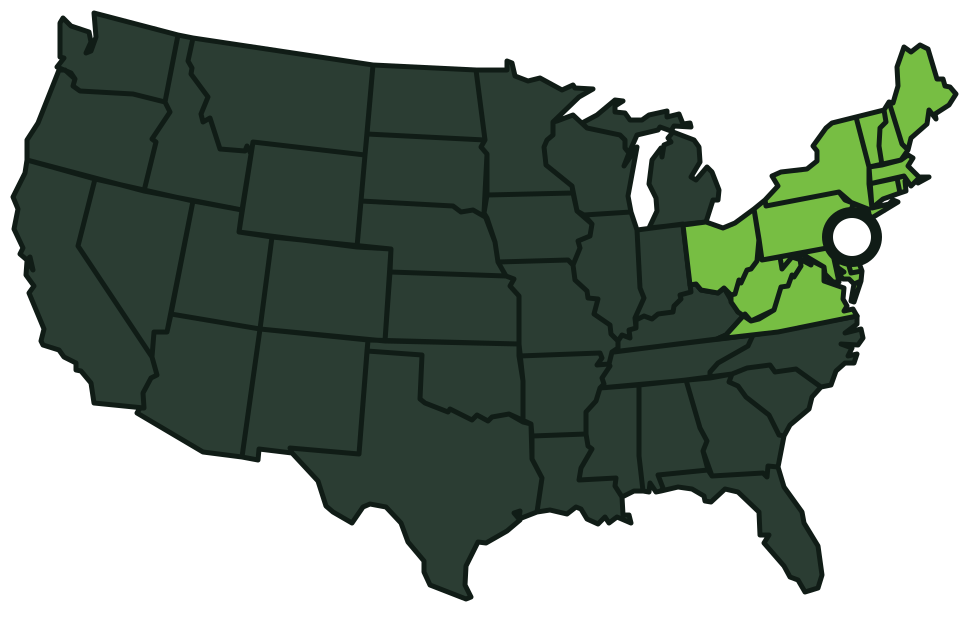
 Philadelphia, PA
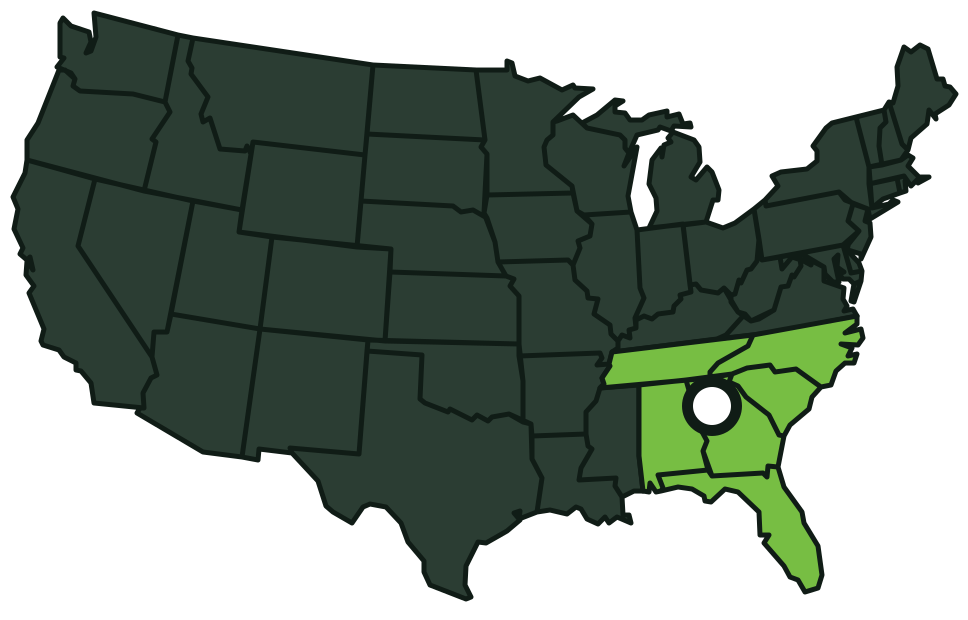 Atlanta, GA
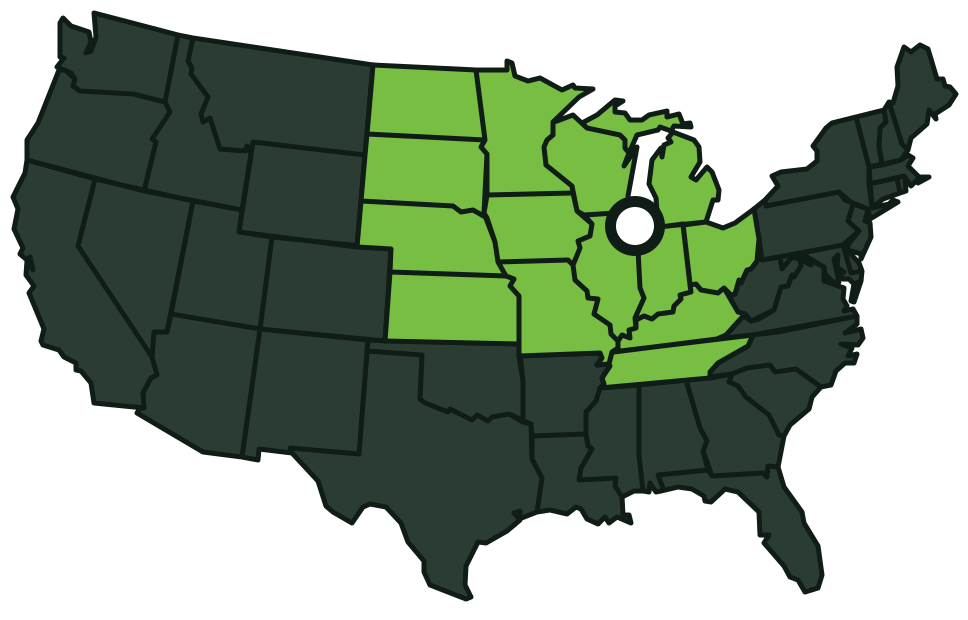 Chicago, IL
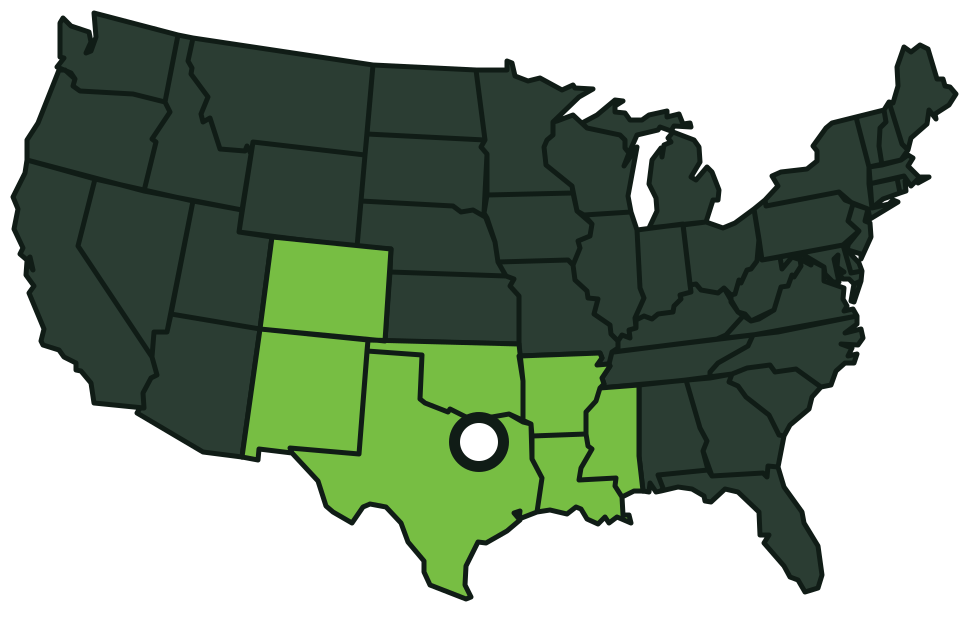 Dallas, TX
 Jackson, TN
 Los Angeles, CA
Maintaining Compliance: Roof Cleaning Requirements for Insurance and Safety Audits
Roof cleaning compliance requirements affect insurance audits and OSHA inspections. See what auditors check and how to prepare your facility.
A clean roof and a compliant roof aren’t automatically the same thing. A facility can clear debris off a roof deck and still fail an insurance inspection or an OSHA walkthrough if drainage isn’t documented, combustible buildup hasn’t been addressed, or there’s no record showing when the last assessment took place. For plant managers, that distinction matters more than it used to - insurers and regulators are both paying closer attention to roof condition than they did even five years ago, and the paperwork now matters almost as much as the work itself.
Why Insurers and Auditors Care About Roof Condition
Roof failures are one of the most common and most expensive property claims insurers pay out on, which is exactly why underwriters increasingly ask for proof of ongoing maintenance before they’ll renew coverage at favorable terms. A roof with a documented cleaning and inspection history signals lower risk. A roof with no records, or worse, a known history of ponding and deferred repairs, can trigger higher premiums, coverage exclusions, or a flat-out denial of a claim after the fact.
Meeting roof cleaning compliance requirements isn’t just about passing an audit on the day it happens. It’s about building a paper trail that protects the facility financially if something does go wrong later.
What an Industrial Roof Safety Audit Actually Checks
An industrial roof safety audit typically goes well beyond a visual walkthrough. Auditors are looking for evidence that drains and scuppers are clear and functioning, that there’s no significant ponding history, and that the membrane and flashing details show no signs of deferred maintenance. They’ll also check for combustible dust accumulation on rooftop equipment housings and around exhaust penetrations, an issue regulated under NFPA 654 and 664 for facilities handling combustible materials - a detail that’s easy to overlook on the roof since most dust remediation programs focus on interior trusses and ductwork rather than rooftop units.
Access and fall protection come up in nearly every audit as well. If maintenance crews are walking the roof for cleaning or inspection without proper guardrails, anchor points, or warning lines, that’s a finding regardless of how clean the roof itself looks.
Insurance Roof Inspection Checklist: What Documentation Insurers Want to See
Most insurers aren’t asking facilities to guess what “good maintenance” looks like; they want specific documentation. At minimum, that typically includes dated records of debris removal and drain clearing, photos or reports from annual or post-storm inspections, any coating or repair work performed along with material specs and warranty information, and a record of who performed the work and what certifications they hold.
That last point matters more than facilities sometimes realize. Insurers and auditors increasingly want to know whether maintenance was performed by trained, accountable technicians or by an unverified subcontractor with no direct relationship to the company doing the work. A consistent insurance roof inspection checklist, maintained year over year, turns roof maintenance from a vague claim into something an underwriter or auditor can actually verify.
OSHA, EPA, and Combustible Dust Considerations on the Roof
OSHA roof maintenance compliance overlaps with several regulatory areas at once: fall protection standards for anyone accessing the roof, hazard communication if cleaning involves chemical treatments or coatings, and combustible dust standards where applicable. EPA considerations come into play too, particularly around stormwater runoff if debris, biological growth, or coating overspray isn’t managed properly during cleaning.
None of this is meant to make roof maintenance feel like a regulatory minefield. It’s meant to illustrate why a single missed drain or an undocumented cleaning cycle can cascade into a finding that has nothing to do with whether the roof is actually leaking. We cover how drainage, structural integrity, and cleaning intersect in more detail in our article on industrial roof cleaning, structural integrity, and drainage compliance.
Building Compliance Into a Routine, Not a Scramble
The facilities that pass audits without a scramble are the ones that treat documentation as part of the maintenance cycle itself, not something assembled the week before an inspector shows up. That means logging every cleaning, every drain check, and every repair as it happens, and pairing that with a roof condition strategy that addresses ponding and debris before they become the kind of deferred maintenance that draws scrutiny in the first place. Our earlier piece on the hidden costs of neglected roof cleaning goes into why those small, routine tasks carry more weight than they get credit for.
Kelly Industrial Services has spent forty years working inside the most heavily audited manufacturing, food and beverage, and paper processing facilities in the country, and our crews are trained to meet OSHA, EPA, and industry-specific compliance standards on every job - no subcontractors, no gaps in accountability. If an upcoming audit or insurance renewal has roof maintenance on the agenda, contact us to schedule an assessment and get the documentation in order before it’s requested.
Industrial roof coatings
The Importance of Regular Roof Maintenance for Industrial Facilities
Maximize your roof's lifespan and prevent costly repairs with regular industrial roof maintenance provided by Kelly Industrial Services.
Read more7 Signs Your Industrial Roof Needs a Specialized Coating
Ponding water, rust at fasteners, and rising HVAC costs are early warning signs. Learn the 7 signs your facility needs specialized industrial roof coatings.
Read moreIndustrial Roof Cleaning for Structural Integrity, Drainage, and Compliance
Learn why routine industrial roof cleaning matters by setting up a successful coating system, safeguarding structural integrity, and enhancing drainage.
Read moreTell us about the facility.
We'll tell you straight.
A specialist reviews every request, not a call center. If it is not Kelly work, we will say so and point you in the right direction.