
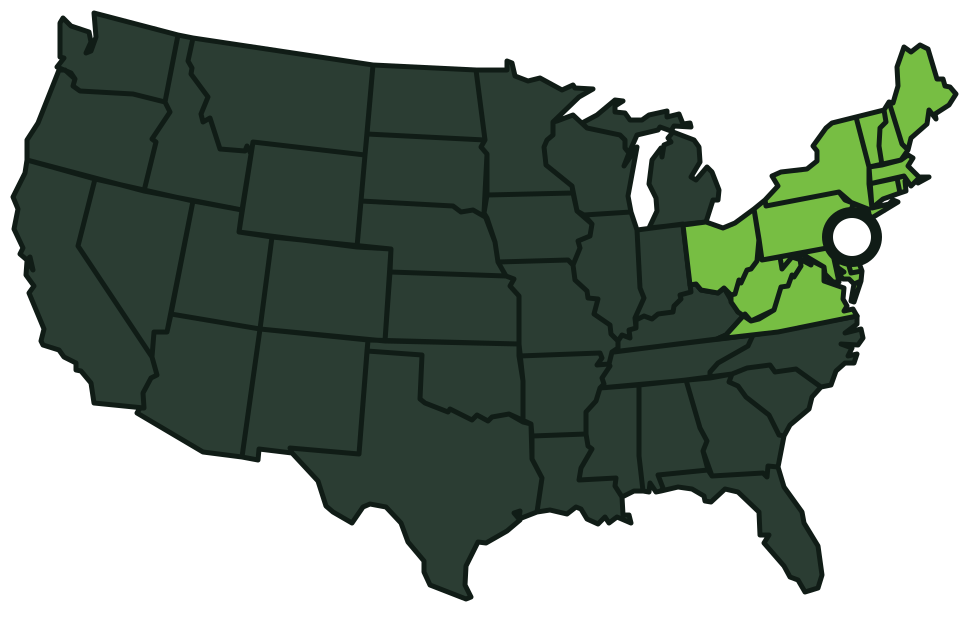
 Philadelphia, PA
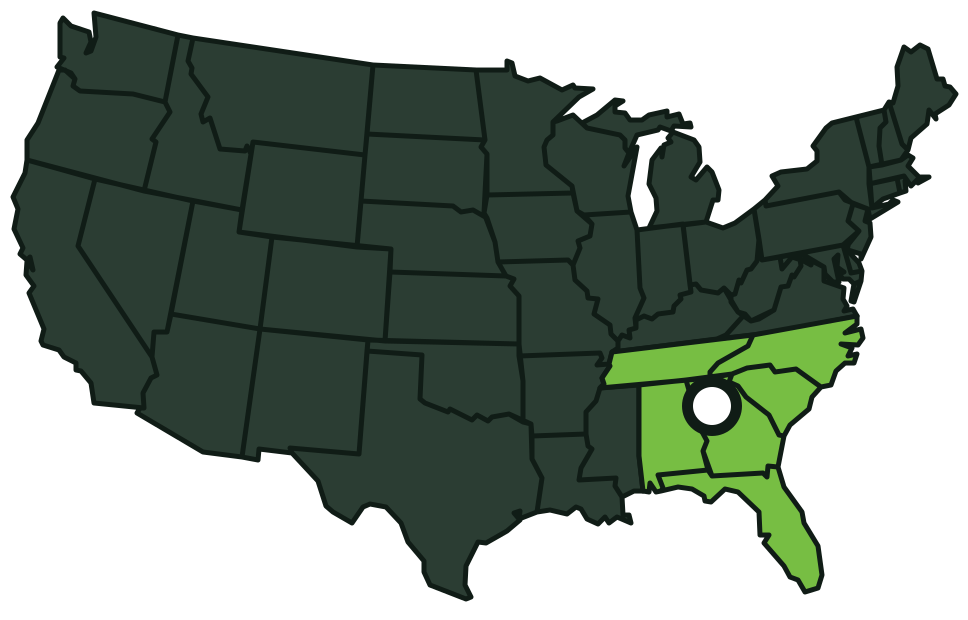 Atlanta, GA
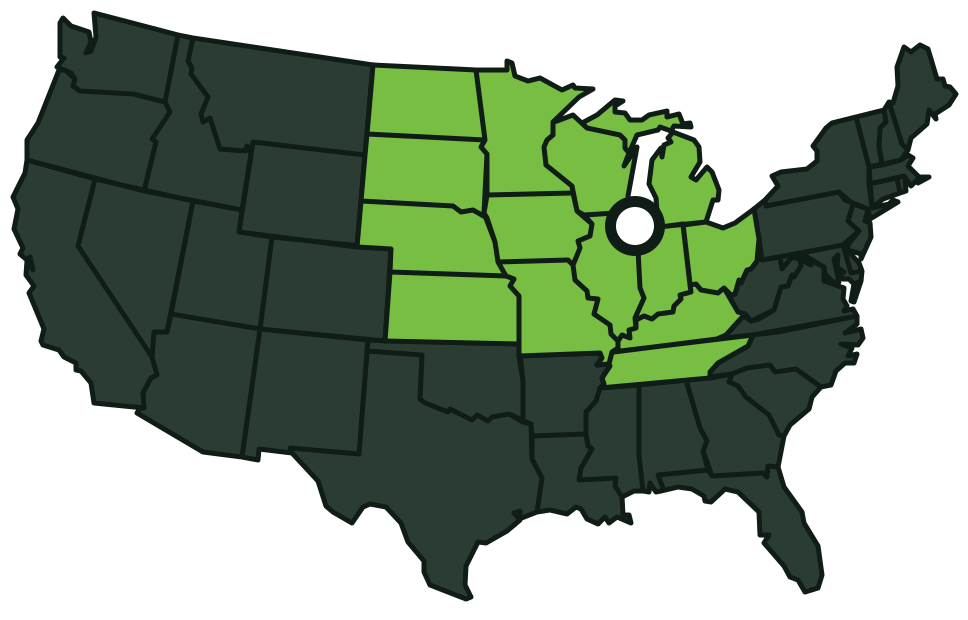 Chicago, IL
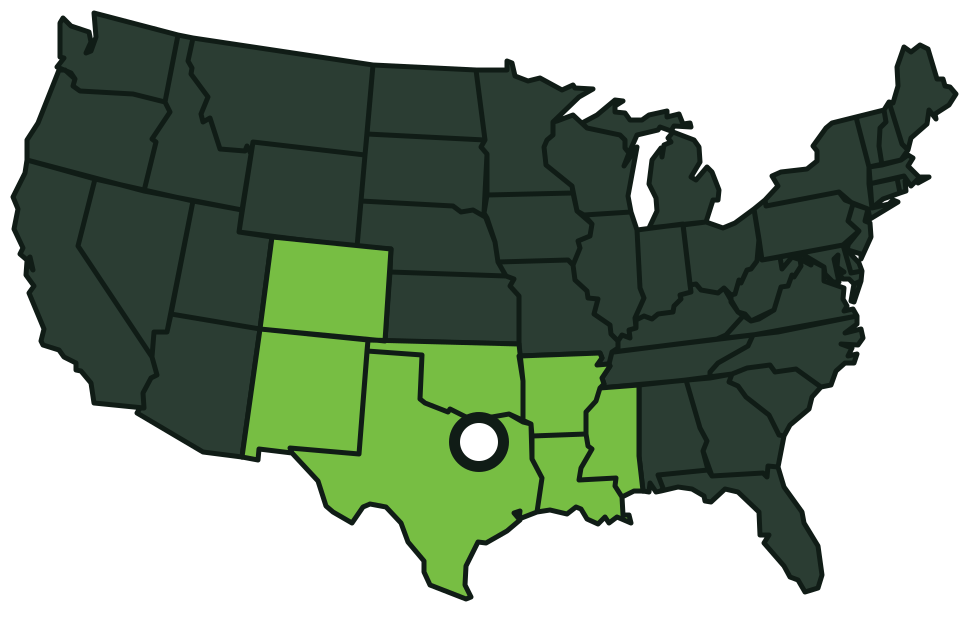 Dallas, TX
 Jackson, TN
 Los Angeles, CA
Industrial Roof Cleaning for Structural Integrity, Drainage, and Compliance
Learn why routine industrial roof cleaning matters by setting up a successful coating system, safeguarding structural integrity, and enhancing drainage.
When facility managers think about roof maintenance, cleaning is often treated as a cosmetic afterthought - something to schedule once the roof already “looks” neglected. In an industrial setting, that’s a costly assumption. Dirt, organic growth, and production byproducts that accumulate on a roof don’t just affect appearance; they actively degrade the structure underneath, block the drainage systems designed to protect it, and create compliance exposure during safety audits. Routine industrial roof cleaning is one of the most overlooked, lowest-cost ways to protect a roof’s long-term performance.
How a Dirty Roof Threatens Structural Integrity
Industrial roofs accumulate far more than dust. Depending on the facility, rooftop surfaces collect oils and grease vented from production exhaust, paper or wood fiber dust from manufacturing processes, biological growth from standing moisture, and general airborne debris that settles and compacts over time. Left unaddressed, this buildup creates several structural problems:
Added weight load. Saturated debris, especially organic growth and trapped sediment, holds water far longer than a clean roof surface would, adding sustained weight the structure wasn’t necessarily designed to carry indefinitely.
Accelerated membrane degradation. Grease, chemical residue, and biological growth break down roofing membranes and coatings faster than UV exposure alone. A roof that might otherwise perform well for years can deteriorate prematurely simply because contaminants were never removed.
Hidden corrosion on metal roofs. Dirt and organic matter trap moisture against metal panels and fasteners, creating ideal conditions for rust to take hold long before it becomes visible from the ground.
This is also why roof cleaning is the first real step in any coating project, not an optional add-on. As we cover in our guide to industrial roof coatings, a coating system is only as durable as the surface preparation underneath it - and no coating, regardless of quality, adheres properly or performs to its rated lifespan over a contaminated substrate.
Drainage: The System Most Facilities Forget to Inspect
Every low-slope industrial roof depends on a functioning drainage system - drains, scuppers, gutters, and properly graded surfaces that move water off the roof before it can pond. Debris accumulation is the most common reason that system fails.
Clogged drains and scuppers cause water to back up and pool in areas the roof wasn’t designed to hold long-term. Ponding water is more than a maintenance nuisance: sustained ponding accelerates membrane breakdown, adds significant structural load, and creates the exact conditions that lead to leaks during the next major storm. On roofs with rooftop HVAC units or process equipment, displaced or pooled water can also threaten electrical components and mechanical systems housed above the building envelope.
Routine cleaning of drains, scuppers, and the surrounding roof field is a simple, low-cost way to prevent a drainage failure from turning into an emergency leak response or premature coating failure.
Compliance: Why Auditors and Insurers Care About Roof Cleanliness
For facilities operating under NFPA combustible dust regulations, OSHA safety standards, or insurance loss-prevention requirements, rooftop conditions are frequently part of what gets reviewed. Dust accumulation near rooftop exhaust vents, intake louvers, and HVAC equipment can present a combustible dust risk in the same way interior dust accumulation does in facilities governed by NFPA 654 and 664 standards. Auditors and insurance risk assessors also use visible housekeeping - including rooftop conditions - as a general indicator of how seriously a facility takes its overall safety culture.
A documented, recurring roof cleaning program gives facility managers a straightforward way to demonstrate proactive maintenance during inspections, rather than scrambling to address rooftop conditions only when an audit is already scheduled.
How Professional Industrial Roof Cleaning Works
Industrial roof cleaning isn’t simply hosing down a surface. A proper cleaning program is matched to the specific contaminants and roof type involved:
Pressure washing and hydroblasting remove embedded grease, oils, scale, and general grime from roofing membranes and metal panels without damaging the substrate underneath.
Vacuum services safely remove combustible dust and debris from rooftop equipment housings, vents, and surrounding surfaces - the same NFPA-compliant approach Kelly applies to interior facility cleaning projects.
Drain and scupper clearing restores the roof’s intended drainage path before ponding becomes a structural or membrane issue.
Biological growth treatment addresses moss, algae, or fungal growth that retains moisture against the roof surface and accelerates material breakdown.
Each of these steps should be performed by technicians trained to work safely at height, around live rooftop equipment, and within a facility’s active production schedule - not treated as a generic pressure-washing job.
The Foundation for a Longer-Lasting Roof
Cleaning and coating aren’t two separate maintenance line items - they’re two stages of the same strategy. A clean roof drains properly, resists structural strain, and supports compliance during inspections. A roof that’s also coated with the right system, as outlined in our complete guide to industrial roof coatings, extends that protection for another 10 to 20 years. Skipping the cleaning step undermines the coating; skipping the coating leaves a clean roof just as exposed to UV, ponding, and corrosion as before.
Kelly Industrial Services performs both stages with the same in-house, full-time technicians across every industry we serve - no subcontractors, no inconsistent quality between visits. Contact us today to schedule a rooftop evaluation and find out whether your facility’s roof needs cleaning, coating, or both.
Industrial roof coatings
Roof Coating vs. Roof Replacement: A Cost Comparison for Industrial Facilities
Specialized industrial roof coatings often cost a fraction of full replacement. See how the two options compare on cost, downtime, and long-term value.
Read moreWhat Makes an Industrial Roof Coating “Specialized”? Matching the System to Your Facility
Specialized industrial roof coatings are matched to substrate, climate, and plant operations. Learn how coating selection actually works for industrial facilities.
Read moreHigh-Performance Factory Roof Coatings: Extending Lifespan, Enhancing Weatherproofing, and Maximizing Energy Efficiency
High-performance factory roof coatings extend roof lifespan, seal out severe weather, and cut energy costs.
Read moreTell us about the facility.
We'll tell you straight.
A specialist reviews every request, not a call center. If it is not Kelly work, we will say so and point you in the right direction.